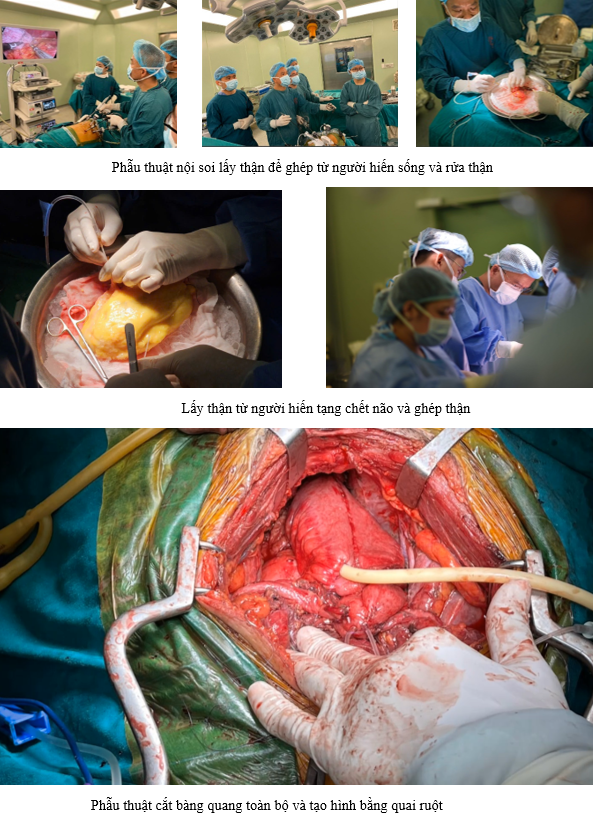
The Department of Urological Surgery - Bach Mai Hospital was established on July 4, 2022. The department is a specialized unit for the treatment and surgical intervention of urological and andrological pathologies, including urological-andrological cancers, urinary system malformations, urolithiasis (urinary stones), congenital urogenital defects, infertility, physiological and reproductive dysfunctions, and male genital diseases.
The department directly participates in the preparation, surgery, and treatment of kidney transplant patients. Since its inception, the department has increasingly asserted its vital position within Bach Mai Hospital. In its first three years of operation, the department successfully performed nearly 8,000 surgeries, including many difficult and complex cases, and provided examination and treatment for nearly 25,000 patient visits.
New methods, high-tech procedures, and minimally invasive surgeries performed worldwide are continuously updated and implemented by the department's doctors. Currently, the department performs almost all specialized urological techniques, such as laparoscopic donor nephrectomy for transplantation, kidney transplantation from living and brain-dead donors, mini-percutaneous nephrolithotomy (mini-PCNL), flexible ureteroscopy for stone treatment, radical cystectomy with bladder reconstruction, radical prostatectomy, and laparoscopic partial nephrectomy for renal tumor treatment.
3. Functions and Missions Functions:
Organize the examination and treatment of pathological cases in the field of Urological Surgery, including urinary stones, urological cancers, and andrology.
Master surgical techniques in the specialized field of Urological Surgery, from basic to the most complex procedures.
Missions:
Build a united department contributing to the hospital's general development.
Advise the Party Committee and Board of Directors on the department's development orientation for each period.
Coordinate closely with other Institutes, Centers, and Departments within the hospital to ensure high-quality patient examination and treatment.
Adhere strictly to the development orientations, hospital regulations, and State laws.
Focus on professional development based on the six pillars directed by the Board of Directors, particularly organ transplantation, robotic surgery, and the application of Artificial Intelligence (AI) and 3D printing technology in clinical practice.
3. Outstanding Achievements
Routine kidney retrieval and transplantation from living and brain-dead donors.
Successful implementation of difficult and complex specialized techniques recognized by domestic and international scientific journals: Laparoscopic partial nephrectomy for renal tumors, mini and ultra-mini percutaneous nephrolithotomy, flexible ureteroscopy for stones, prostatectomy, and en-bloc bladder tumor resection using bipolar energy.
Excellent achievements in multi-disciplinary coordination, successfully treating many rare and critical cases, notably the Paraneoplastic Pemphigus - large retroperitoneal tumor case (Decision No. 4169/GĐ-BM dated August 29, 2024).
Received numerous thank-you letters and expressions of gratitude from patients and their families.