Ngày đăng: 14/09/2025Tác giả: VPBV - CTXH
From September 8 to 11, 2025, Bach Mai Hospital hosted a delegation of experts from the Japan Institute for Health Security (JIHS) as part of the project titled “Strengthening Team-Based Approaches and Regional Collaboration at Stroke Centers in Northern Vietnam,” under the TENKAI Project.
This visit marked an important milestone in the 11-year partnership between the two institutions, aimed at improving the quality of stroke treatment and patient care in Vietnam.
International Expert Delegation
The JIHS delegation was led by Dr. Masato Inoue, Director of the Stroke Center and Head of Neurosurgery (Project Leader). The delegation also included:
Dr. Noritoshi Arai, Head of Neurology (Deputy Project Leader)
Dr. Hayato Tsuchiya, Head of the Nutrition Department
Dr. Masashi Fujimoto, Deputy Head of the Rehabilitation Department
Leading specialists in stroke care, neurology, neurosurgery, nutrition, and rehabilitation
Representing Bach Mai Hospital were:
Assoc. Prof. Dr. Dao Xuan Co, Director of the Hospital
Assoc. Prof. Dr. Vu Van Giap, Deputy Director
Assoc. Prof. Dr. Mai Duy Ton, Director of the Stroke Center
Assoc. Prof. Dr. Luong Tuan Khanh, Director of the Rehabilitation Center
Assoc. Prof. Dr. Vo Hong Khoi, Director of the Neurology Center
Dr. Nghiem Nguyet Thu, Director of the Clinical Nutrition Center
Ms. Nguyen Thi Huong, Chief of Office
Healthcare professionals participating in the TENKAI Project
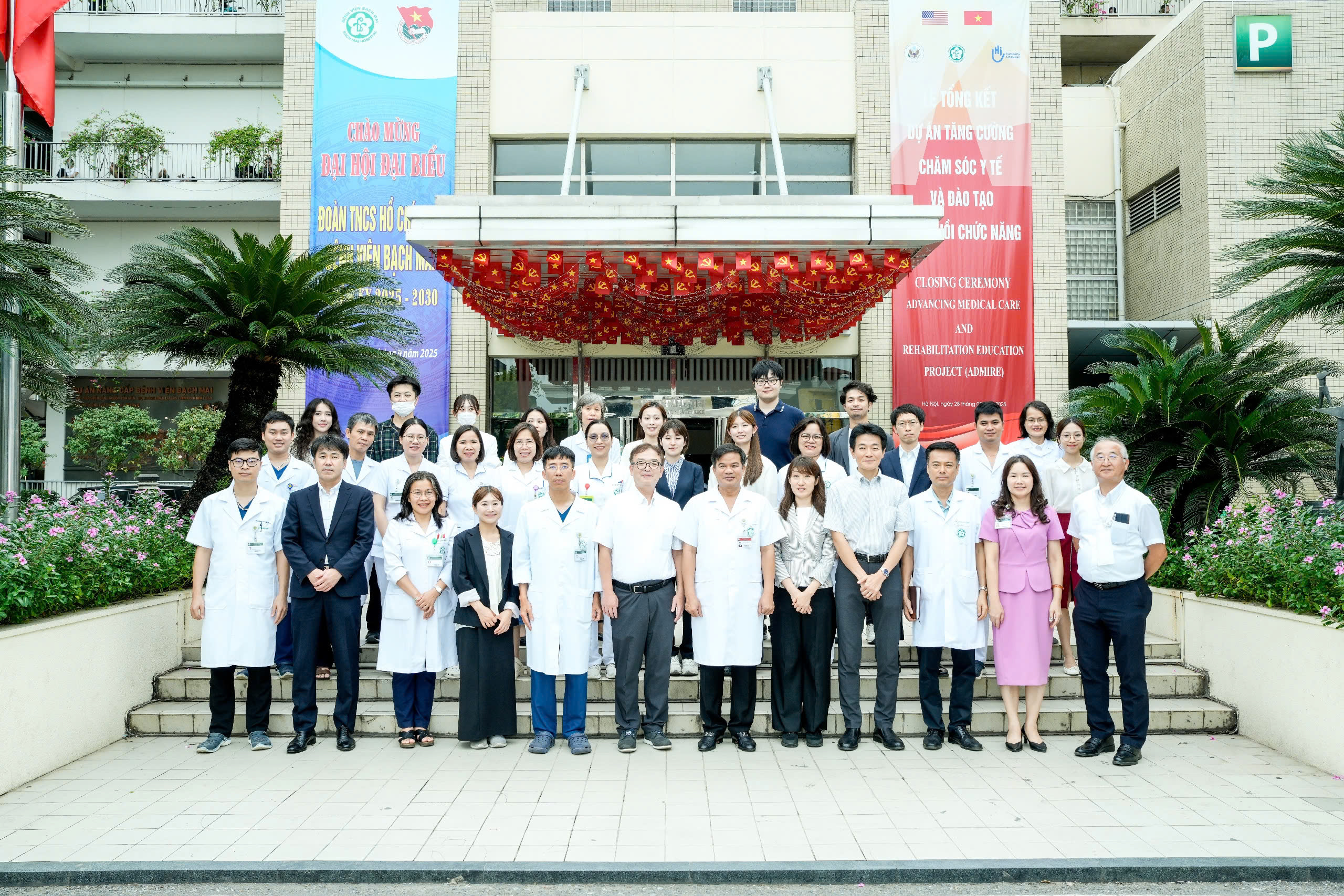
Building Capacity Through Training and Knowledge Sharing
Since the launch of the project, the partnership has focused on strengthening multidisciplinary collaboration in stroke care.
Between 2015 and 2024, a total of 60 staff members from Bach Mai Hospital were trained in Japan through the program. In addition, the two institutions have maintained monthly online consultations to discuss complex and rare cases in neurology and stroke treatment.
Beyond training, JIHS has supported the development of several important professional resources, including:
Clinical mind maps on pressure ulcers, cerebral infarction, subarachnoid hemorrhage, and stroke-related pneumonia
A stroke patient care handbook for nurses (1,000 copies)
A training manual for early rehabilitation and nursing care after stroke (2,000 copies)
Instructional videos on nutritional management for patients with swallowing disorders
These materials have contributed significantly to standardizing training and patient care practices across Vietnam’s healthcare system.
Advanced Training and Clinical Activities
During the four-day working visit at Bach Mai Hospital, both sides conducted a series of professional activities focusing on advanced stroke care and rehabilitation, including:
Care for patients with ventricular drainage systems
Pressure ulcer prevention and management
Mechanical ventilation support
Developing nutrition plans for patients with dysphagia
Speech therapy and functional rehabilitation programs
Designing and adjusting orthotic devices and gait training techniques
Advanced teaching sessions on neurological syndromes
One particularly notable activity was a “patient role-play experience”, which helped nearly 50 stroke nurses at Bach Mai Hospital improve their practical skills and empathy in patient care.
To better understand the model of post-discharge rehabilitation care, the delegation also visited Hung Yen Provincial General Hospital, where they observed community-based rehabilitation practices.
Strengthening a Sustainable Stroke Care Network
At the project review meeting, Assoc. Prof. Dr. Dao Xuan Co, Director of Bach Mai Hospital, emphasized that after 11 years of implementation, the TENKAI Project and its related initiatives have produced clear and measurable improvements in stroke patient care.
He highlighted that the project has helped establish a sustainable stroke prevention and treatment network in Vietnam, which should continue to expand in the future.
Dr. Dao Xuan Co also shared several strategic initiatives currently underway at Bach Mai Hospital, including:
The development of a comprehensive emergency center
The completion of Bach Mai Hospital’s second campus in Ninh Binh, with a capacity of 1,000 beds
These projects aim to enhance the hospital’s capacity for emergency response, treatment, and patient care.
He expressed the hospital’s hope to continue receiving technical and professional support from JIHS experts to further improve stroke treatment and comprehensive patient care.
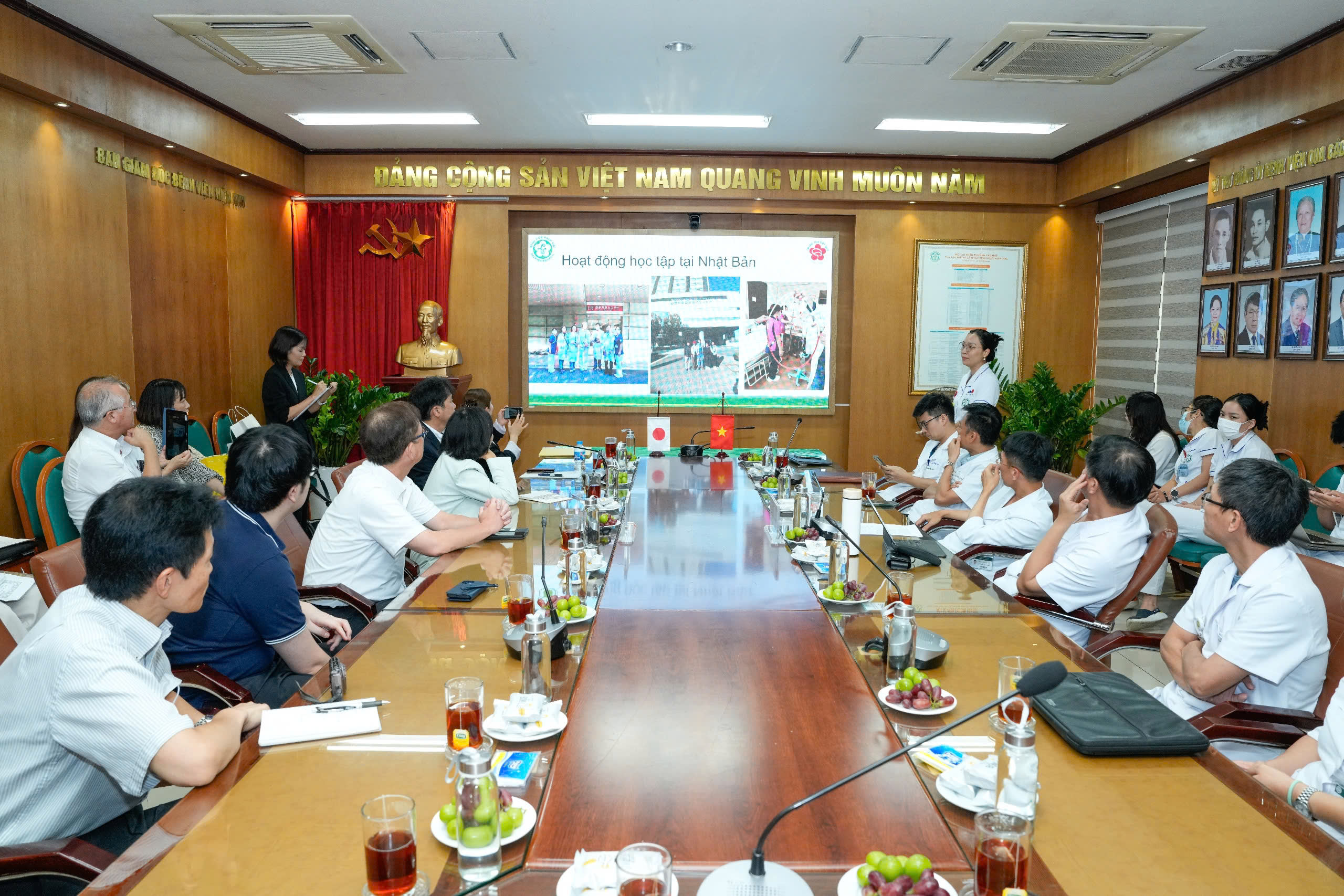
Continuing Vietnam–Japan Medical Cooperation
In response, Dr. Masato Inoue praised the dedication and professional competence of Bach Mai Hospital’s medical staff. He affirmed that JIHS will continue supporting cooperation in training, research, and the development of specialized educational materials for stroke diagnosis, treatment, and care.
The visit further strengthened the strategic partnership between Bach Mai Hospital and the Japan Institute for Health Security, opening new opportunities for collaboration in clinical practice, medical training, and scientific research.
Ultimately, these efforts aim to improve the quality of stroke treatment and comprehensive patient care for people across Vietnam.