 Ngày đăng: 03/06/2026Tác giả: Dr Nguyen Hung Hiep
Premolars (the first and second premolars) occupy a unique position in the dental arch. They play an important role in chewing, contribute to facial aesthetics, and support speech. These teeth are also often visible when smiling or speaking, particularly in individuals with a broad smile line.
Many people assume that losing a single premolar has little impact on overall health. However, dental specialists warn that if the missing tooth is left unreplaced for an extended period, the jawbone may gradually resorb, leading to gum recession, sunken cheeks, shifting of adjacent teeth, and bite misalignment.
In this context, Immediate Implant Placement (IIP) has become an increasingly popular treatment option, offering both functional and aesthetic restoration at an early stage.
What Is Immediate Implant Placement?
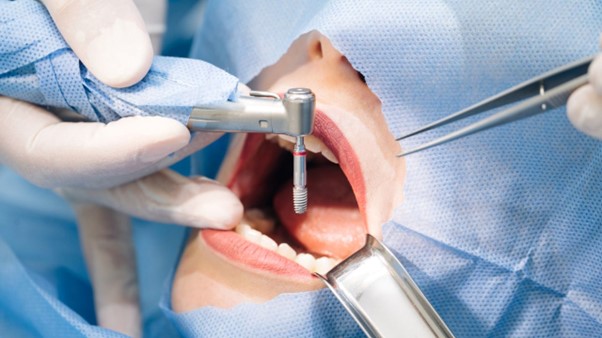
Immediate Implant Placement (IIP) is a technique in which a dental implant is inserted immediately after tooth extraction during the same surgical procedure.
Unlike the conventional approach, which requires a waiting period of three to six months for the extraction socket to heal before implant placement, immediate implantation significantly shortens treatment time and helps minimize post-extraction bone loss.
For the premolar region, this technique is considered one of the most favorable treatment options when appropriate clinical conditions are met.
Why Is Immediate Implant Placement Suitable for Premolars?
According to dental specialists, the premolar region has distinct anatomical characteristics.
In the upper jaw, the roots of the second premolars are often located close to the maxillary sinus. In the lower jaw, special attention must be paid to the distance from the inferior alveolar nerve canal and the mental foramen.
Therefore, precise treatment planning using advanced three-dimensional imaging technology is essential for determining the safest and most optimal implant position.
When properly indicated, immediate implant placement offers several advantages:
Tooth extraction and implant placement can be completed in a single surgical procedure.
Reduced surgical trauma and faster recovery.
Treatment time shortened by three to six months compared with conventional protocols.
Preservation of jawbone volume and surrounding soft tissues.
Maintenance of natural smile aesthetics.
Long-term success rates comparable to those of delayed implant placement.
Don’t Wait Too Long After Tooth Loss
According to Dr. Nguyen Hung Hiep, Department of Odonto-Stomatology, Bach Mai Hospital, the best time to consider dental implants is when tooth extraction is first recommended or when the tooth can no longer be preserved.
Patients should seek consultation in the following situations:
Severe decay of the first or second premolar that cannot be restored.
Tooth mobility caused by advanced periodontal disease.
Vertical root fracture.
A tooth that has been indicated for extraction.
“Many people choose to have the tooth extracted first and only consider implants later. However, jawbone resorption begins immediately after tooth loss and can progress rapidly during the first few months,” Dr. Hiep explains.
What Happens During an Immediate Implant Procedure?
In most cases, the entire procedure is completed in a single appointment lasting approximately 60 to 90 minutes under local anesthesia.
The process begins with a 3D CBCT scan to evaluate bone volume, sinus location, nerve anatomy, and to create a computerized treatment plan.
The tooth is then carefully extracted using specialized instruments designed to preserve as much surrounding bone as possible.
Immediately after extraction, the implant fixture is placed into the predetermined position. In many cases, bone grafting materials may be added to improve stability and maintain the volume of the extraction socket.
If clinical conditions permit, a temporary crown may be placed on the same day to restore aesthetics and facilitate communication.
After approximately three to six months, once the implant has fully integrated with the jawbone, the final ceramic crown is fabricated and attached.
Excellent Long-Term Outcomes When Properly Indicated
Recent studies have shown that the long-term success rate of immediate implant placement in the premolar region can exceed 96% when performed under appropriate indications by experienced clinicians and supported by advanced diagnostic imaging systems.
Experts emphasize that patients should not delay replacing missing teeth. Early consultation allows patients to take advantage of the “golden window” for preserving jawbone structure, shortening treatment time, and achieving optimal aesthetic outcomes.
Note: This article is for informational purposes only. Patients should undergo a comprehensive examination by a dental specialist before deciding on any treatment option. Consultation Hotline: +84 869 587 708



78 Giai Phong Street, Kim Lien Ward, Hanoi City
1900.888.866
096.985.1616
Department of On-Demand Medical Examination:
Outpatient Department: Monday – Friday
Main responsible person: Associate Professor, Dr. Dao Xuan Co - Hospital Director




