 Ngày đăng: 15/09/2026
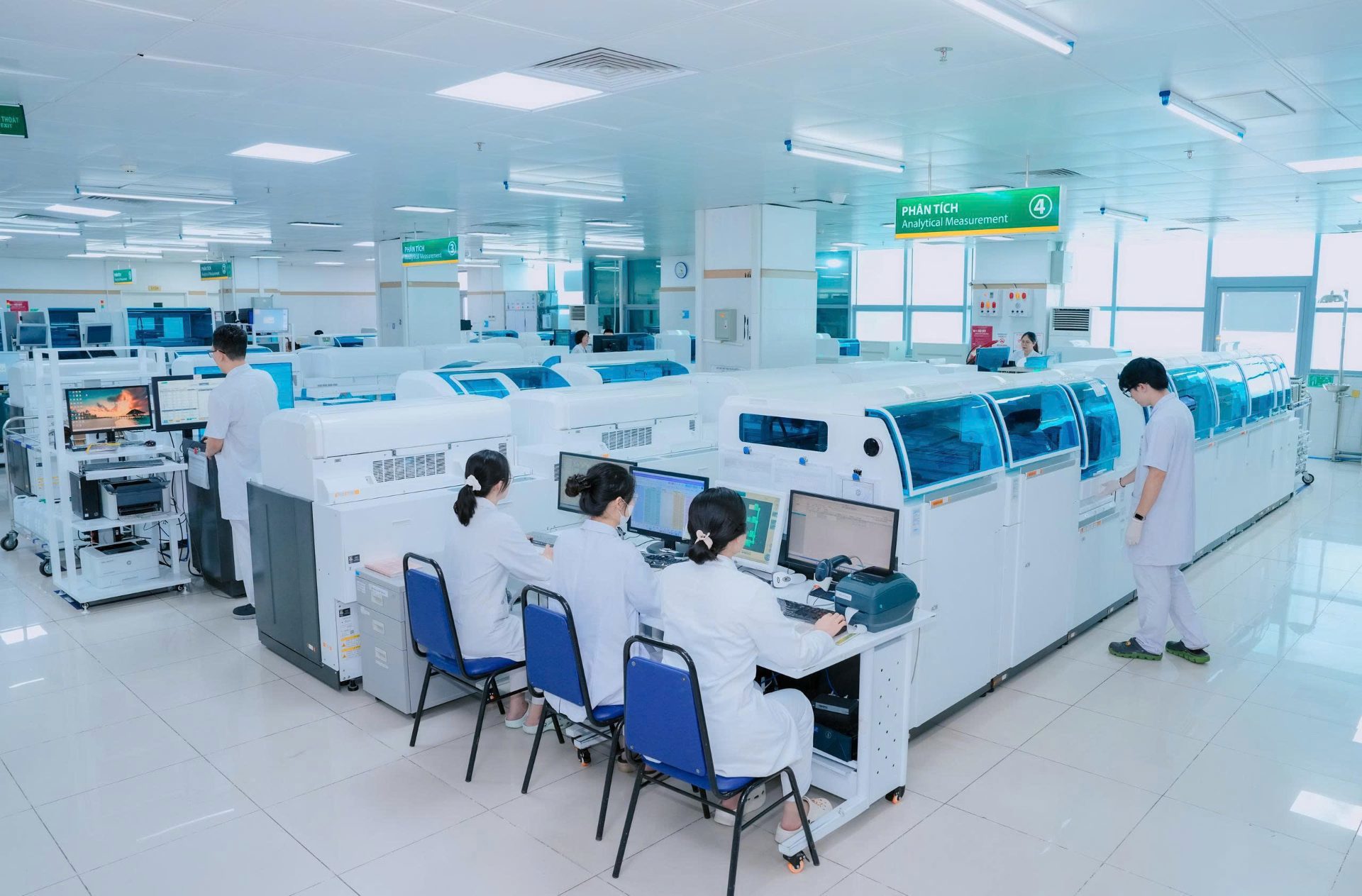
With a volume of nearly 100,000 tests per day, the Department of Biochemistry - Institute of Medical Laboratory, Bach Mai Hospital has gradually automated and comprehensively digitalized the testing process. The rate of automated testing procedures reaches 87%, with 95% of samples having a turnaround time of under 60 minutes.
The "challenge" of hundreds of thousands of tests every day
Biochemical testing is one of the crucial links in the diagnosis, treatment, and monitoring of patients. At a tertiary hospital like Bach Mai Hospital, the daily volume of tests is extremely large, imposing high demands on speed, accuracy, and safety.
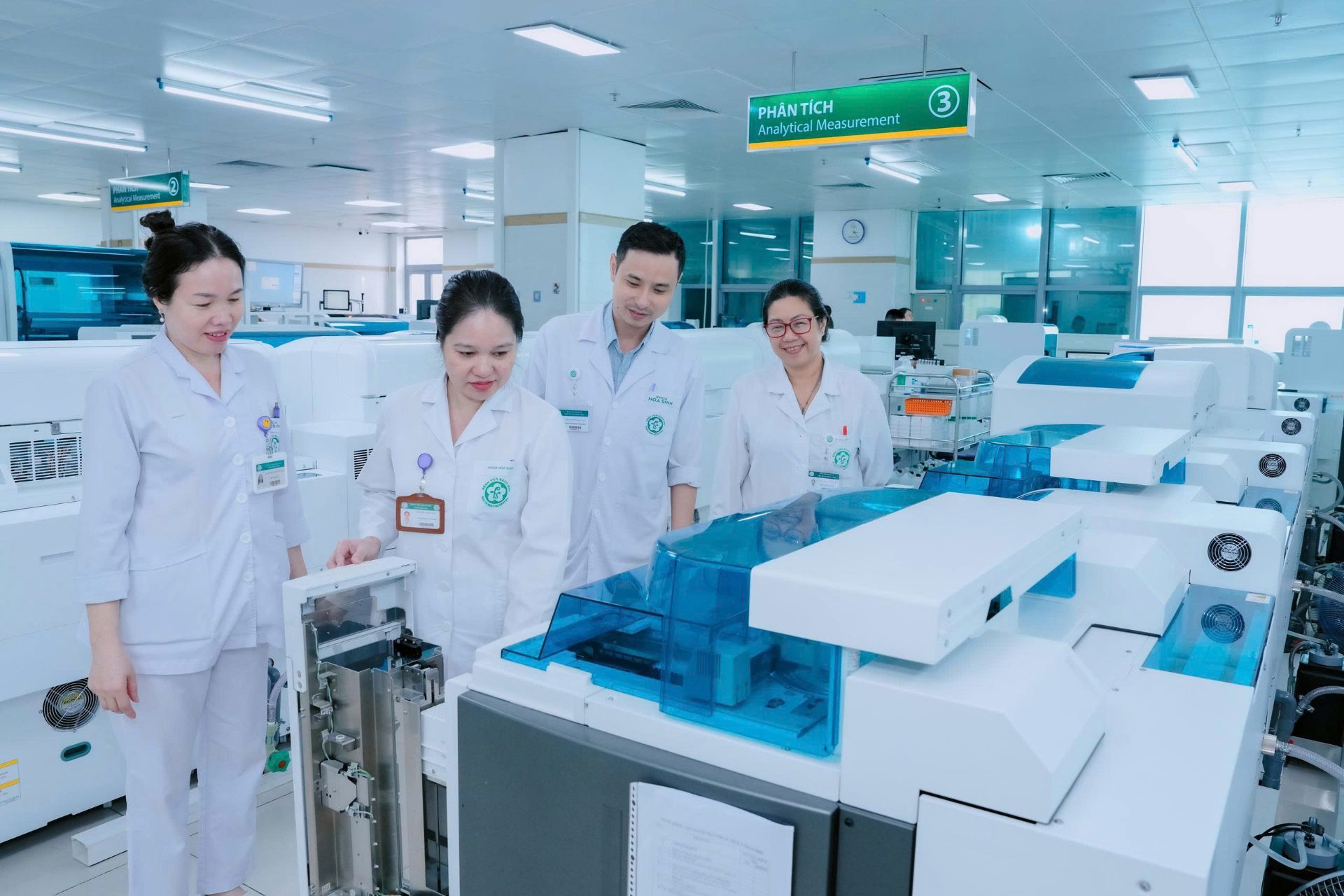
According to Ph.D., M.D. Dao Huyen Quyen, Deputy Director of the Institute of Medical Laboratory and Head of the Department of Biochemistry at Bach Mai Hospital, the Department of Biochemistry currently performs nearly 100,000 tests daily, serving 9,000 to 10,000 patient visits. The massive workload coupled with increasingly stringent turnaround time requirements means that relying too heavily on manual operations can increase the risk of errors while affecting diagnostic and treatment timelines.
To address this reality, the Department of Biochemistry has been implementing automation since 2010, gradually expanding into digital transformation and data-driven quality management.
The goal is not merely to "perform tests faster," but to build a closed-loop process in which specimen transportation, processing, analysis, inspection, and result reporting are carried out with minimized manual intervention.
Automation from the moment a specimen leaves the patient until results are returned
One of the implemented solutions is the pneumatic tube system (PTS) with 37 stations. Instead of staff having to transport each specimen manually, the system helps deliver samples rapidly to the laboratory.
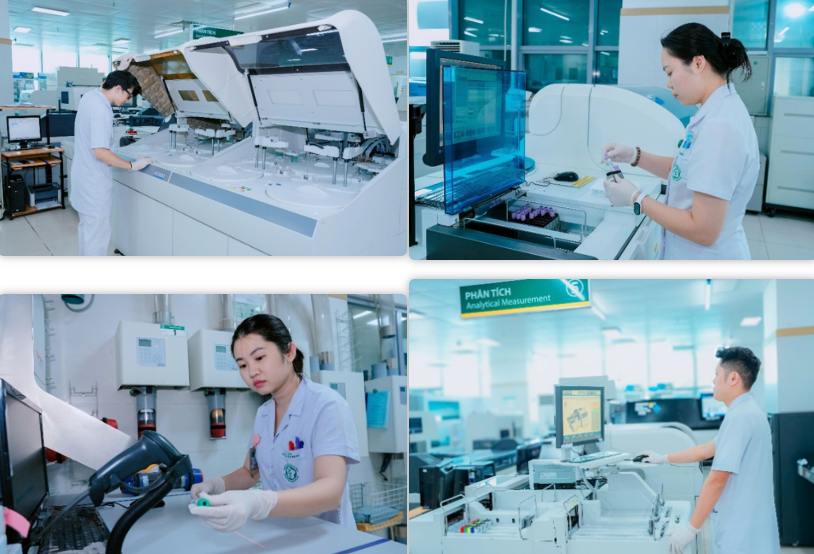
The testing process continues to be automated across all three phases: pre-analysis, analysis, and post-analysis, through systems such as cobas 8100, CCM, and cobas pro.
The system can identify hemolysis, icterus, and lipemia in samples using SCM/QS1 digital camera technology to detect factors that may affect test results.
After analysis, samples are automatically transferred to the system's refrigerated sample storage compartment. When retesting or additional indices are needed, the system automatically retrieves the sample and transfers it back to the analyzer without requiring manual sample retrieval by staff.
In addition, the laboratory management middleware is integrated with automated result validation (Autovalidation) algorithms. Results that meet established criteria can be automatically checked and validated by the system, reducing manual operations for laboratory staff.
Thanks to these solutions, the sample processing workflow operates continuously and synchronously from sample reception to result delivery, while reducing dependence on manual operations.
95% of samples have results in less than 60 minutes
Thanks to the application of machinery and equipment, Information Technology, and advanced ISO 15189 management processes, turnaround time is reduced while quality is maintained.
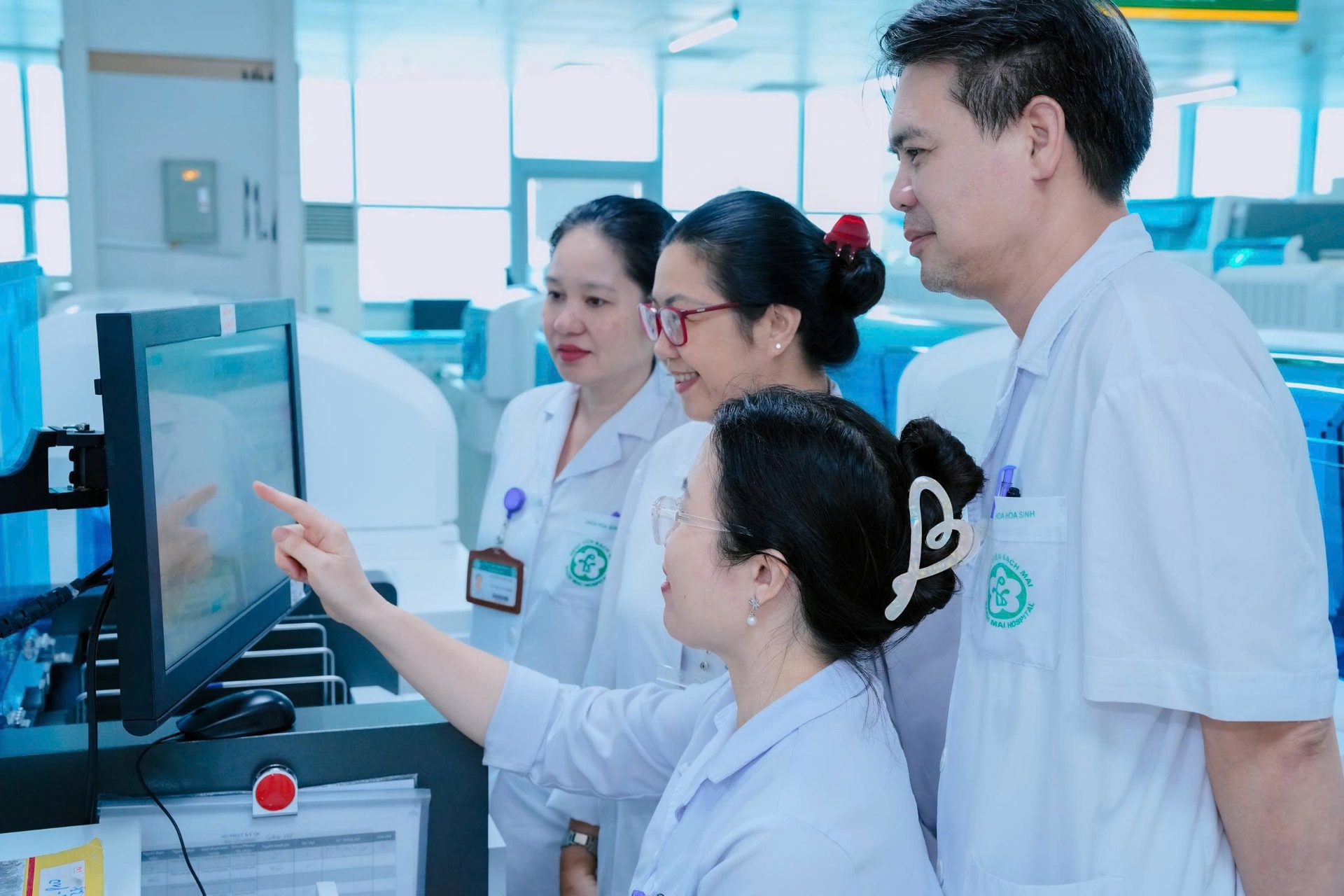
Notably, 95% of test samples have a turnaround time (TAT) of under 60 minutes. At the On-Demand Examination Department alone, 95% of samples have a TAT of under 50 minutes.
This is one of the key indicators reflecting the operational efficiency of the laboratory, especially for emergency patients or cases requiring rapid results to guide treatment decisions. Shortening the TAT not only helps patients reduce waiting times but also assists physicians in obtaining timely information for diagnosis and selecting appropriate treatment plans.
Data-driven Quality Management
Automation is truly meaningful only when coupled with quality control. Therefore, the Department of Biochemistry - Bach Mai Hospital applies the Six Sigma methodology to evaluate and monitor testing quality.
Six Sigma is a data-driven quality management method that allows the evaluation of the stability and error-control capability of testing processes. The higher the Sigma value, the better the process performance.
Among the 31 tests evaluated using Six Sigma, 91% achieved a level of 4 Sigma or higher, and 73% achieved 5 Sigma or higher.
These data help the laboratory not only detect issues as they occur but also identify trends, assess risks, and proactively improve processes.
When test results are connected to the electronic medical record
Another important milestone is the integration of the testing system with the electronic medical record (EMR) and the Bach Mai Care application.
Instead of test results existing only within the laboratory's standalone system, the data is synchronized with the hospital's information system, making the process of reception, processing, and result delivery more seamless.
The role of human resources in digital transformation and automation
Digital transformation and automation require staff with proper training, good laboratory practice, periodic competency assessment, continuous improvement, and clearly defined responsibilities according to job positions. Staff need to effectively utilize available laboratory resources and strictly follow standard operating procedures. The role of personnel is gradually shifting from monitoring partially automated systems to supervising and managing fully automated systems, controlling processes, preventing risks, and detecting potential incidents. At the time, access rights must be managed functionally and continuous training maintained to ensure capability and safety during the operation of automated systems. It can be seen that human resource development is the most core factor in maintaining the hospital's reputation and brand, with the motto: Patient safety is medical staff safety - Testing quality builds the brand of Bach Mai Hospital.
M.Thanh - T.Anh



78 Giai Phong Street, Kim Lien Ward, Hanoi City
1900.888.866
096.985.1616
Department of Examination on Demand:
Department of Examination: Monday - Friday
National Route 21B, Liem Tuyen Ward, Ninh Binh Province
1900.888.866
0969851616
Outpatient Department on Demand (On-demand Clinic)
+ Monday - Friday:
+ Saturday - Sunday:
Outpatient Department (Standard Clinic): Monday - Friday
+ Working hours:
Main responsible person: Associate Professor, Dr. Dao Xuan Co - Hospital Director




