 Ngày đăng: 25/05/2026Tác giả: Pham Phuong - Van Khang - Thu Huong - Nguyen Ha
Many people suffer from recurrent kidney stones, persistent bone and joint pain, or chronic fatigue without realizing that the underlying cause may be a tiny tumor located behind the thyroid gland. This is also why parathyroid adenoma - an uncommon endocrine disorder is often detected late, when the body has already developed serious complications.
Experts from the Diagnostic Imaging and Interventional Radiology Institute at Bach Mai Hospital warn that without timely diagnosis and treatment, the disease can silently damage the bones, kidneys, nervous system, and significantly affect patients’ quality of life.
Vague Symptoms Easily Overlooked
Parathyroid adenoma is the most common cause of primary hyperparathyroidism. Normally, the body has four small parathyroid glands located behind the thyroid gland, responsible for secreting parathyroid hormone (PTH) to regulate calcium and phosphorus levels in the blood.
When a tumor develops, the parathyroid gland produces excessive amounts of PTH, leading to prolonged elevated blood calcium levels and a series of metabolic disturbances. However, the disease often progresses silently, with non-specific symptoms that can easily be mistaken for other medical conditions.
In the urinary system, patients may experience recurrent kidney stones, calcium deposits in the kidney tissue, gradual decline in kidney function, and even chronic kidney disease. In the musculoskeletal system, prolonged hypercalcemia reduces bone density, causing osteoporosis, bone and joint pain, and an increased risk of pathological fractures.
Some patients present with gastrointestinal symptoms such as loss of appetite, nausea, prolonged constipation, peptic ulcers, or acute pancreatitis. Others may experience fatigue, muscle weakness, insomnia, mood changes, difficulty concentrating, or mild cognitive decline.
According to physicians, many cases are only discovered after complications have developed or incidentally through blood tests during routine health check-ups.
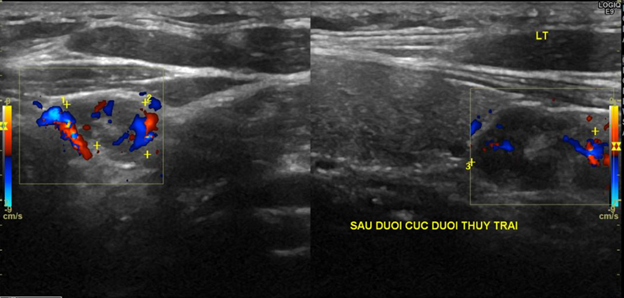
Ultrasound image showing a left parathyroid adenoma incidentally detected in a 28-year-old female patient who underwent a health check-up due to persistent fatigue
Early Detection Through Modern Diagnostic Technologies
Today, parathyroid adenoma can be detected early even before obvious symptoms appear, thanks to the combination of biochemical testing and advanced imaging technologies.
Blood tests play a crucial role, with two key indicators being elevated blood calcium levels and abnormally high PTH levels. After initial screening, neck ultrasound is commonly used to identify the location, size, and characteristics of the lesion.
At Bach Mai Hospital, a 28-year-old woman who underwent a health check-up due to prolonged fatigue was incidentally diagnosed with a left parathyroid adenoma through ultrasound, despite having almost no specific symptoms beforehand.
In difficult cases, especially when the tumor is small or located in unusual sites such as the mediastinum, 99mTc-Sestamibi parathyroid scintigraphy can accurately localize the lesion. In addition, 4D computed tomography (4D-CT) provides detailed evaluation of the tumor’s relationship with blood vessels and nerves in the neck, helping physicians develop safer treatment plans.
A 54-year-old man with recurrent kidney stones was also diagnosed with a left parathyroid adenoma using 4D-CT after years without identifying the underlying cause.
Notably, Bach Mai Hospital has recently implemented next-generation quantum CT technology. This system provides high-resolution images while reducing radiation exposure and contrast agent dosage. It also enables iodine mapping, which helps detect tiny lesions or tumors located in areas that are difficult to identify using conventional imaging techniques.
Physicians reported a 46-year-old woman with prolonged PTH-dependent hypercalcemia whose lesion could not be identified despite multiple previous imaging studies. Only after undergoing quantum CT scanning was a parathyroid tumor located near the upper pole of the thyroid gland successfully detected, thanks to iodine mapping that distinguished it from normal thyroid tissue.
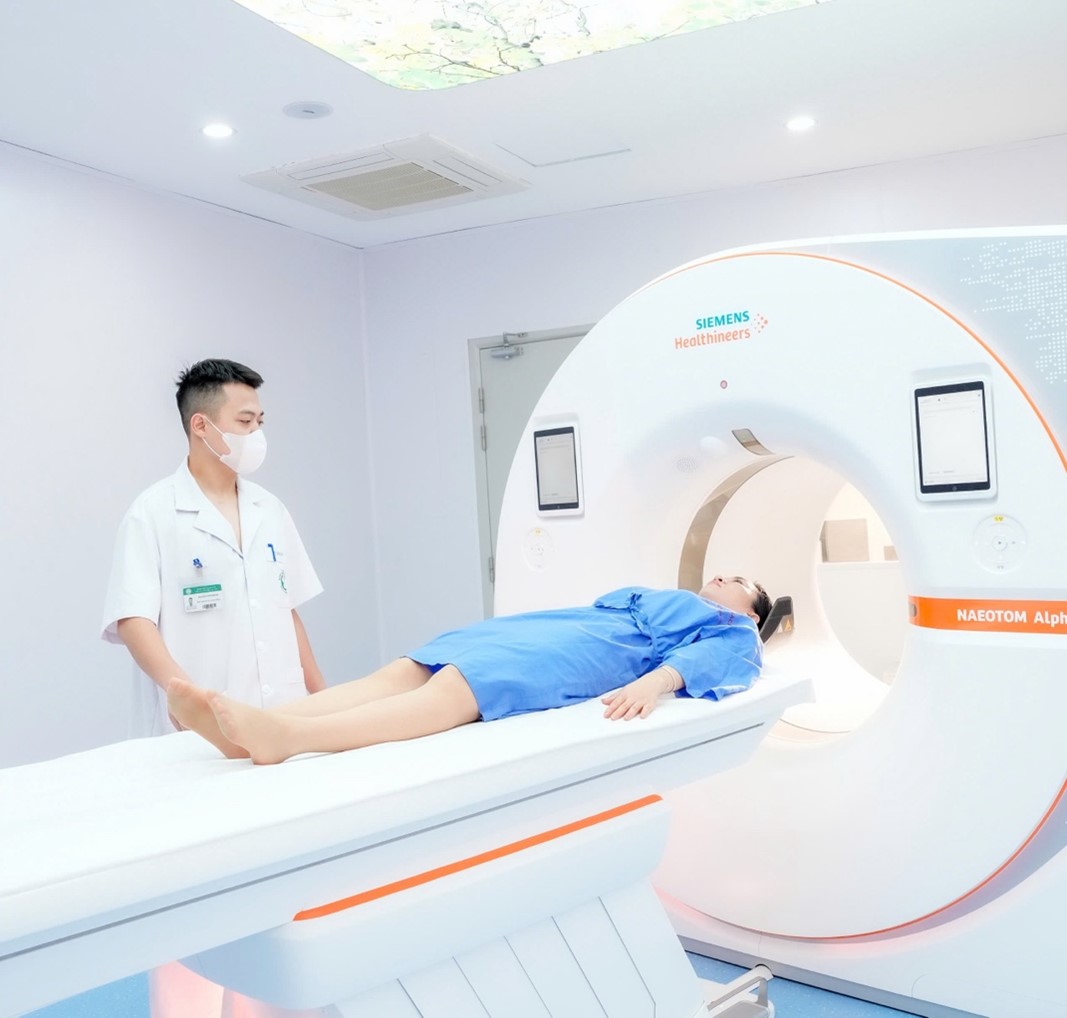
Quantum CT scanner – An advanced imaging system that helps enable early detection of parathyroid adenoma
Effective Treatment When Detected Early
According to specialists, the goal of treatment is to eliminate the source of abnormal PTH secretion, restore blood calcium levels to normal, and prevent long-term complications.
Currently, surgical removal of the parathyroid tumor remains the most definitive and effective treatment. Modern trends favor minimally invasive surgery with smaller incisions and precise localization of the lesion, helping patients recover faster while maintaining cosmetic outcomes.
In selected cases, radiofrequency ablation under ultrasound guidance may also be considered as a minimally invasive option for patients at high surgical risk or those unwilling to undergo surgery.
After treatment, patients require close monitoring of calcium and PTH levels to detect metabolic disturbances early, particularly the “hungry bone syndrome” that may occur after surgery. Patients should also follow medical guidance on calcium and vitamin D supplementation, attend regular follow-up visits, maintain a balanced diet, and drink enough water to reduce the risk of recurrent kidney stones.
Doctors advise the public not to ignore persistent symptoms such as recurrent kidney stones, prolonged bone pain, unexplained fatigue, or abnormal hypercalcemia. Early diagnosis and timely treatment not only help preserve kidney function and protect bone health but also significantly improve patients’ quality of life.



78 Giai Phong Street, Kim Lien Ward, Hanoi City
1900.888.866
096.985.1616
Department of On-Demand Medical Examination:
Outpatient Department: Monday – Friday
Main responsible person: Associate Professor, Dr. Dao Xuan Co - Hospital Director




