 Ngày đăng: 10/09/2026
September 9, 2026, became a special milestone for Bach Mai Hospital as two patients who seemed to have no chance of survival were brought back to life by the doctors. One was saved from a free wall rupture of the left ventricle - an exceptionally dangerous complication of myocardial infarction. The other was given a chance at life from the heart of a deceased organ donor.
10 minutes that decided the life of a woman with a broken heart
Ms Vu Thi Yeu (63 years old, Hai Hau, Ninh Binh) was admitted in critical condition due to a free wall rupture of the left ventricle - one of the most severe complications of myocardial infarction, with a documented very high mortality rate.
Previously at home, she suddenly collapsed right in front of the bathroom door. The severity of her condition led her family to even consider the worst-case scenario.
Immediately, the hospital-wide "code red" system was activated. Within just 2 minutes of preparation and 10 minutes of online consultation between the two bridgeheads of Bach Mai Hospital in Hanoi and Ninh Binh, the experts agreed on an emergency surgical plan right on the spot.
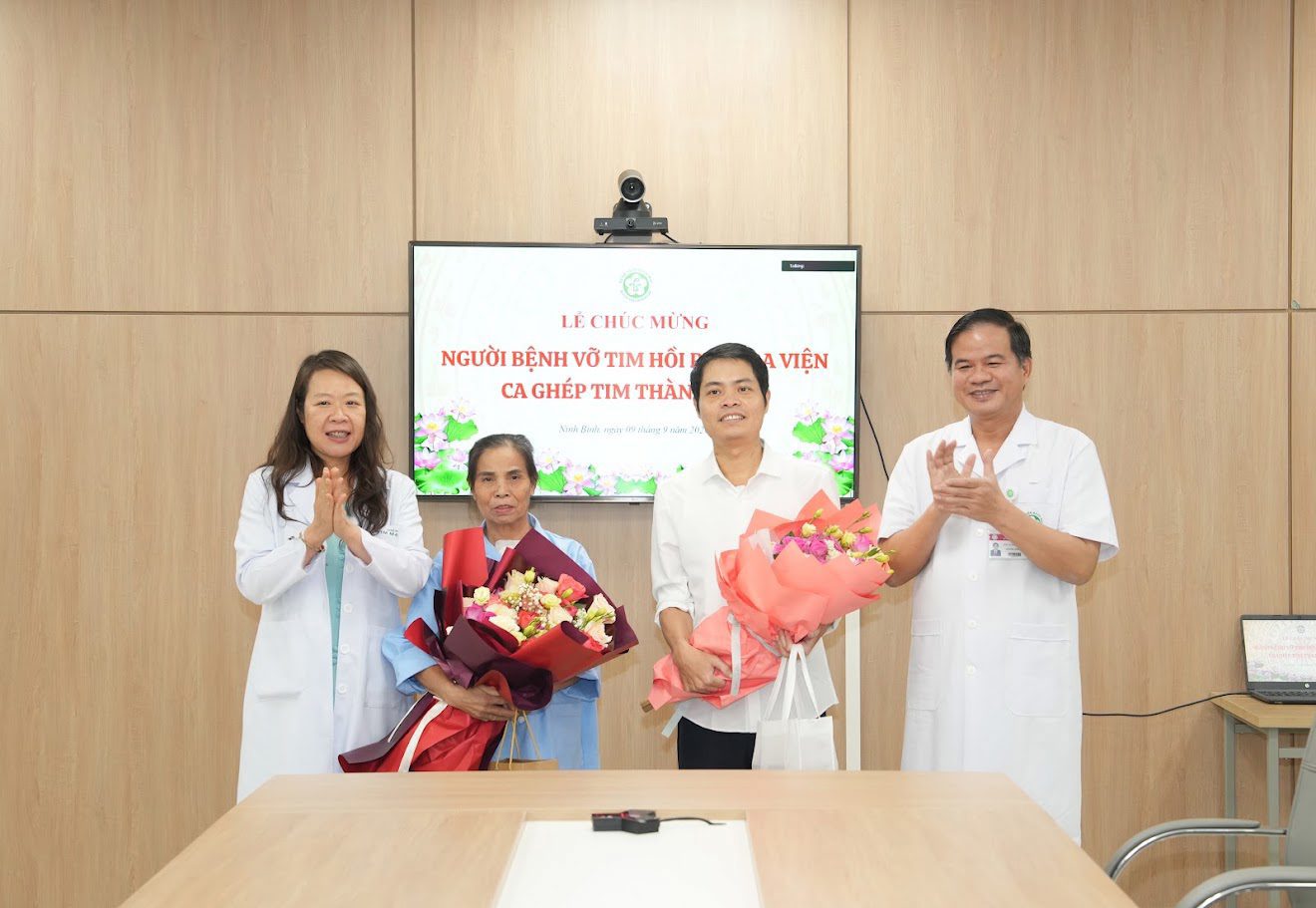
Assoc. Prof. Dr. Dao Xuan Cơ - Director of the hospital (right) and Assoc. Prof. Dr. Nguyen Thi Thu Hoai - Director of the Cardiovascular Institute (left) congratulate the patient with a ruptured heart on her recovery and discharge, and the successful heart transplant from a brain-dead donor
Instead of transferring the patient in a critical condition, the team decided to operate on a beating heart (off-pump), aiming to utilize every precious minute.
The doctors used autologous pericardium combined with biological glue to patch the rupture site. The surgery was successful. On the very same evening, Ms. Yeu regained consciousness to the joy and astonishment of her family.
"Indeed, returning from the jaws of death is incomparable," Ms. Yeu emotionally shared as her health gradually stabilized.
60 seconds of resurrection and a 27-day journey to reclaim life
At the same time, at Bach Mai Hospital, a 40-year-old male patient with end-stage heart failure, with a cardiac function of only 17%, underwent a heart transplant from a 29-year-old organ donor.
When life was only measurable in remaining time, the donated heart became an invaluable gift, opening up a new opportunity for life for the patient.
The special moment took place about 60 seconds after releasing the aortic cross-clamp. The donated heart began to beat again in the recipient's chest, marking a crucial turning point in the transplant procedure.
However, the journey to reclaim life did not stop there. Following the transplant, the patient continued to face multi-organ failure and postoperative infection.
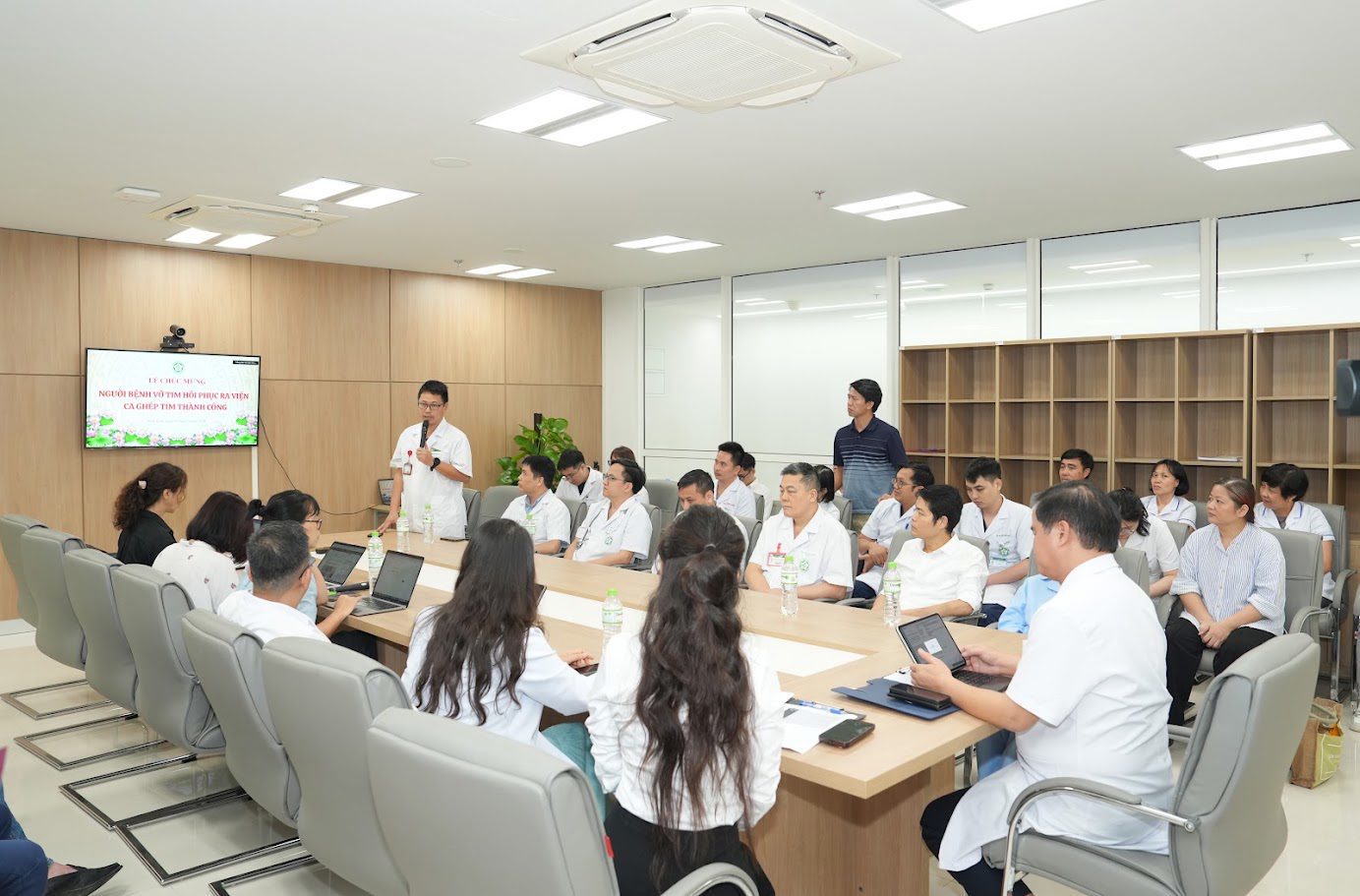
Facing this exceptionally difficult situation, Assoc. Prof. Dr. Dao Xuan Co, Director of Bach Mai Hospital, requested the entire team to focus intensely, with the determination: "Only victory is permitted, failure is not allowed."
More than 100 professors, doctors, and medical staff were mobilized to participate in the treatment, closely monitoring every vital sign day and night. After 27 days of treatment and 9 hospital-wide consultations, along with the support of Hue Central Hospital, the patient made a spectacular recovery.
One Bach Mai - One quality standard
Behind the success of the two cases are the professional competence, interdisciplinary coordination, and high sense of responsibility of the medical team at Bach Mai Hospital.
In particular, saving Ms. Yeu right at the Bach Mai Ninh Bình facility instead of transferring her demonstrated the effectiveness of the professional connection model between the two facilities. The capacity of the last-line hospital is brought closer to the people, helping patients in critical conditions have more opportunities for timely emergency care.
Assoc. Prof. Dr. Dao Xuan Co once emphasized: "A truly strong last-line hospital is not about keeping a large number of patients, but about making the lower levels stronger."
Accordingly, Bach Mai Hospital aims not only at treatment but also at training, technology transfer, and building solid professional teams at the local facilities, so that patients can enjoy high-quality medical services right in their locality.
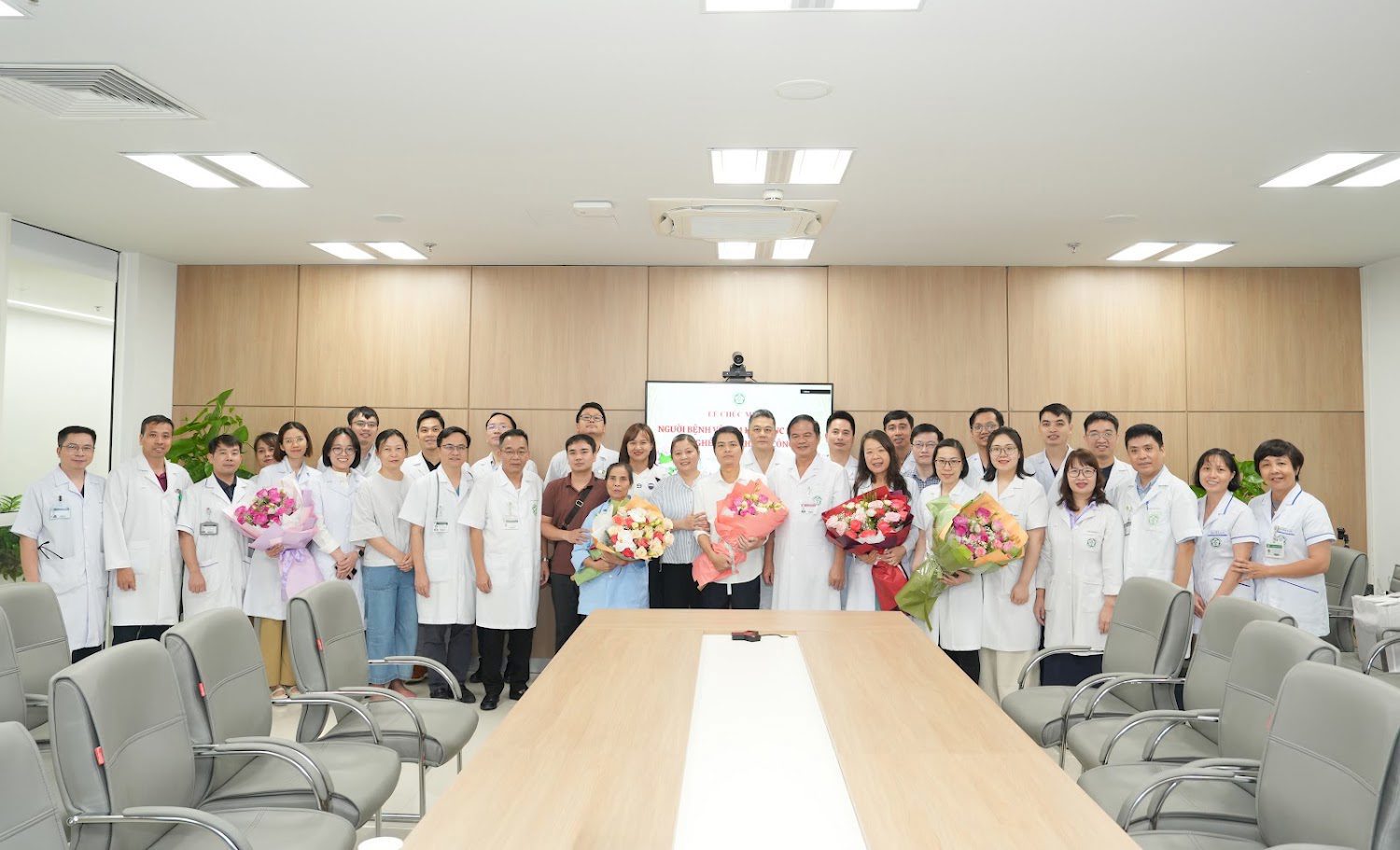
Behind modern equipment and advanced techniques remains the decisive factor: responsibility, dedication, and love for patients.
The tears of physicians witnessing patients return from the borderline of life and death are not only professional joy, but also a testament to the humanistic value of the medical profession.
Two cases, two different journeys, yet they meet at one point: faith in life and the relentless efforts of healers.
Miracles are created not only by medical techniques, but also by coordination, responsibility, and the hearts of those who save lives - contributing to continuing faith in an increasingly developing Vietnamese healthcare system, with patients and human life at the center.
Dieu Hien - Thanh Duong


78 Giai Phong Street, Kim Lien Ward, Hanoi City
1900.888.866
096.985.1616
Department of Examination on Demand:
Department of Examination: Monday - Friday
National Route 21B, Liem Tuyen Ward, Ninh Binh Province
1900.888.866
0969851616
Outpatient Department on Demand (On-demand Clinic)
+ Monday - Friday:
+ Saturday - Sunday:
Outpatient Department (Standard Clinic): Monday - Friday
+ Working hours:
Main responsible person: Associate Professor, Dr. Dao Xuan Co - Hospital Director




