 Ngày đăng: 21/08/2026
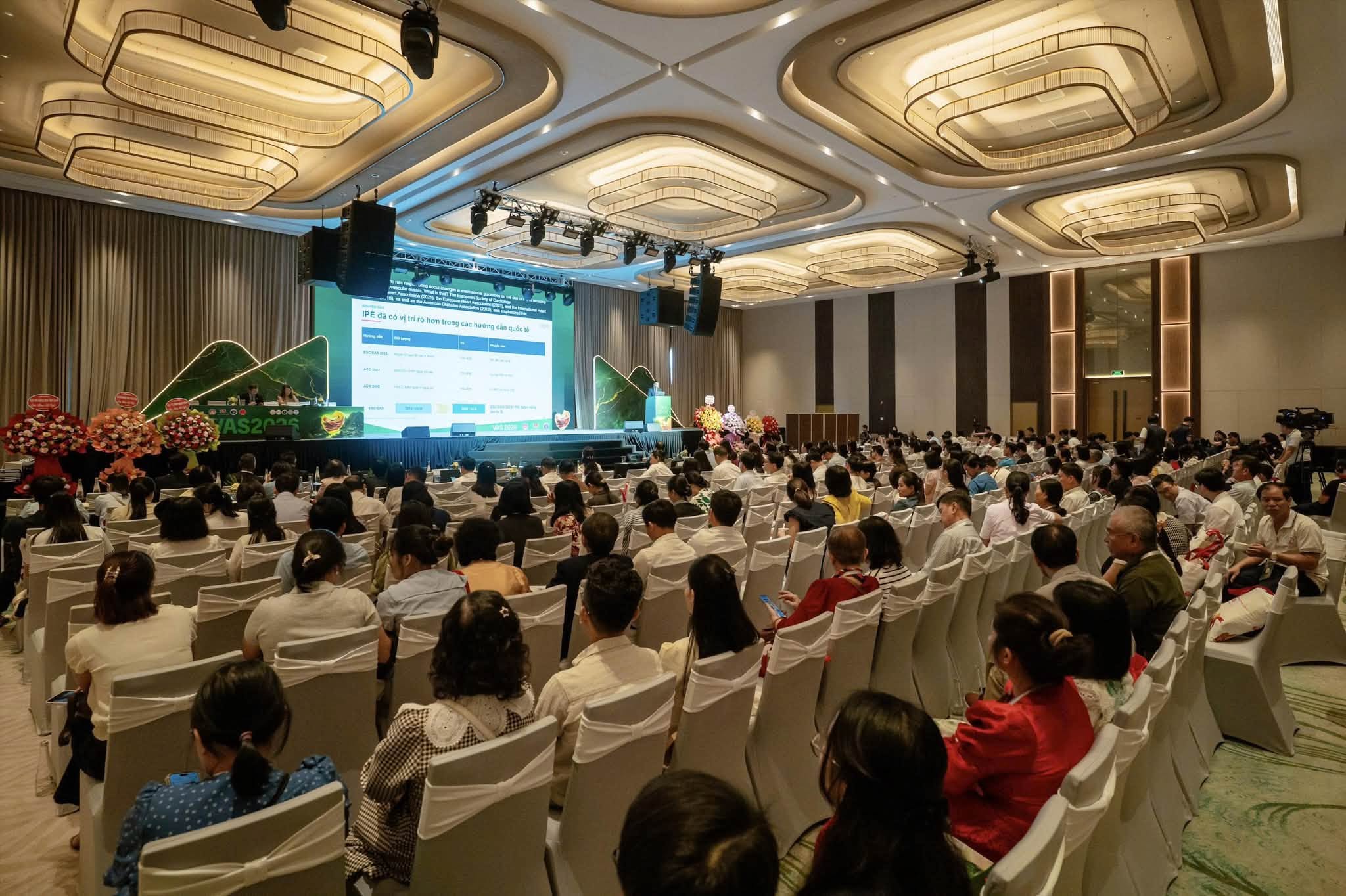
The 4th Vietnam Atherosclerosis Society Scientific Congress - VAS 2026, held on August 15-16, 2026 in Ninh Binh, is a major scientific forum updating new advances in risk identification, prevention, and treatment of atherosclerotic cardiovascular disease. The active participation of experts from the Heart Institute - Bach Mai Hospital has contributed to connecting scientific evidence with clinical practice and aiming for comprehensive, long-term patient management.
With the theme "From risk factors to precise prevention: A new era in the management of atherosclerotic cardiovascular disease", VAS 2026 gathered nearly 1,000 delegates, 186 scientific reports, and 40 professional sessions. The conference content ranged from traditional risk factors, novel biomarkers, dyslipidemia, cardiorenal-metabolic conditions to aggressive treatment and long-term patient management.
Not waiting for an event to happen before starting prevention
At the conference, Assoc. Prof. Dr. Nguyen Thi Thu Hoai - Director of the Heart Institute, Bach Mai Hospital co-chaired the CME session "Optimizing the management of atherosclerotic cardiovascular disease", and simultaneously presented a topic on the new prospects of SGLT2 inhibitors in the era of early intervention to prevent atherosclerotic cardiovascular events. The prominent message is that atherosclerosis does not form from a single factor but is the cumulative result of hypertension, dyslipidemia, diabetes, overweight-obesity, smoking, genetic factors, and many metabolic disorders over a long period. Therefore, modern management must range from early detection, correct risk stratification to timely intervention, instead of waiting for organ damage or cardiovascular events to appear.

English: This approach also expands from individual diseases to the cardiorenal-metabolic continuum, where the goal is not just to improve a test number but to protect target organs and reduce the risk of events throughout the patient's life journey.
After myocardial infarction: successful treatment does not end at the procedure
As one of the presenters at VAS 2026, Dr. Hoang Viet Anh - Head of the Department of Sports Cardiology and Cardiac Rehabilitation, Heart Institute - Bach Mai Hospital focused on questions very close to practice: How can post-myocardial infarction patients continue to be protected once they leave the hospital? How to maintain LDL-C at target? And what to do when cardiovascular risk persists even though LDL-C has been controlled?
The reports emphasized three parallel pillars after a coronary event: Symptom control, prevention of recurrent events, and maintaining long-term treatment adherence. Simplifying the regimen in appropriate cases can help patients easily remember medications, maintain treatment, and limit the situation of stopping medication arbitrarily when feeling that health has stabilized.
With dyslipidemia, "reduced LDL-C" does not mean "target reached". In very high-risk patients after acute coronary syndrome, treatment needs to aim at lowering LDL-C deep enough, early enough, and maintaining it sustainably; when high-intensity statin has not met the goal, evaluation to intensify treatment is needed instead of delaying. Another challenge is "therapeutic inertia" - when the target is not reached but regimen adjustment is still delayed.
LDL-C reaches target but cardiovascular risk may still persist
VAS 2026 also spent a lot of discussion on the concept of "Residual cardiovascular risk". Even when LDL-C has been controlled, patients may still have risks related to triglycerides and triglyceride-rich lipoproteins/remnants, Lp(a), inflammation, diabetes, obesity, kidney disease, smoking, or physical inactivity. Therefore, residual risk needs to be viewed as an "ecosystem" rather than a single test index.
In the report on hypertriglyceridemia, Dr. Hoang Viet Anh noted that the foundation of treatment remains lifestyle modification, addressing secondary causes, and optimizing statins. In appropriately selected patient groups, evidence from REDUCE-IT shows that icosapent ethyl can help further reduce cardiovascular events; however, this benefit cannot be extrapolated to all types of omega-3 or regular "fish oil". Treatment must be for the right patient, the right preparation, the right dose, and accompanied by long-term safety monitoring.
From atherosclerosis management to chronic disease care model
From the scientific sessions at VAS 2026, Assoc. Prof. Dr. Nguyen Thi Thu Hoai emphasized that the management of atherosclerosis should be viewed as a continuous process: screening - early detection - risk stratification - multi-factor control - target-directed treatment - long-term monitoring and management. This is also the core mindset in modern chronic disease care: not waiting for complications to intervene, but proactively recognizing risk, early prevention, and accompanying patients throughout the treatment process.
With the role of a professional focal point in the national program for chronic disease management, the Heart Institute - Bach Mai Hospital not only undertakes the treatment of complex cardiovascular diseases at the tertiary level but also holds an important position in building management models, training and transferring expertise, connecting network levels, standardizing prevention, treatment, rehabilitation, and long-term patient monitoring. Therefore, the management of atherosclerosis is not only the task of the cardiology specialty but also an important link in the strategy for managing non-communicable diseases and chronic diseases in general.
The presence of the Heart Institute - Bach Mai Hospital at VAS 2026 continues to affirm the orientation of connecting science with practice and putting the patient at the center. The ultimate goal is not just to save patients when events occur, but to help everyone detect risks earlier, control disease better, live healthier lives, and minimize preventable events.
Dr. Hoang Thi Phu Bang



78 Giai Phong Street, Kim Lien Ward, Hanoi City
1900.888.866
096.985.1616
Department of Examination on Demand:
Department of Examination: Monday - Friday
National Route 21B, Liem Tuyen Ward, Ninh Binh Province
1900.888.866
0969851616
Outpatient Department on Demand (On-demand Clinic)
+ Monday - Friday:
+ Saturday - Sunday:
Outpatient Department (Standard Clinic): Monday - Friday
+ Working hours:
Main responsible person: Associate Professor, Dr. Dao Xuan Co - Hospital Director




