 Ngày đăng: 15/09/2026
The IASLC World Conference on Lung Cancer 2026 (WCLC 2026) took place from September 12 to 15 in Seoul, South Korea, gathering more than 8,000 experts, physicians, and researchers. At the conference, the Vietnamese delegation shared practical experiences in the prevention, control, and care of lung cancer patients. Associate Professor, Ph.D., M.D. Pham Cam Phuong, Director of the Institute of Nuclear Medicine and Oncology, Bach Mai Hospital, was invited to deliver a presentation at the plenary session on Global Health and Health Economics.
From clinical practice
Under the theme “Lung Cancer Care in Vietnam: From Public Health to Palliative Care”, the presentation by Assoc. Prof., Ph.D., M.D. Pham Cam Phuong focused on reflecting the current situation, advancements in diagnosis and treatment, and challenges in lung cancer patient care in Vietnam.
According to Globocan data mentioned in the report, Vietnam records more than 23,000 new cases of lung cancer each year. Notably, over 65% of patients are diagnosed at stage IV. Late detection is one of the major challenges, affecting treatment efficacy and increasing the financial burden on patients and the healthcare system.
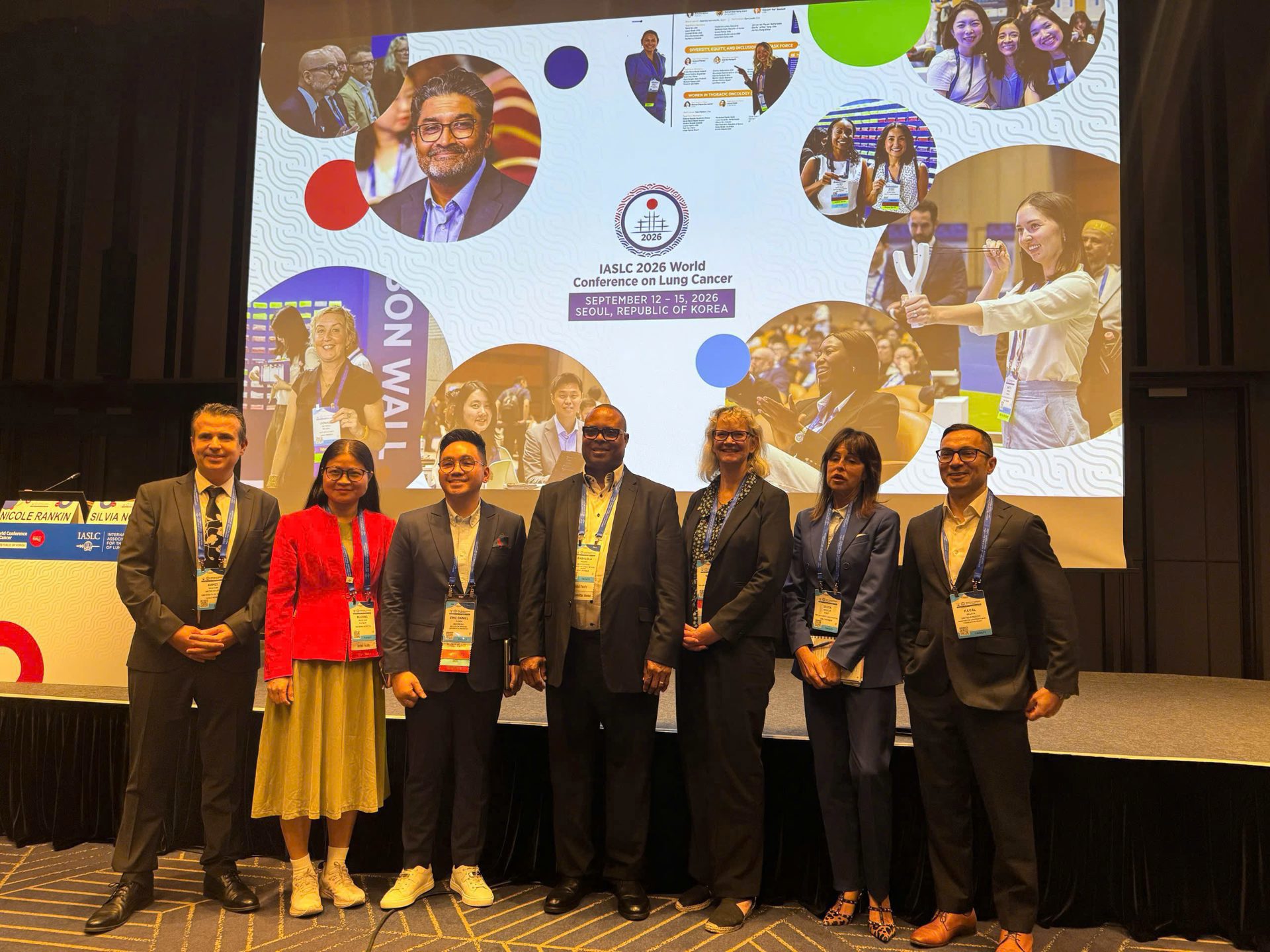
Assoc. Prof., Ph.D. Pham Cam Phuong - Director of the Institute of Nuclear Medicine and Oncology, Bach Mai Hospital (in red shirt) and delegates at the International Conference on Lung Cancer 2026
From this reality, the report emphasizes the role of early detection and the application of technology in lung cancer screening. Low-dose computed tomography (LDCT) techniques, combined with artificial intelligence software such as BM Lung Software, are applied to assist in detecting early-stage lung lesions.
In disease diagnosis and evaluation, modern imaging techniques such as PET/CT and SPECT/CT are combined with molecular biology testing methods. Tests for EGFR, ALK, KRAS mutations, next-generation sequencing (NGS), and PD-L1 immunohistochemistry provide additional information on the biological characteristics of the tumor, serving as a basis for selecting the appropriate treatment method for each patient.
Multidisciplinary, Personalized Treatment
One content emphasized in the report is the multidisciplinary tumor board (MDT) model in lung cancer treatment at Bach Mai Hospital.
According to Assoc. Prof., Ph.D., M.D. Pham Cam Phuong, complex cases are consulted with the participation of multiple specialties, including oncology, nuclear medicine, thoracic surgery, diagnostic imaging, pathology, clinical pharmacy, and nursing.
On the basis of comprehensive evaluation, experts jointly agree on a treatment strategy suitable for each case, ranging from surgery and radiotherapy—including stereotactic body radiation therapy (SBRT)—to targeted therapy and immunotherapy.
The multidisciplinary approach helps limit reliance on a single treatment method while increasing the ability to select a strategy tailored to the disease characteristics and specific condition of the patient.
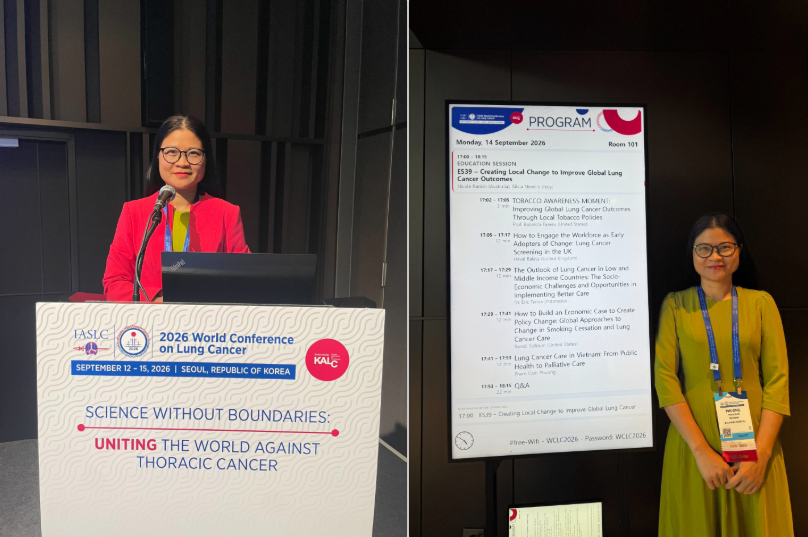
Assoc. Prof., Ph.D., M.D. Pham Cam Phuong, Director of the Institute of Nuclear Medicine and Oncology - Bach Mai Hospital at the World Conference on Lung Cancer 2026
Comprehensive care, improving quality of life
Cancer treatment focuses not only on controlling the disease but also on caring for the patient's quality of life. This was also a content mentioned in the report at WCLC 2026.
In the spirit of the Ministry of Health's Guidelines on Palliative Care, patient care at the Institute of Nuclear Medicine and Oncology, Bach Mai Hospital is emphasized in many aspects, from pain control and nutritional support to mental health care.
Psychological support, relaxation, and patient connection activities, including "Laughter Yoga" classes, were shared at the conference as part of the comprehensive care model.
This approach aims to accompany patients throughout the treatment process, not only in terms of disease control but also physically, mentally, and in quality of life.
From treatment to public health
Besides professional advancements, the report also mentioned barriers to cancer care in developing countries, including Vietnam, such as costs, the habit of not proactively undergoing periodic health checkups, and the shortage of certain home healthcare services.
From these practical issues, the orientation for the 2026-2027 period is proposed to focus on perfecting national lung cancer screening guidelines and promoting annual periodic health checkup policies for the public.
Participating in WCLC 2026 is an opportunity for Vietnamese experts to share practical experiences with the international medical community and update new advancements in the field of lung cancer.
From early detection, accurate diagnosis, personalized treatment to palliative care, the journey of caring for cancer patients is being approached in a more comprehensive manner. This is also the basis for Vietnamese medicine to continue improving treatment quality, expanding service accessibility, and aiming to reduce the burden of cancer in the community.
Kim Long



78 Giai Phong Street, Kim Lien Ward, Hanoi City
1900.888.866
096.985.1616
Department of Examination on Demand:
Department of Examination: Monday - Friday
National Route 21B, Liem Tuyen Ward, Ninh Binh Province
1900.888.866
0969851616
Outpatient Department on Demand (On-demand Clinic)
+ Monday - Friday:
+ Saturday - Sunday:
Outpatient Department (Standard Clinic): Monday - Friday
+ Working hours:
Main responsible person: Associate Professor, Dr. Dao Xuan Co - Hospital Director




