 Ngày đăng: 20/07/2026
Many women live in fear of developing cancer when witnessing their mothers or close blood relatives pass away one by one from breast cancer or ovarian cancer. The question "Will I be the next one?" stems not only from psychological concerns but also has a scientific basis.
According to experts, mutations in the two genes BRCA1 and BRCA2 significantly increase the risk of developing cancer. Individuals carrying a BRCA1/BRCA2 mutation have a risk of developing breast cancer of up to approximately 80% and ovarian cancer of approximately 40%. Not only women, but men carrying this gene mutation also have a high risk of developing prostate cancer; in both sexes, the risk of pancreatic cancer is also increased.
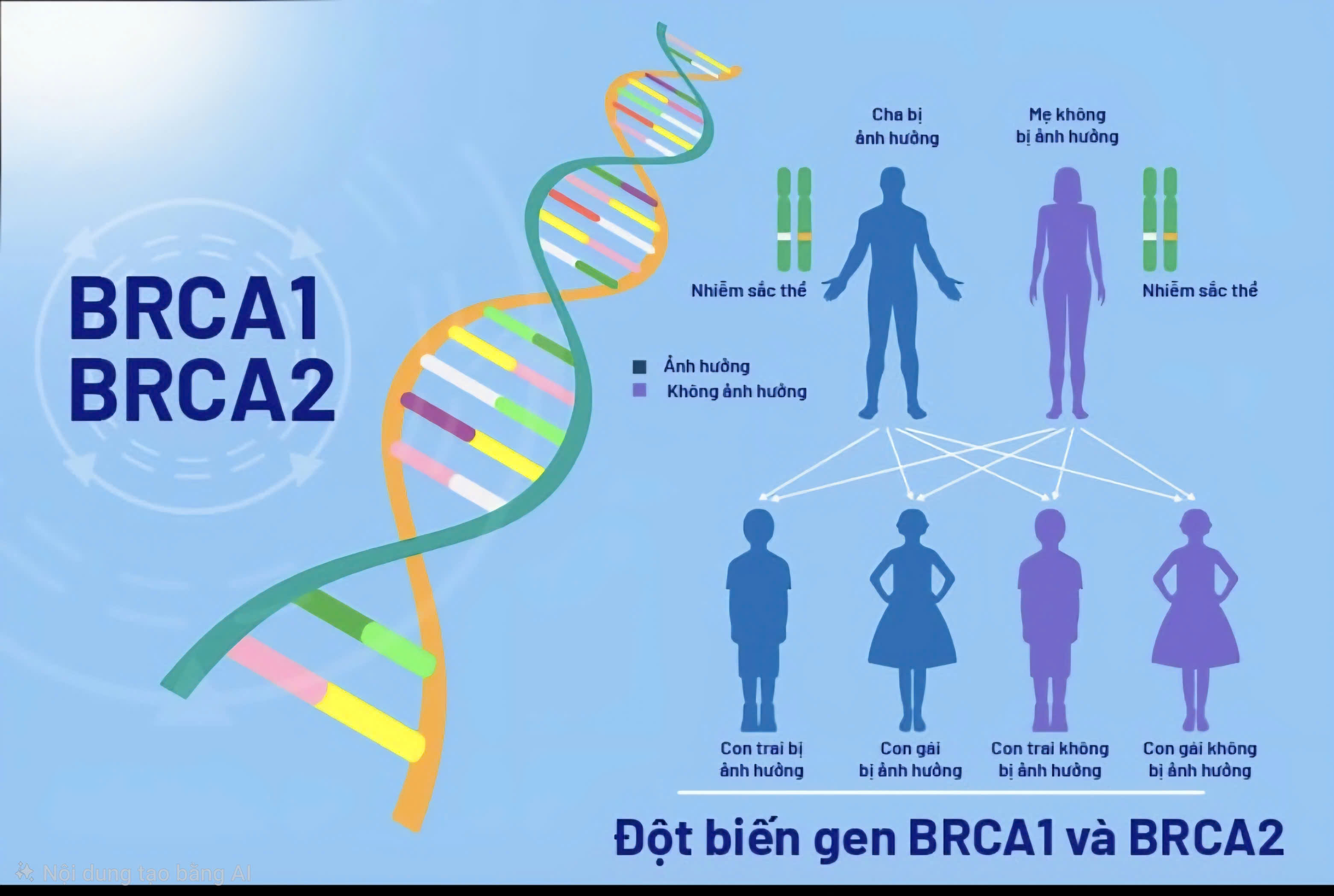
Individuals with a family history of BRCA gene mutations should undergo genetic testing for screening and evaluation.
Who should get tested for BRCA1/BRCA2?
Assoc. Prof. Dr. Pham Cam Phuong recommends that individuals in the following risk groups consider undergoing testing:
Knowing the risk to proactively prevent it
According to experts, BRCA1/BRCA2 testing is not intended to definitively confirm whether a person will develop cancer, but rather to identify the risk in order to build an appropriate monitoring and prevention plan.
At the Institute of Nuclear Medicine and Oncology, Bach Mai Hospital, BRCA1/BRCA2 gene mutation testing is currently performed using molecular biotechnology technology, with a cost of approximately 10.3 million VND.
Test results can provide two important values:
|
Registration information for examination:
|
Note: BRCA1/BRCA2 mutations increase the risk of developing cancer but do not mean that one will definitely contract the disease. The indication for testing must be consulted by a specialist based on personal and family history. This is also the basis for developing an appropriate screening and prevention strategy for each individual.
Dieu Hien



78 Giai Phong Street, Kim Lien Ward, Hanoi City
1900.888.866
096.985.1616
Department of Examination on Demand:
Department of Examination: Monday - Friday
National Route 21B, Liem Tuyen Ward, Ninh Binh Province
1900.888.866
0969851616
Outpatient Department on Demand (On-demand Clinic)
+ Monday - Friday:
+ Saturday - Sunday:
Outpatient Department (Standard Clinic): Monday - Friday
+ Working hours:
Main responsible person: Associate Professor, Dr. Dao Xuan Co - Hospital Director




