 Ngày đăng: 24/05/2026Tác giả: Nguyen Ha
From a small scratch on the hands or feet, a tiny metal fragment piercing the skin, or simply stepping on a mud-covered piece of broken brick, many people never imagine they could end up fighting for their lives against tetanus.
Recently, Bach Mai Hospital has continuously admitted severe tetanus cases for treatment at the Bach Mai Institute of Tropical Medicine. Notably, most patients had previously been healthy and living normal working lives.
Many cases began with only minor injuries: metal filings penetrating the hand during work, cuts from sharp objects while laboring, infections after dental procedures, or stepping on broken bricks covered with mud at construction sites. Believing the injuries were “too minor to matter,” most patients treated the wounds themselves at home and continued working without getting tetanus vaccination or preventive care.
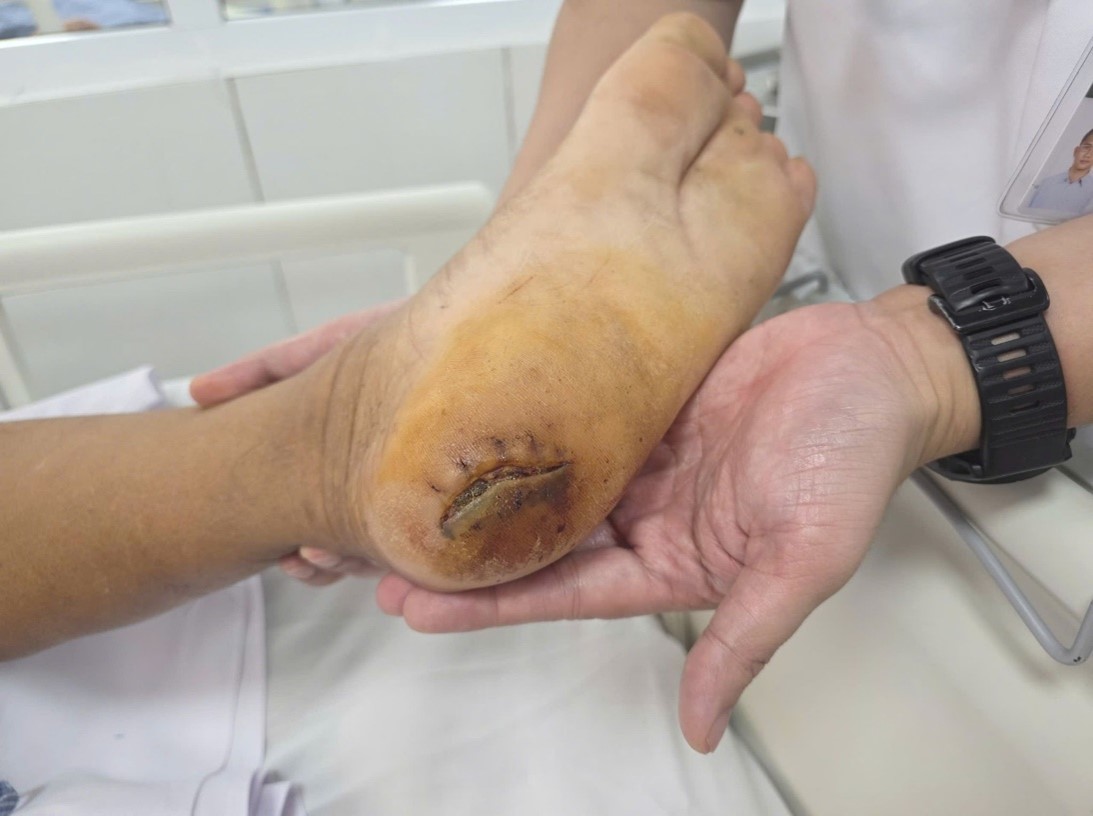
A foot injury caused by stepping on a broken brick led to tetanus infection
Only when symptoms such as difficulty speaking, jaw stiffness, trouble swallowing, chest tightness, or muscle rigidity appeared did they seek medical attention. By then, the disease had often progressed to a dangerous stage.
According to doctors at the Bach Mai Institute of Tropical Medicine, tetanus is a dangerous acute infectious disease caused by toxins produced by the bacterium Clostridium tetani. The bacteria are commonly found in soil, mud, dust, and animal waste, and can enter the body through even very small wounds.
Once inside the body, the bacteria release toxins that attack the nervous system, causing generalized muscle stiffness and severe spasms. Patients may develop lockjaw, inability to open the mouth, whole-body rigidity, laryngeal spasms, and respiratory failure.
Many patients admitted to Bach Mai Hospital were already in critical condition, requiring tracheostomy, mechanical ventilation, and prolonged blood purification therapy. Some developed severe complications such as autonomic nervous system dysfunction, low blood pressure, septic shock, and severe pneumonia, resulting in treatment lasting weeks or even months, with a high risk of death.
Doctors noted that there is currently no specific treatment capable of neutralizing tetanus toxin once it has bound to the nervous system. Treatment mainly focuses on intensive care, controlling spasms, respiratory support, and preventing complications. Despite advances in modern medicine, tetanus still carries a high mortality rate if detected late.
Dr. Doan Thu Tra, Acting Director of the Bach Mai Institute of Tropical Medicine, warned that many people remain careless about skin injuries, particularly freelance laborers, mechanics, construction workers, and farmers.

Even a small puncture wound caused by a sharp object, a wound contaminated with soil, sand, or rust, or crushed tissue can create favorable low-oxygen conditions for tetanus bacteria to grow. More concerning is that many adults have not received tetanus booster shots for years, leaving their immunity weakened.
Currently, the patients are being closely monitored and treated to support recovery. However, according to doctors, the most important factor remains proper prevention and not missing the “golden window” for post-injury prophylaxis.
When suffering a wound at risk of contamination, people should immediately wash it thoroughly with clean water and soap, disinfect it properly, and absolutely avoid applying leaves, traditional herbal remedies, or substances of unknown origin to the wound. At the same time, they should seek medical care promptly for risk assessment and appropriate treatment.
Experts emphasize that vaccination is the most important measure for preventing tetanus. Adults should receive booster shots periodically as recommended. People who frequently work in high-risk environments such as soil, mud, metal workshops, or construction sites should pay even greater attention to full vaccination. In cases of high-risk injuries, patients should seek medical attention early to determine whether tetanus antitoxin serum or vaccination is needed.
Tetanus is a dangerous disease, but it is entirely preventable through vaccination. Do not let carelessness over a minor wound result in weeks in intensive care — or even the loss of life.



78 Giai Phong Street, Kim Lien Ward, Hanoi City
1900.888.866
096.985.1616
Department of Examination on Demand:
Department of Examination: Monday - Friday
National Route 21B, Liem Tuyen Ward, Ninh Binh Province
1900.888.866
0969851616
Outpatient Department on Demand (On-demand Clinic)
+ Monday - Friday:
+ Saturday - Sunday:
Outpatient Department (Standard Clinic): Monday - Friday
+ Working hours:
Main responsible person: Associate Professor, Dr. Dao Xuan Co - Hospital Director




