 Ngày đăng: 15/04/2026Tác giả: Nguyen Ha - The Anh
Amid the continuous transformation of the healthcare sector, collaboration among leading institutions is increasingly seen as a “key” to enhancing professional capacity and improving treatment quality. The technical transfer signing ceremony between Bach Mai Hospital and National Lung Hospital, held on the afternoon of April 14, 2026, was not merely a professional activity but also a milestone reflecting strategic vision and a shared commitment to public health.
A milestone advancing comprehensive strategic cooperation
Previously, on May 21, 2025, the two hospitals signed a comprehensive cooperation agreement for the 2025-2030 period, laying the foundation for a long-term, in-depth, and sustainable partnership.
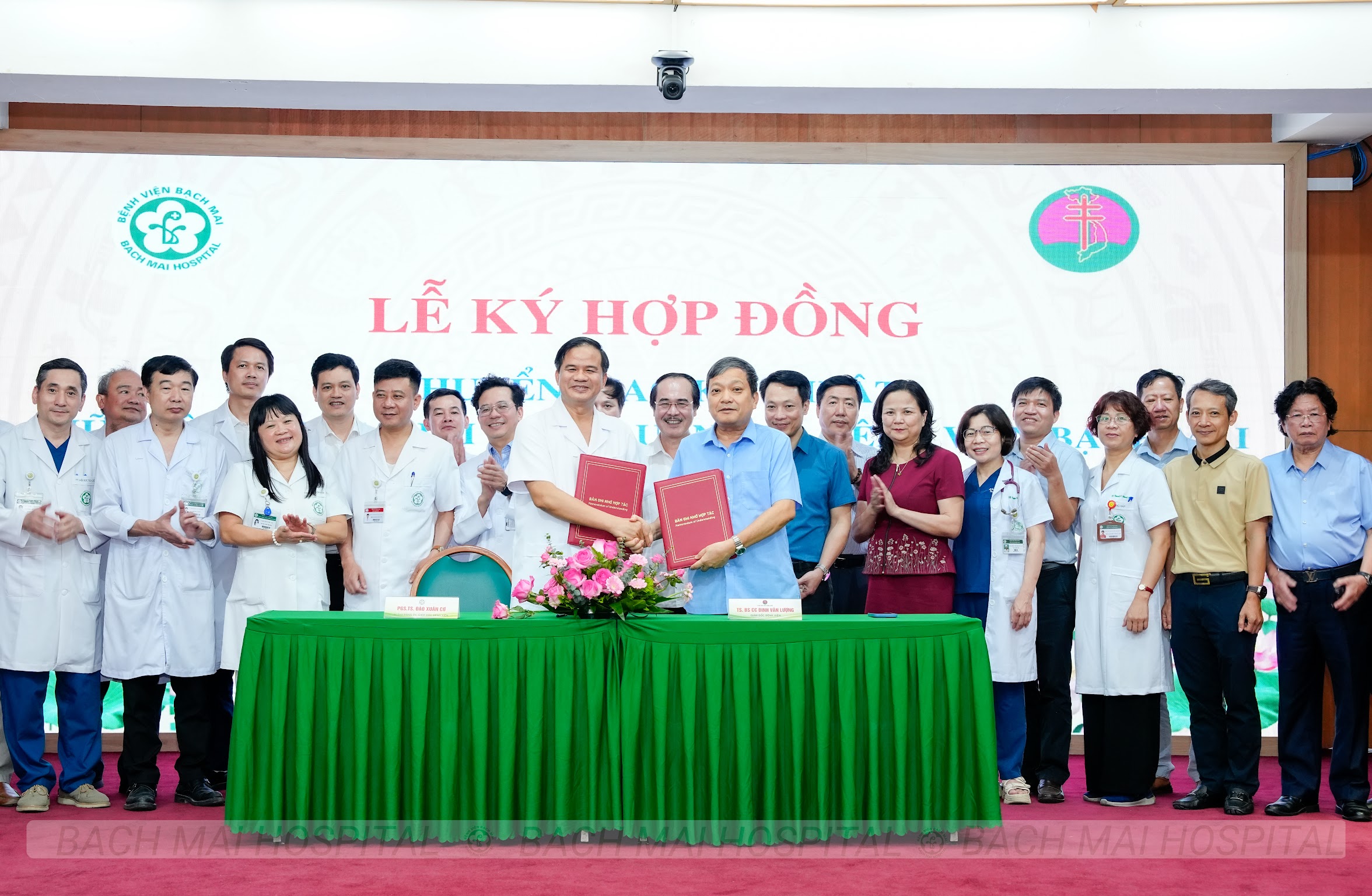
Building on this foundation, numerous collaborative activities have been effectively implemented, particularly in specialized fields such as intensive care, interventional medicine, and organ transplantation. This latest technical transfer agreement represents a concrete step in realizing prior commitments, bringing strategic orientations into practical application.
The event was attended by the boards of directors, leadership teams, and leading experts from various departments, institutes, and centers of both hospitals.
“Not only transferring techniques, but an entire system”
Speaking at the ceremony, Dao Xuan Co, Director of Bach Mai Hospital, emphasized that cooperation should go beyond mere skill transfer to encompass a comprehensive transfer of professional models.
“Technical transfer today is not only about imparting skills but also about transferring an entire system-from procedures and treatment protocols to internationally standardized practices-thereby building sustainable and autonomous capacity for each team and specialty,” he stated.
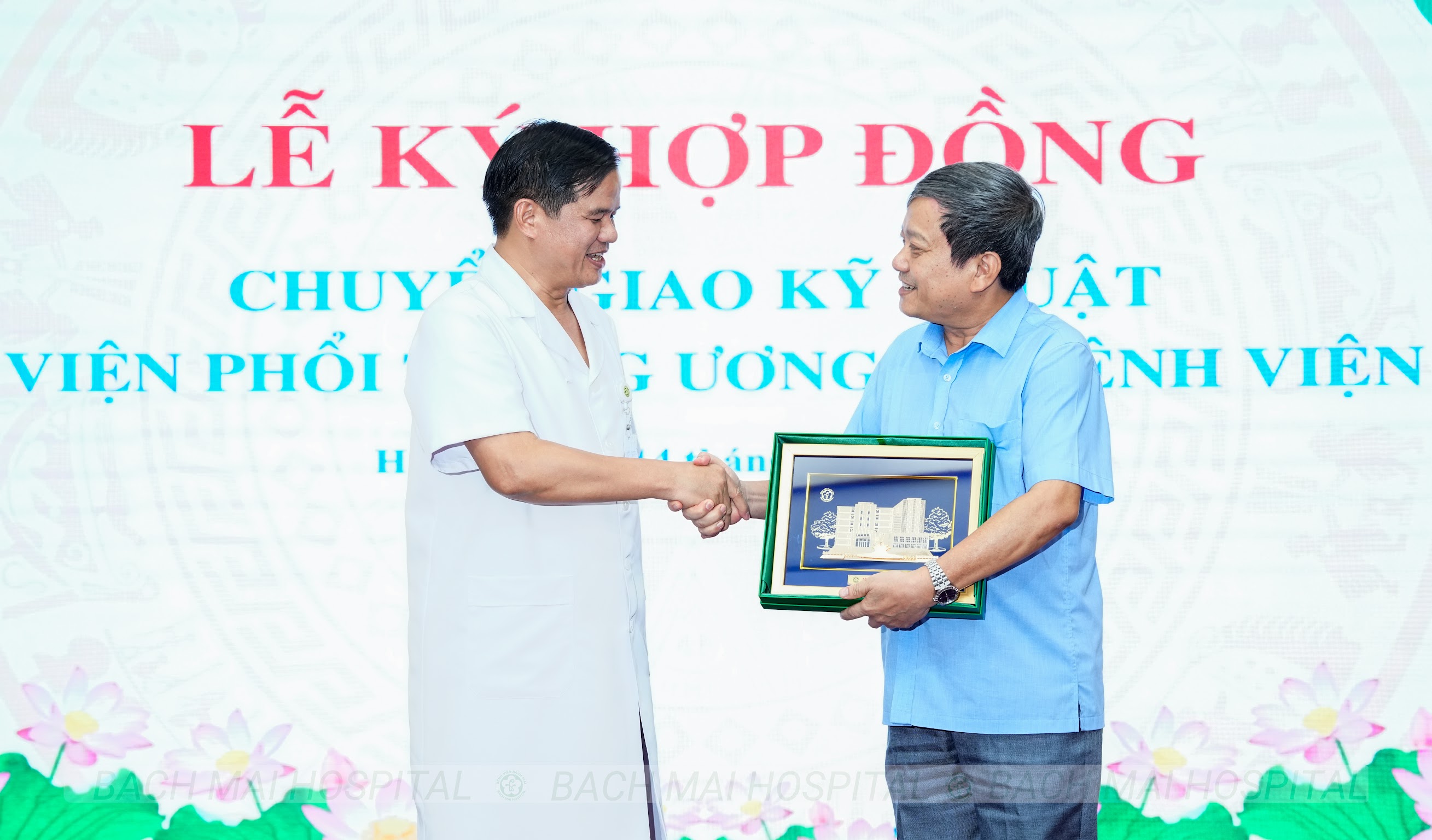
The partnership between the two leading hospitals not only signifies professional collaboration but also opens up a model of exemplary linkage within the healthcare system.
According to him, this marks a significant milestone, clearly demonstrating the spirit of collaboration among leading institutions, all striving toward the ultimate goal of improving treatment quality and healthcare services for the public.
The strategic complementarity between the two hospitals provides a solid foundation for cooperation: the National Lung Hospital as the leading institution in respiratory diseases, and Bach Mai Hospital as a top-tier general hospital with strengths in intensive care, cardiology, stroke management, and the treatment of severe cases. This synergy has been clearly demonstrated through complex transplant cases, including one organ donation that saved eight patients—an achievement of profound humanitarian significance.
“Two hospitals as one”: practical and effective coordination
From practical experience, leaders of both hospitals stressed that success in medicine-especially in organ transplantation-often lies in the smallest details.
A typical example shared at the ceremony involved lung procurement techniques: ensuring that the bronchus is preserved at an adequate length and in accordance with proper technique can significantly facilitate subsequent transplantation. Mastery of technique, they noted, is not merely about performing a procedure but ensuring it is done with the highest standards of precision and safety. This reflects the overarching philosophy of the partnership: standardization, synchronization, safety, and tangible effectiveness.
According to Dinh Van Luong, Director of the National Lung Hospital, cooperation between the two institutions has become seamless: “Since the previous agreement, the two hospitals have operated in close coordination. When a transplant case arises, every stage-from transportation and reception to surgery and intensive care-runs smoothly.”
This collaboration extends beyond theory into real clinical practice, particularly in lung transplantation-one of the most complex medical procedures. To date, dozens of lung transplant cases have been successfully performed, with outcomes approaching international standards.
“There is no special secret; success is built on standardized international protocols, close coordination, and the genuine sense of responsibility of each individual,” he affirmed.
Toward a comprehensive and sustainable collaboration ecosystem
Building on existing achievements, the two hospitals have agreed to focus on four major orientations:
Standardizing and synchronizing professional practices: Unifying technical procedures and treatment protocols to ensure consistent quality.
Developing highly skilled expert teams: Promoting hands-on training to form strong teams capable of independently managing complex cases.
Linking technical transfer with scientific research: Enhancing research collaboration and aiming for international publications to elevate Vietnam’s medical standing.
Building a long-term collaboration ecosystem: Moving beyond individual techniques toward comprehensive and sustainable cooperation.
Concluding the ceremony, both sides emphasized a shared message of partnership: “If you want to go fast, go alone. If you want to go far, go together.”
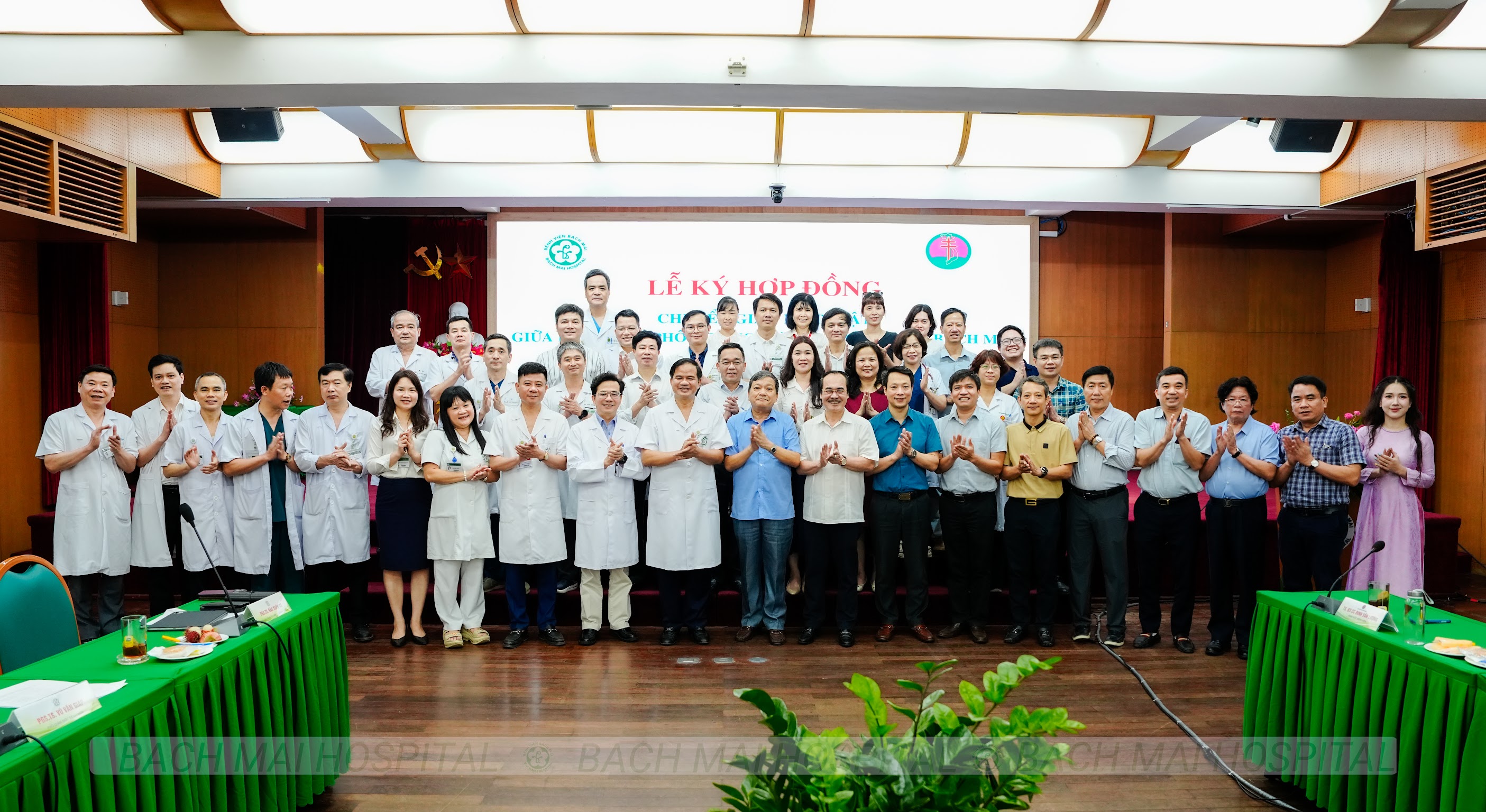
This collaboration between two leading hospitals not only represents professional cooperation but also establishes a model partnership within Vietnam’s healthcare system-where all efforts are ultimately measured by tangible benefits for patients.
In the context of rising healthcare demands, such collaborative models form a crucial foundation for Vietnam’s healthcare sector to advance further-more sustainably, more systematically, and more humanely.
On the sidelines of the ceremony, the National Lung Hospital delegation visited various departments, institutes, and centers at Bach Mai Hospital, gaining firsthand insights into the advanced technologies, equipment, and medical capabilities of one of the country’s leading healthcare institutions.



78 Giai Phong Street, Kim Lien Ward, Hanoi City
1900.888.866
096.985.1616
Department of On-Demand Medical Examination:
Outpatient Department: Monday – Friday
Main responsible person: Associate Professor, Dr. Dao Xuan Co - Hospital Director




