 Ngày đăng: 21/05/2026Tác giả: Dieu Hien - The Anh
On May 18-19, 2026, Bệnh viện Bạch Mai, in collaboration with the Vietnam Association of Diabetes and Endocrinology, hosted an international scientific conference themed “Updates in the Diagnosis and Treatment of Diabetes and Its Complications,” attracting more than 600 physicians participating both in person and online.
The conference was among the key scientific events marking the 115th anniversary of Bach Mai Hospital, reaffirming the hospital’s pioneering role in international integration, continuing medical education, and the transfer of advanced techniques in endocrinology and metabolic medicine.
The event brought together leading experts from Harvard Medical School, Beth Israel Deaconess Medical Center, the Joslin Diabetes Center, as well as major Vietnamese hospitals including 108 Military Central Hospital, the National Hospital of Endocrinology, and Bach Mai Hospital.
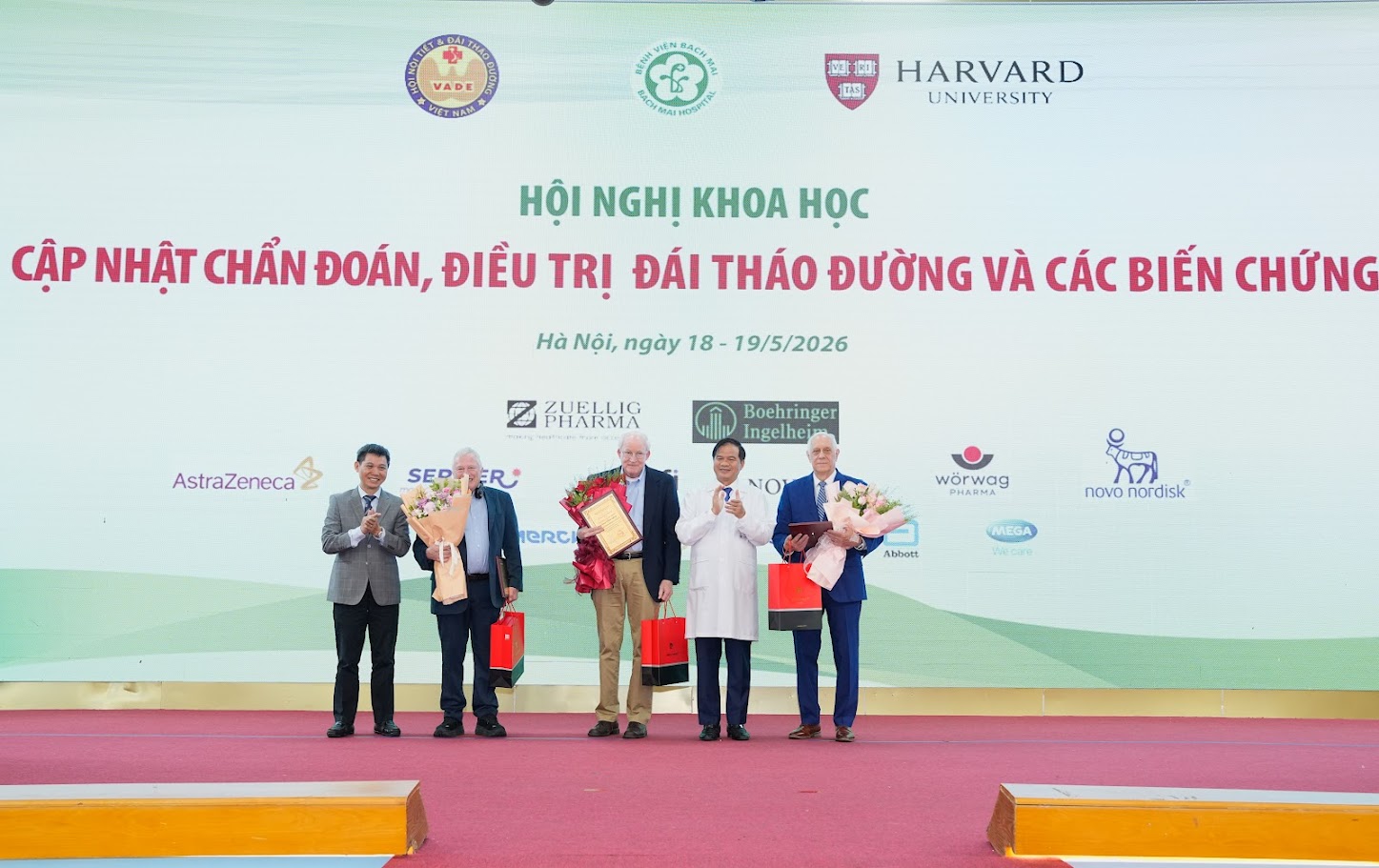
In his opening remarks, Associate Professor Dr. Đào Xuân Cơ, Director of Bệnh viện Bạch Mai, emphasized that diabetes is no longer solely an endocrine disorder but has become a global healthcare challenge with serious cardiovascular, neurological, and peripheral vascular complications. Among these, diabetic foot ulcers remain one of the leading causes of disability, limb amputation, and mortality.
One of the conference’s central themes was the multidisciplinary treatment model for diabetic patients with lower-limb arterial disease and diabetic foot ulcers. According to Professor John Giurini, diabetic foot damage results from a complex combination of glucose metabolism disorders, peripheral neuropathy, immune dysfunction, and peripheral vascular disease. Limb preservation requires close collaboration among specialists in endocrinology, vascular surgery, interventional radiology, diabetic foot care, and rehabilitation medicine.
Experts noted that modern diabetes management is shifting beyond blood glucose control toward a comprehensive strategy that includes early vascular screening, timely revascularization, infection control, and pressure offloading for the foot.
At the conference, Professor David Campbell, a vascular surgery and interventional radiology specialist from Beth Israel Deaconess Medical Center and Harvard Medical School, presented the latest advances in diagnosing and treating peripheral arterial disease in diabetic patients. He explained that vascular lesions in these patients typically occur in small arteries below the knee, particularly in the lower leg and foot, leading to severe ischemia that is often overlooked because of atypical symptoms.
Experts also highlighted several common “clinical pitfalls,” including peripheral neuropathy that diminishes pain sensation, autonomic neuropathy causing the feet to remain warm despite poor blood circulation, and falsely elevated ABI (Ankle-Brachial Index) readings due to arterial calcification.
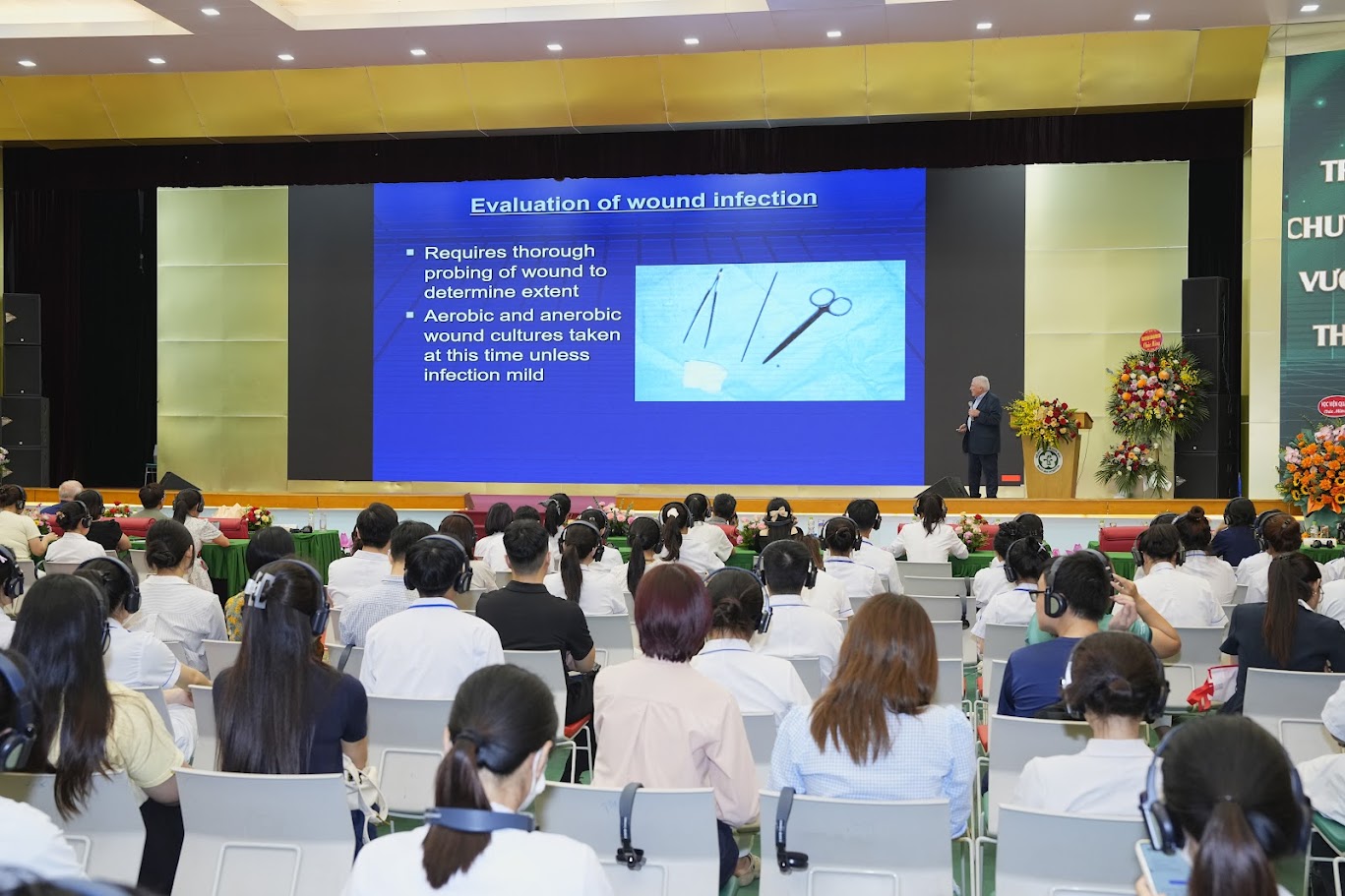
Regarding treatment strategies, autologous vein bypass surgery continues to be considered the “gold standard” for patients with critical limb ischemia who are suitable surgical candidates. However, endovascular interventions are increasingly preferred because they are minimally invasive, effective for distal lesions, and associated with shorter recovery times.
Providing practical insights from Vietnam, Dr. Lương Tuấn Anh, an interventional vascular specialist from 108 Military Central Hospital, said that the prevalence of lower-limb arterial disease in Vietnam is estimated at 5-7% of the population and is increasingly affecting younger individuals. Notably, many patients seek medical care only at advanced stages, when deep ulcers, tissue necrosis, or severe infections have already developed.
According to experts, the main reasons include the lack of symptoms in the early stages, limited public awareness about diabetic foot care, disparities in expertise between healthcare levels, and inadequate long-term follow-up systems after intervention. In recent years, major medical centers in Vietnam have introduced advanced techniques such as balloon angioplasty, stent placement, drug-coated balloons, and combined revascularization with multimodal diabetic foot ulcer treatment.
In the field of diabetic foot management, Professor John M. Giurini and Dr. Nguyễn Đình Đức from the Department of Endocrinology and Diabetes at Bệnh viện Bạch Mai shared practical experience in chronic wound debridement, foot-preserving surgery, pressure offloading, and the use of vacuum-assisted closure therapy. According to Professor Giurini, the modern approach prioritizes preserving anatomical structure and mobility rather than performing extensive amputations as in the past.

The conference also devoted significant attention to technological applications in diabetes care. Professor William Sullivan from the Joslin Diabetes Center introduced advances in continuous glucose monitoring systems and automated insulin pumps. Experts noted that “time in range,” rather than HbA1c alone, is becoming a new therapeutic target in modern diabetes management.
The conference once again affirmed the position of Bệnh viện Bạch Mai as one of Vietnam’s leading specialized medical centers, at the forefront of international medical knowledge exchange, multidisciplinary treatment development, and the application of high technology in healthcare.



78 Giai Phong Street, Kim Lien Ward, Hanoi City
1900.888.866
096.985.1616
Department of On-Demand Medical Examination:
Outpatient Department: Monday – Friday
Main responsible person: Associate Professor, Dr. Dao Xuan Co - Hospital Director




