 Ngày đăng: 11/05/2026Tác giả: Article: Hospital Office / Photos: Department of Social Work
On May 7, 2026, as part of ongoing international healthcare cooperation activities, Bach Mai Hospital held a professional exchange and working session with a delegation from the Japan-Vietnam Medical Exchange Association (JVME), opening up promising opportunities for deeper collaboration between the two sides in the near future.
Attending the meeting on behalf of JVME were Dr. Matsuoka Takaaki, Co-Chair of the Association and Director General of the Helene Stem Cell Center; Dr. Dinh Ngoc Hai, Co-Chair of the Association and Chairman of the Board of Japan-Vietnam Regenerative Medicine Joint Stock Company (JVIM); along with Japanese experts in oncology, gastroenterology-hepatology, cardiology, and stem cell medicine.
Representing Bach Mai Hospital were Assoc. Prof. Dr. Dao Xuan Co, Hospital Director; Assoc. Prof. Dr. Pham Cam Phuong, Director of the Center for Nuclear Medicine and Oncology; Assoc. Prof. Dr. Nguyen Thi Thu Hoai, Director of the Cardiovascular Institute; Assoc. Prof. Dr. Do Ngoc Son, Director of the Intensive Care Center; Assoc. Prof. Dr. Luong Tuan Khanh, Director of the Rehabilitation Center; Assoc. Prof. Dr. Nguyen Cong Long, Director of the Gastroenterology and Hepatology Center; Ms. Nguyen Thi Huong, Chief of Office, together with leaders of hospital departments, physicians, and nurses who had previously studied and trained in Japan.
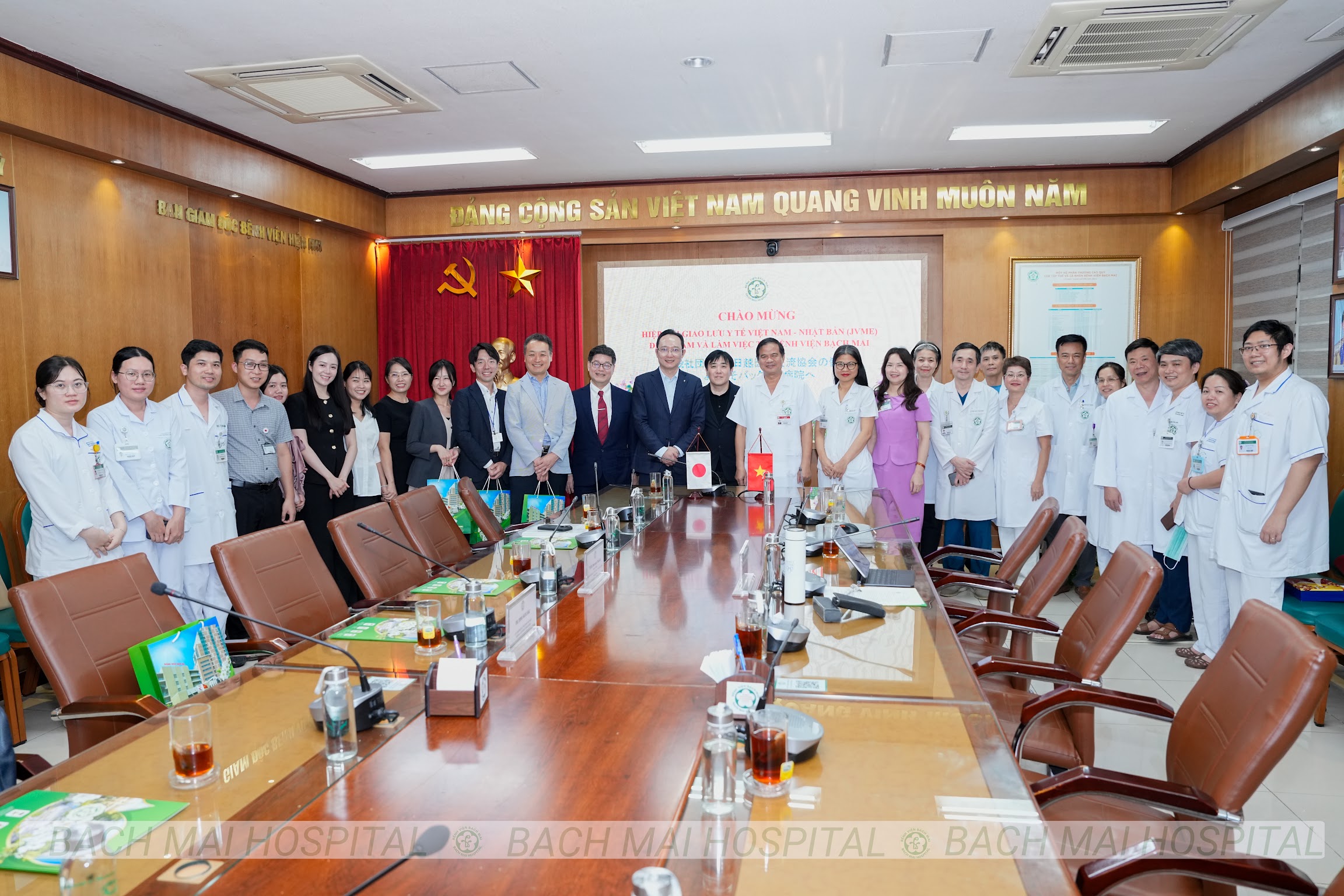
During the meeting, JVME representatives noted the increasing demand among Vietnamese patients seeking medical treatment in Japan and expressed their desire to enhance support mechanisms, strengthen connectivity, and facilitate better access for patients. Both sides also showed strong interest in promoting technology transfer in advanced medical fields, particularly stem cell therapy and immunotherapy.
In his remarks, Assoc. Prof. Dr. Dao Xuan Co highlighted the special cooperative relationship between Bach Mai Hospital and Japanese partners over the past two decades, especially through support programs from Japan International Cooperation Agency (JICA) and leading Japanese hospitals and universities.
According to the Hospital Director, many of Bach Mai Hospital’s key specialties-including intensive care, cardiology, gastroenterology, rehabilitation, microbiology, and infection control-have received substantial support from Japan in terms of workforce training, technology transfer, and professional development.
He also noted that many of the hospital’s leading experts had previously studied and trained in Japan and now serve as core specialists in advanced medical fields. At the same time, Bach Mai Hospital is actively promoting the development of high-tech medical sectors such as regenerative medicine, stem cell therapy, immunology, artificial intelligence, robotic surgery, and the establishment of an internationally standardized International Medical Center in the coming years.
At the meeting, Dr. Matsuoka Takaaki introduced the Helene Stem Cell Center, the first institution in Japan licensed to conduct stem cell therapy in humans since 2015. According to Dr. Matsuoka, the center has so far provided treatment for approximately 18,000 patients and is actively promoting international cooperation in stem cell and immune cell technology transfer, including in Vietnam.
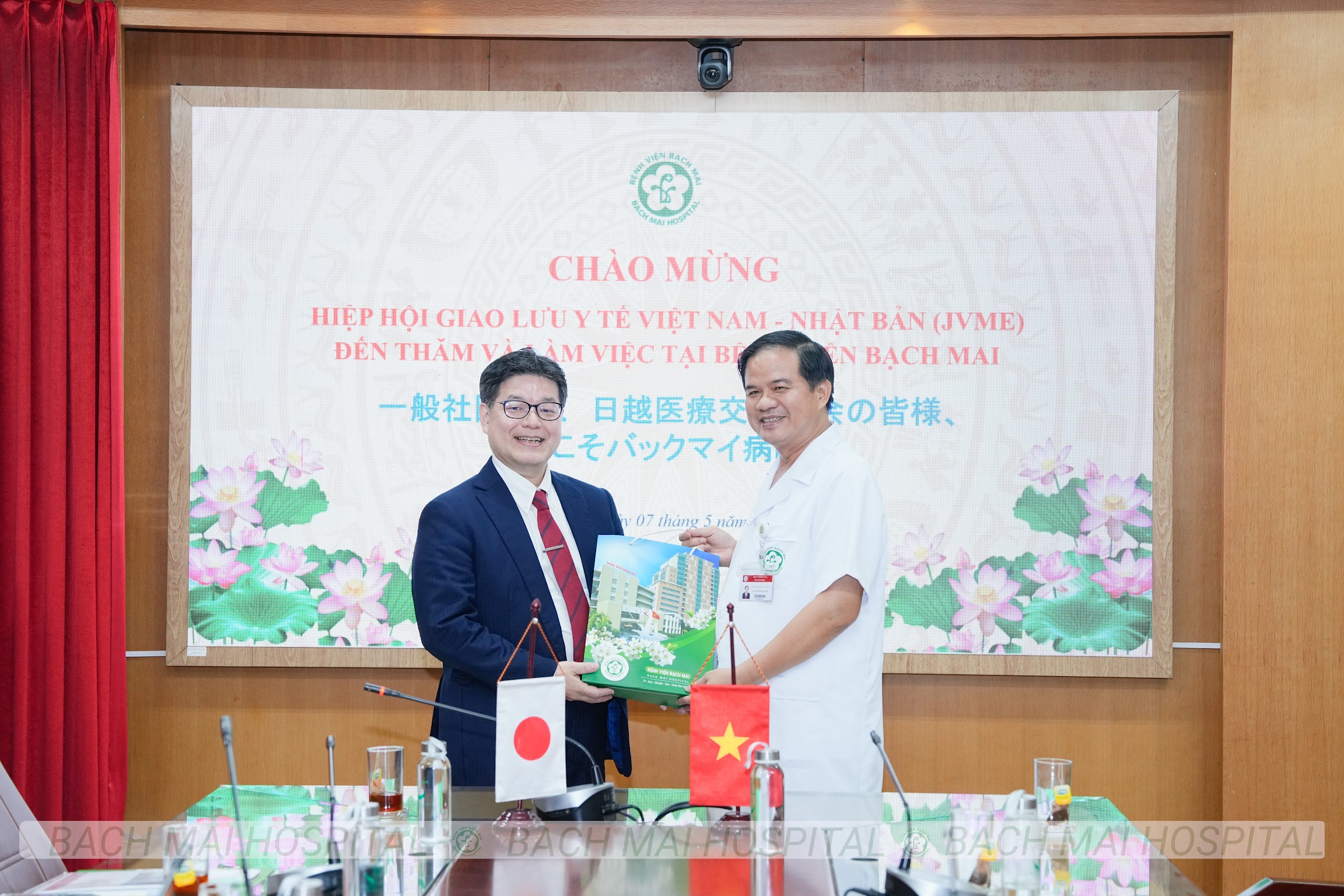
Representatives from the Ariake Cancer Research Hospital also shared professional insights into Japan’s early cancer screening systems, immunotherapy, personalized medicine, and clinical research models. Japanese experts highly appreciated the potential for collaboration with Bach Mai Hospital in oncology, immunotherapy, CAR-T cell therapy, and regenerative medicine research.
During the professional exchange session, experts from Bach Mai Hospital expressed their desire to strengthen cooperation with Japanese partners in training young medical professionals, transferring advanced technologies, conducting online consultations, carrying out scientific research, and implementing multicenter clinical trials. Potential areas of collaboration discussed by both sides included immunotherapy, NK cell therapy, CAR-T cell therapy, early cancer detection, personalized treatment, and stem cell applications in disease treatment.
The meeting took place in an open, sincere, and substantive atmosphere, reflecting the strong commitment of both sides to advancing in-depth healthcare cooperation between Vietnam and Japan. The two parties agreed to continue discussions to gradually realize collaborative initiatives through training programs, scientific research, technology transfer, and future cooperation agreements, thereby contributing to improved healthcare quality and the development of advanced medical technologies in Vietnam.



78 Giai Phong Street, Kim Lien Ward, Hanoi City
1900.888.866
096.985.1616
Department of On-Demand Medical Examination:
Outpatient Department: Monday – Friday
Main responsible person: Associate Professor, Dr. Dao Xuan Co - Hospital Director




