 Ngày đăng: 05/06/2026Tác giả: MSc. Resident Physician Le Van Anh
When hearing the diagnosis of a common bile duct (CBD) stone, many people immediately think of major surgery, significant pain, and a prolonged hospital stay. However, thanks to advances in endoscopic technology, doctors can now remove bile duct stones through an endoscope inserted via the mouth-without surgical incisions and without leaving scars.
A Technique That Replaces Traditional Surgery
In the past, common bile duct stones almost always required surgery. The introduction of Endoscopic Retrograde Cholangiopancreatography (ERCP) has dramatically changed the treatment approach.
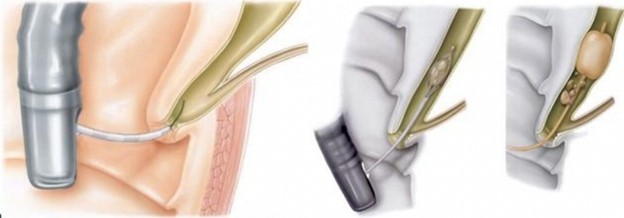
With ERCP, physicians can access the biliary system through the digestive tract, visualize the bile ducts under fluoroscopic guidance, and use specialized devices such as retrieval baskets, extraction balloons, or the SpyGlass system to remove or fragment stones directly at the site.
Compared with conventional surgery, ERCP offers several important advantages:
Minimally invasive, with no surgical scars.
Shorter hospital stay and faster recovery.
Significantly fewer complications.
Lower treatment costs.
What Is ERCP and What Conditions Can It Treat?
ERCP is a specialized endoscopic procedure that allows physicians to visualize the bile ducts, pancreatic ducts, and gallbladder.
In addition to its diagnostic role, ERCP is widely used as a therapeutic intervention for various conditions, including:
Biliary obstruction caused by stones or parasitic infestation of the bile ducts.
Bile duct strictures leading to bile stasis and jaundice.
Biliary tract tumors and related disorders.
Preparing for the Procedure
To ensure a safe and successful procedure, patients should follow several important recommendations:
Do not eat or drink for at least six hours before the procedure.
Continue taking prescribed cardiovascular or anti-seizure medications unless otherwise instructed.
Patients with diabetes should not take their morning diabetes medication until the procedure has been completed.
If you are taking anticoagulants or antiplatelet medications such as Aspirin, Warfarin, or Plavix, contact your doctor at least 10 days in advance and bring a list of all medications and dosages.
Patients and their family members should receive a full explanation of the procedure and sign an informed consent form before treatment.
How Are Stones Removed?
The first step is to accurately identify the location, size, number, and characteristics of the stones using a side-viewing endoscope combined with fluoroscopic imaging.
Based on these findings, the physician develops an appropriate treatment strategy.
The most common approach involves performing a sphincterotomy of the sphincter of Oddi and, when necessary, dilating the bile duct opening. Specialized retrieval baskets or extraction balloons are then used to remove the stones.
This technique is particularly effective for stones measuring less than 15 mm in diameter.
What Should Patients Know After ERCP?
ERCP is generally considered a safe procedure when performed by experienced specialists.
After the procedure, patients may experience mild nausea, abdominal bloating, or slight discomfort in the throat and upper abdomen for several hours. These symptoms are usually temporary and resolve quickly.
However, less common complications may occur, including:
Acute pancreatitis (approximately 5%).
Persistent cholangitis (3%).
Bloodstream infection (2%).
Biliary bleeding (1%).
Duodenal perforation (1%).
Patients should immediately notify their healthcare provider if they experience any of the following symptoms:
Severe or persistent abdominal pain and bloating.
Vomiting, fever, or chills.
Bloody stools or black-colored stools.
Dizziness, persistent sore throat, or difficulty swallowing.
Patients can be reassured that a dedicated medical team will closely monitor their condition during the first 24 to 48 hours following the procedure to ensure prompt management of any complications.
Thanks to advances in therapeutic endoscopy, many cases of common bile duct stones can now be treated effectively without surgery, helping patients recover faster, experience less discomfort, and return to their normal daily activities sooner.



78 Giai Phong Street, Kim Lien Ward, Hanoi City
1900.888.866
096.985.1616
Department of On-Demand Medical Examination:
Outpatient Department: Monday – Friday
Main responsible person: Associate Professor, Dr. Dao Xuan Co - Hospital Director




