 Ngày đăng: 03/03/2026Tác giả: Nguyen Ha - Khanh Linh
In the final days of the year, Bach Mai Hospital remains busy, receiving thousands of patients each day. Among them was a special case: a Filipino teacher living and working in Vietnam, who recently regained significant visual function after timely diagnosis and treatment.
In December 2025, Ms. S. visited the hospital’s Department of Ophthalmology after experiencing rapidly worsening blurred vision. She had previously consulted several medical facilities, but the cause of her symptoms had not been identified.
During the examination and medical history review, doctors discovered reduced visual acuity accompanied by bitemporal visual field loss—a classic sign suggesting compression of the optic nerve pathways that transmit visual signals from the eyes to the brain.
An MRI scan later revealed a large pituitary tumor compressing the optic chiasm, the point where the optic nerves cross. This compression was identified as the direct cause of her blurred vision and narrowing visual fields.
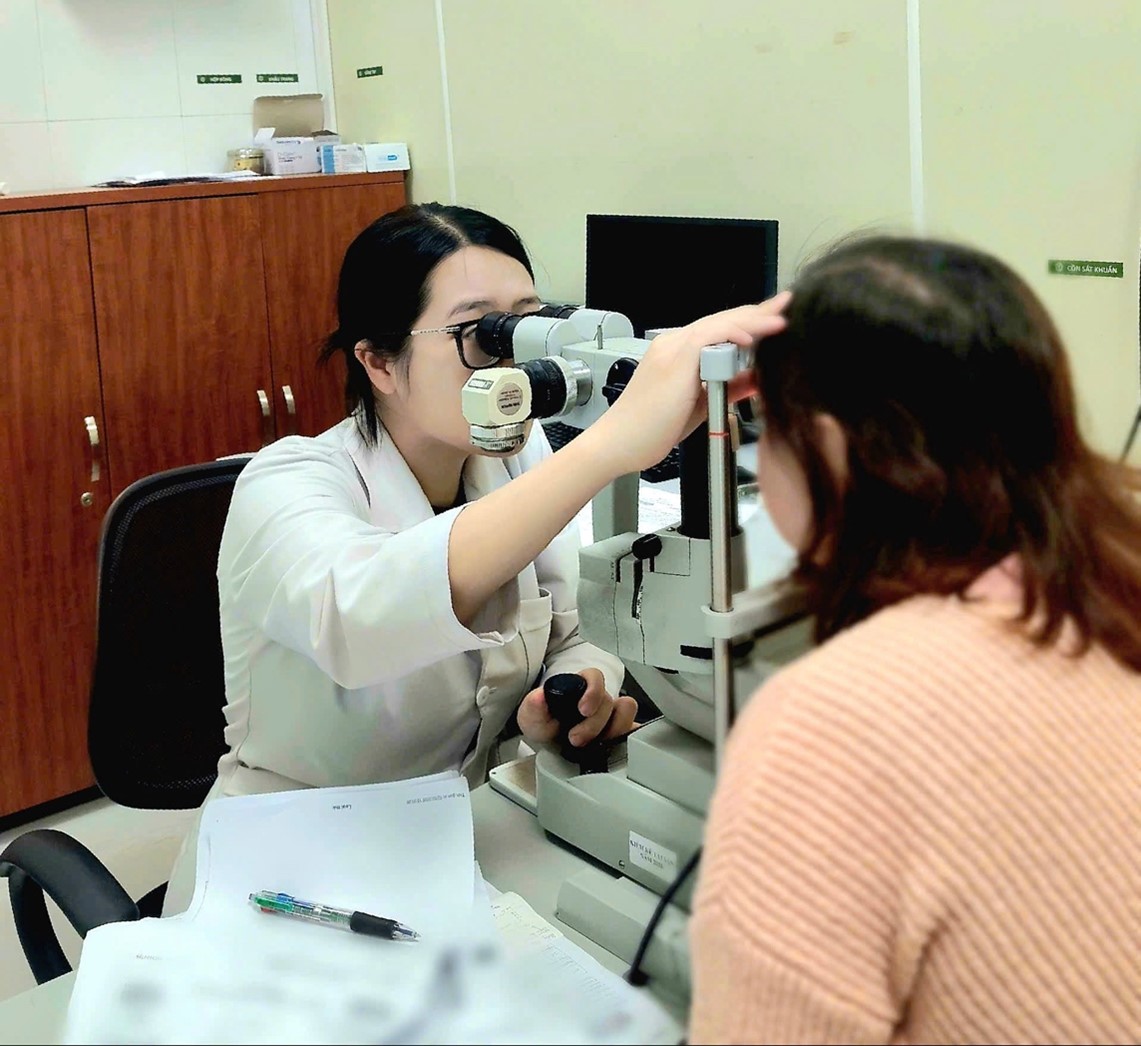
An ophthalmologist examines and checks the patient’s visual acuity.
The patient was promptly referred for multidisciplinary consultation with neurosurgery specialists and was scheduled for tumor removal surgery as soon as possible.
Vision significantly improved after treatment
One month after surgery, Ms. S. returned for a follow-up visit. The anxiety that marked her first hospital visit had disappeared. Both visual acuity and visual fields showed remarkable improvement compared to the initial examination.
With her vision largely restored, she was able to return to her daily activities and teaching work with confidence.
Despite living relatively far from the hospital, Ms. S. chose Bach Mai Hospital as her trusted healthcare provider. She cited the strong professional expertise of the medical team, their dedication to patient care, and their ability to communicate effectively in English, which helped her clearly understand her diagnosis and treatment plan—an important factor for many foreign residents living in a new country.
“The most important thing is that the doctors detected my condition in time, before the tumor grew larger and threatened my life,” she wrote in a letter of appreciation to the hospital.
“I will definitely recommend Bach Mai Hospital to my friends. It is truly a wonderful place where doctors strive to ensure that no patient is left behind in the fight against disease.”
Blurred vision may be a warning sign of serious disease
Blurred vision is a common symptom affecting people of all ages, professions, and backgrounds. In many cases, it may be caused by relatively common conditions such as refractive errors, cataracts, retinal diseases, or uveitis.
However, as demonstrated in Ms. S.’s case, blurred vision can sometimes signal more serious systemic conditions, including brain and neurological disorders, diabetes, systemic lupus erythematosus, or infectious and parasitic diseases.
In such situations, treatment cannot focus solely on the eyes. Patients require comprehensive medical evaluation and multidisciplinary management.
As a leading tertiary hospital with full subspecialties and advanced diagnostic technology, Bach Mai Hospital enables patients to undergo imaging, laboratory testing, and cross-specialty consultations when necessary—ensuring that potential underlying causes affecting vision are not overlooked.
Early detection makes the difference
The restoration of vision in cases like Ms. S.’s is not a miracle. It is the result of early recognition of symptoms, accurate localization of the underlying lesion, and timely medical intervention.
Equally important, the treatment process at Bach Mai Hospital places strong emphasis on psychological support, social considerations, and financial accessibility for patients—guiding principles in the professional practice of the Department of Ophthalmology and the hospital’s entire medical staff.



78 Giai Phong Street, Kim Lien Ward, Hanoi City
1900.888.866
096.985.1616
Department of On-Demand Medical Examination:
Outpatient Department: Monday – Friday
Main responsible person: Associate Professor, Dr. Dao Xuan Co - Hospital Director





