 Ngày đăng: 14/04/2026Tác giả: By Hien Dieu
In the treatment of lung cancer-particularly stage III disease-the question “What comes after chemoradiotherapy?” has long been a concern for both physicians and patients. In the past, the answer was often “watchful waiting,” despite persistently high recurrence rates.
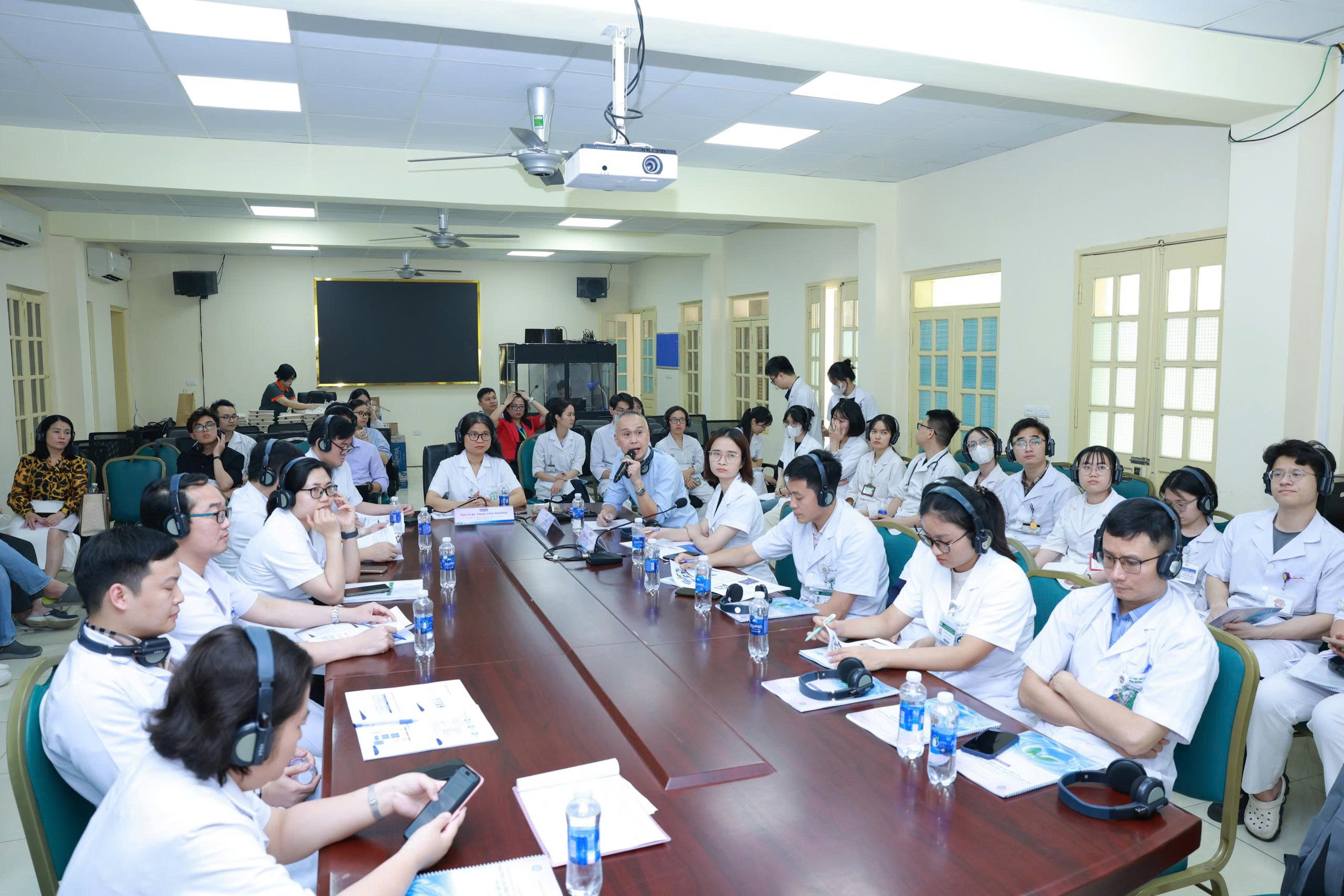
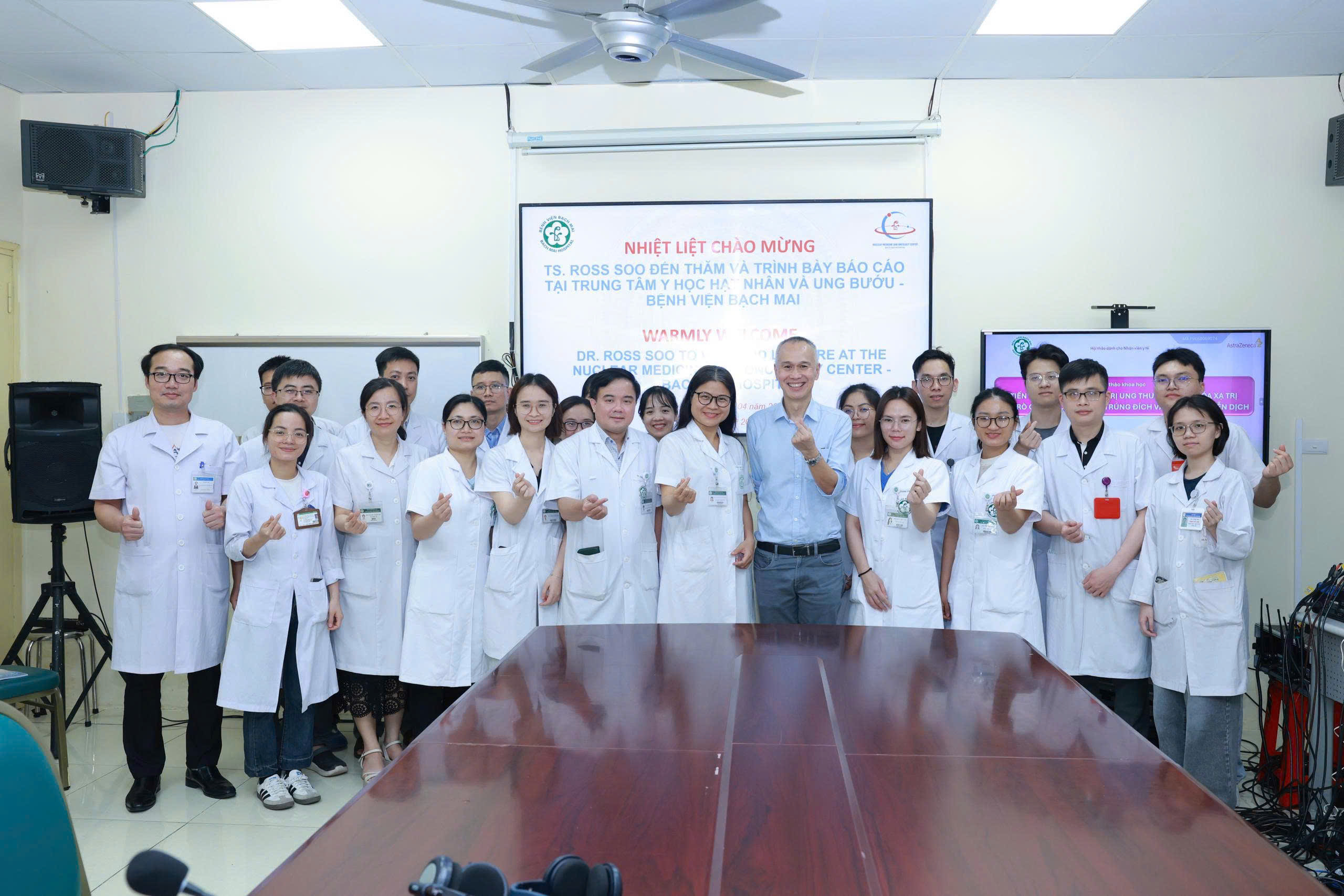
On April 10, 2026, Bach Mai Hospital and the 108 Military Central Hospital co-hosted a scientific symposium to address this critical gap and explore new directions in post-chemoradiotherapy management.
ompelling Evidence from Landmark Trials: LAURA and ADRIATIC
Moving beyond theoretical discussions, the symposium highlighted groundbreaking clinical data. Dr. Ross Soo from Singapore presented striking findings from the LAURA study.
For patients with EGFR-mutated lung cancer, consolidation therapy with Osimertinib following chemoradiotherapy extended median progression-free survival (PFS) to 39.1 months—nearly seven times longer than the 5.6 months observed with placebo. This is not merely a statistic; it represents more than three additional years of stable, meaningful life for patients.
Similarly, the ADRIATIC trial has brought new hope for patients with limited-stage small cell lung cancer, demonstrating the benefits of consolidation immunotherapy with Durvalumab. These advances signal a shift toward the possibility of curative intent, even in later stages of the disease.
The Key to Success: Selecting the Right Patients for Concurrent Chemoradiotherapy
Alongside novel therapies, one of the central themes of the symposium was patient selection for concurrent chemoradiotherapy (cCRT), presented by Dr. Pham Minh Lanh from the Nuclear Medicine and Oncology Center, Bach Mai Hospital.
cCRT remains the cornerstone of treatment for stage III non-small cell lung cancer and limited-stage small cell lung cancer, offering superior outcomes through a synergistic mechanism: chemotherapy enhances tumor radiosensitivity, improving local control and targeting micrometastases.
However, achieving optimal outcomes requires strict patient selection:
Performance status (ECOG): Patients should have a good functional status (ECOG 0–1 or KPS ≥80).
Organ function: Adequate renal function (creatinine clearance ≥60 mL/min), stable liver function, and acceptable hematologic parameters.
Pulmonary and cardiac function: FEV1 >1L or >40% predicted is essential. Cardiac radiation dose (mean heart dose, MHD) should be carefully limited (ideally <10 Gy) to reduce long-term cardiovascular risks.
Nutritional status: Often overlooked, but critical. Severe malnutrition (BMI <16), rapid weight loss (>10% in one month), or low serum albumin (<25 g/L) significantly increases treatment toxicity.
Managing Toxicity: A Parallel Battle
Concurrent chemoradiotherapy is a double-edged sword, associated with significant toxicities that require close monitoring.
Radiation-induced pneumonitis is the most serious complication, typically occurring 1–6 months after treatment, presenting with dry cough and dyspnea. Acute esophagitis, causing painful swallowing and dysphagia, also significantly affects quality of life and nutritional status.
A Real-Life Story: A Lifeline for a 46-Year-Old Patient
The clinical relevance of these advances was illustrated by a case shared by Dr. Thi Thi Duyen from 108 Military Central Hospital.
A 46-year-old man diagnosed with stage IIIB lung cancer achieved a partial response after concurrent chemoradiotherapy. Instead of stopping at that point, he was started on consolidation therapy with Osimertinib, helping to extend his survival.
Such real-world cases sparked in-depth discussions among clinicians on managing side effects and identifying the optimal timing for initiating consolidation therapy to maximize patient benefit.
Toward a Curative Future
Assoc. Prof. Dr. Pham Cam Phuong, Director of the Nuclear Medicine and Oncology Center at Bach Mai Hospital, emphasized: “In the fight against lung cancer, our goal is not merely to extend survival by a few months. We strive for curative treatment. The integration of targeted therapy and immunotherapy after chemoradiotherapy represents the missing piece. What matters most now is seamless multidisciplinary collaboration to ensure no patient misses this critical opportunity.”
While the symposium has concluded, it marks the beginning of a new journey. The collaboration between two leading hospitals is not only about knowledge exchange, but also a commitment to bringing global medical advances closer to home—transforming clinical data into real hope for Vietnamese patients.



78 Giai Phong Street, Kim Lien Ward, Hanoi City
1900.888.866
096.985.1616
Department of On-Demand Medical Examination:
Outpatient Department: Monday – Friday
Main responsible person: Associate Professor, Dr. Dao Xuan Co - Hospital Director




