 Ngày đăng: 11/03/2026Tác giả: Do Hang - Thanh Duong
On March 11, the Institute of Medical Training and Research of Bach Mai Hospital, in collaboration with the Stroke Center of Bach Mai Hospital, held an opening ceremony for a series of specialized training courses and advanced technical programs for more than 80 trainees from provinces and cities across the country.
The program is not merely a training activity but also reflects Bach Mai Hospital’s commitment to knowledge transfer and long-term partnership with primary healthcare facilities, particularly in areas facing significant challenges.
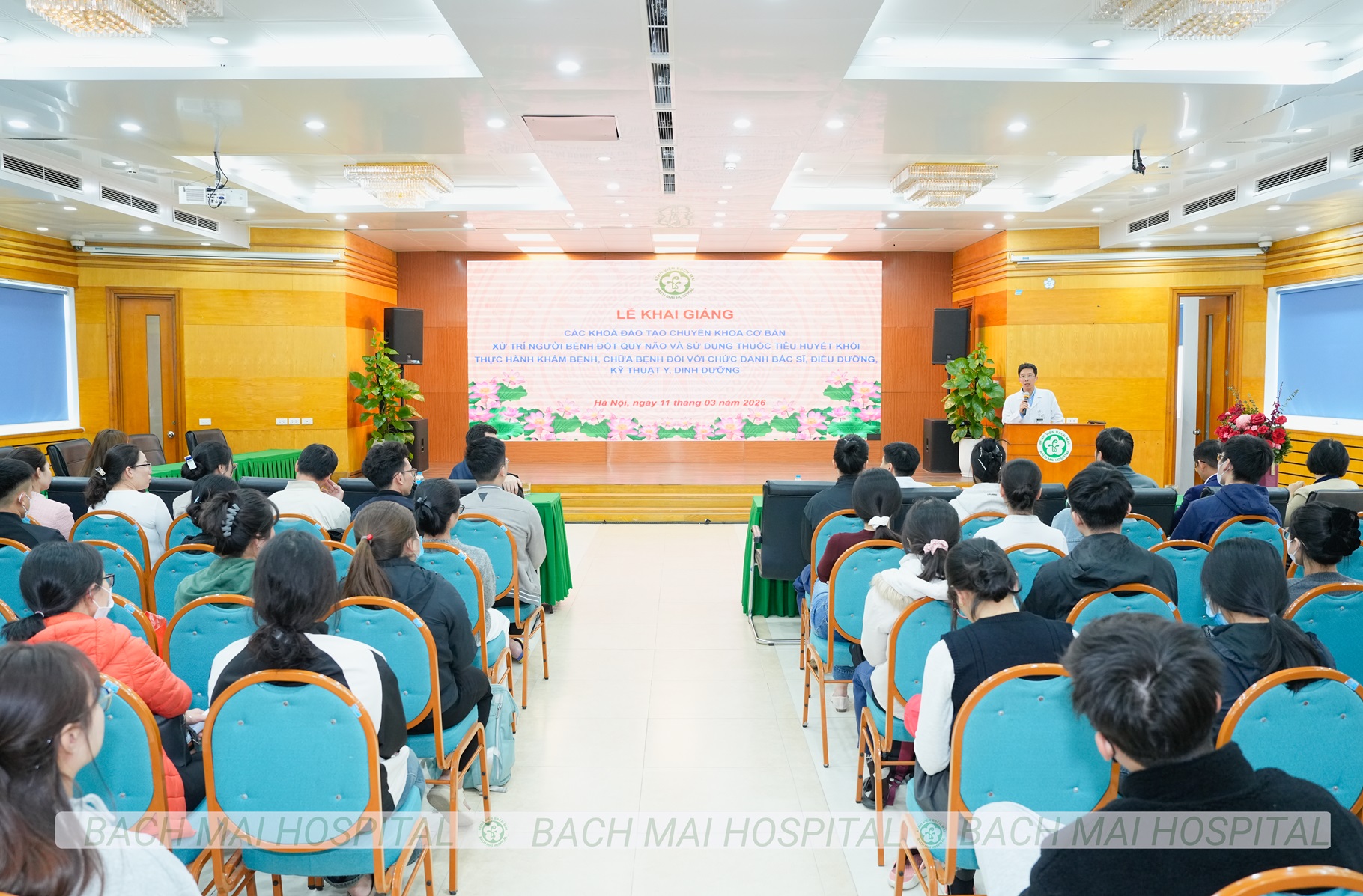
Training aligned with practical needs
In this training intake, more than 80 trainees are participating in courses covering several key professional areas essential for primary healthcare.
Specifically:
Clinical practice in medical examination and treatment: 45 trainees, including physicians, nurses, nutritionists, and medical technicians.
Stroke management techniques: 11 trainees focusing on emergency stroke care processes and intravenous thrombolysis in the treatment of acute stroke.
Basic specialty training: 20 trainees in fields such as Diagnostic Imaging, Emergency and Critical Care, and Obstetrics – Pediatrics.
Notably, many participants come from remote localities such as Quang Binh and Quang Ngai, including doctors from the Phu Quy District Medical Center (Lam Dong Province), an island district located more than 120 km from the mainland.
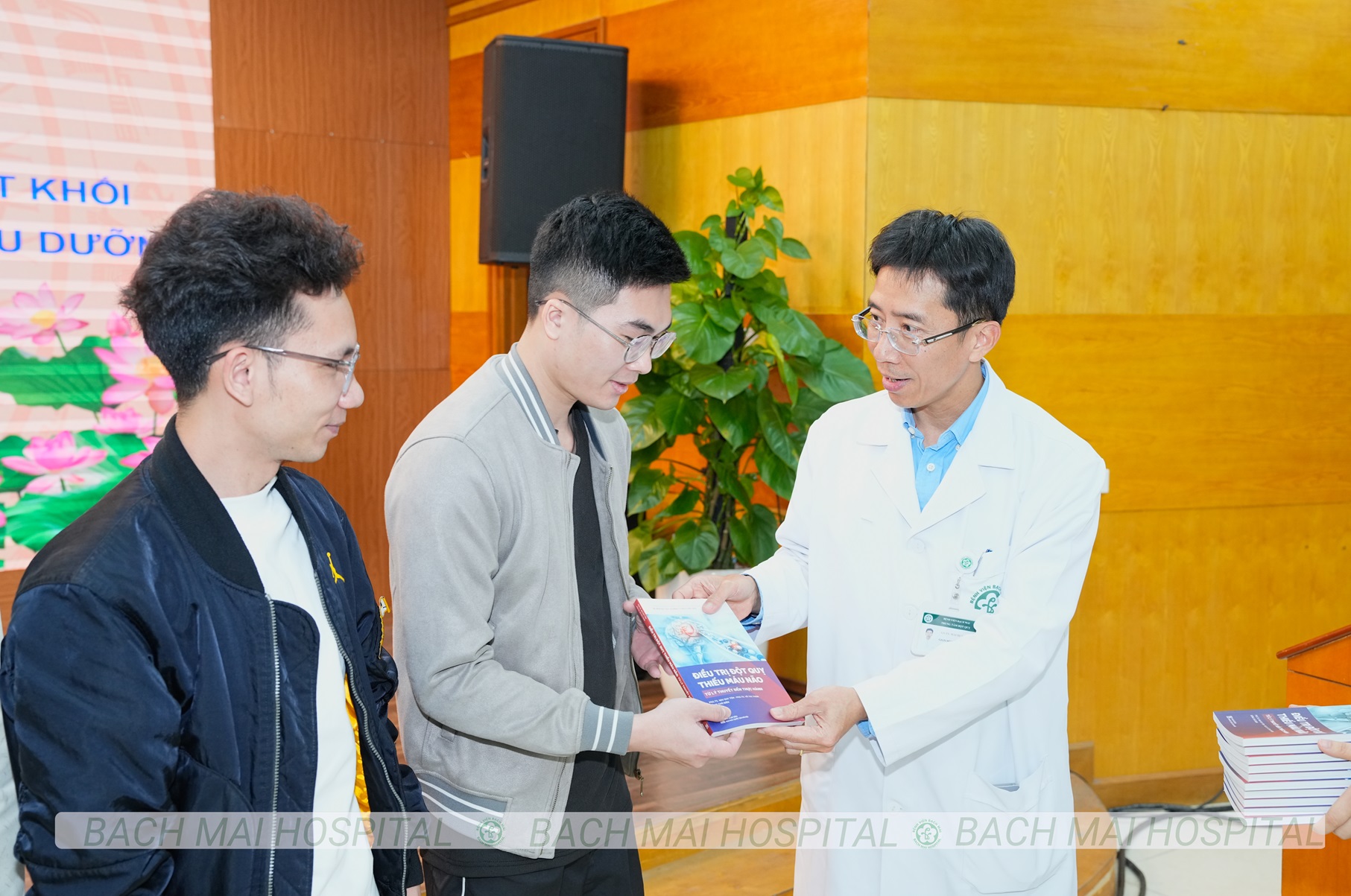
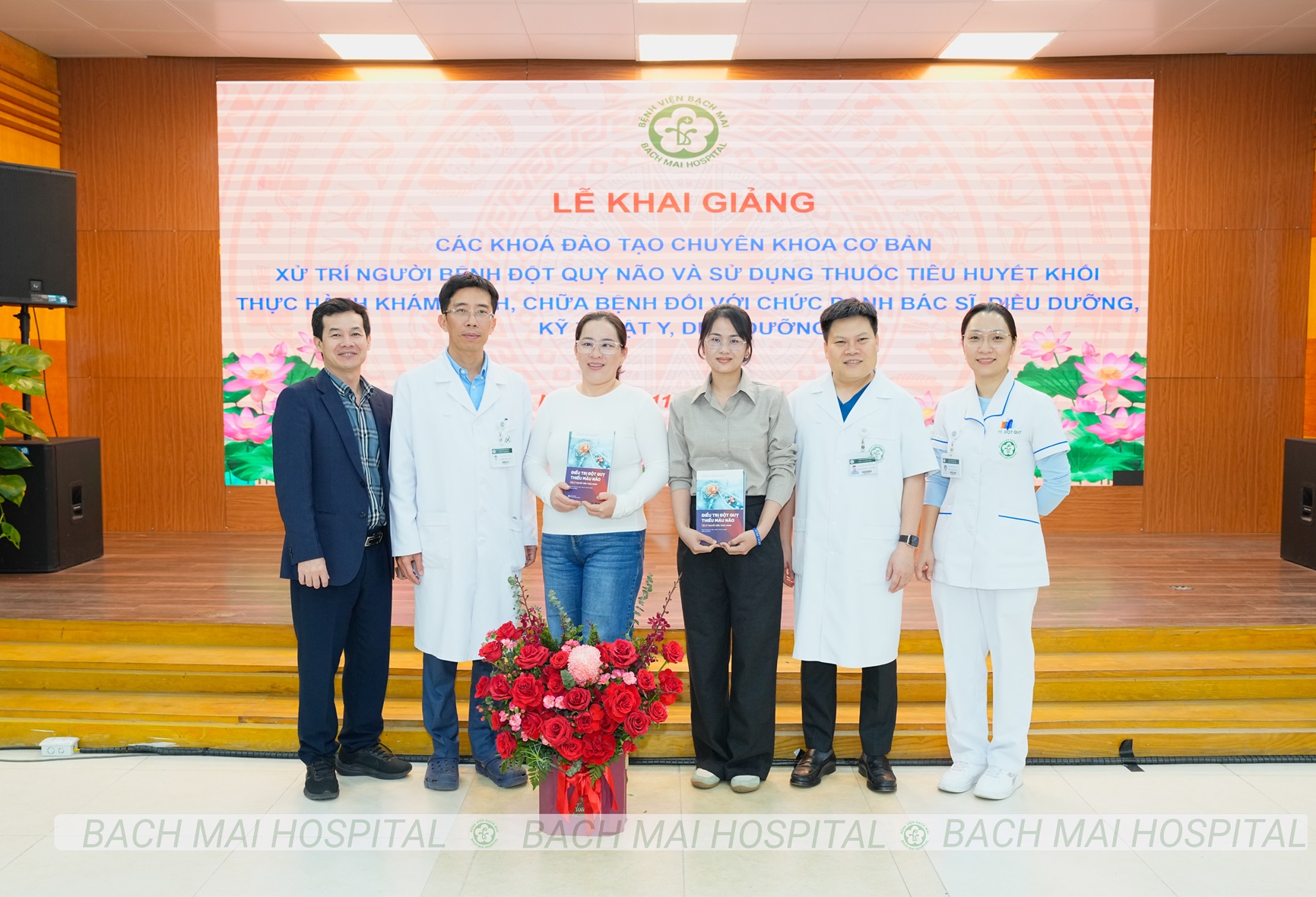
Special support for island healthcare
To enhance stroke emergency capacity at the grassroots level, Bach Mai Hospital has provided special support for trainees from Phu Quy Island District—a strategically important area where emergency medical conditions remain limited.
According to Prof. Dr. Mai Duy Ton, Director of the Stroke Center at Bach Mai Hospital:
“We not only provide free training but also support travel and accommodation costs so that medical staff from Phu Quy can access and master thrombolytic therapy. Our goal is to build a nationwide stroke emergency network so that people, whether in border areas or on remote islands, can still receive timely treatment during the ‘golden hour’.”
Long-term support after training
A distinctive feature of Bach Mai Hospital’s training programs is its commitment to long-term support after course completion.
Under the plan, the hospital will implement a professional support roadmap for Phu Quy Island District through 2028, including:
24/7 professional support through a Telemedicine system, enabling leading experts in Hanoi to provide remote consultations for complex cases.
On-site support, with specialists traveling to Phu Quy Island to guide the establishment and operation of a stroke unit.
According to Dr. Vu Van Nhan, MSc, Vice Director of the Institute of Medical Training and Research, trainees will be trained in the high-intensity clinical environment of Bach Mai Hospital, which receives nearly 10,000 patient visits per day.
“The hallmark of Bach Mai is a highly disciplined working environment with significant clinical pressure. We train healthcare workers so that when they return to their localities, they can confidently implement techniques at a level comparable to that of central hospitals,” Dr. Nhan shared.
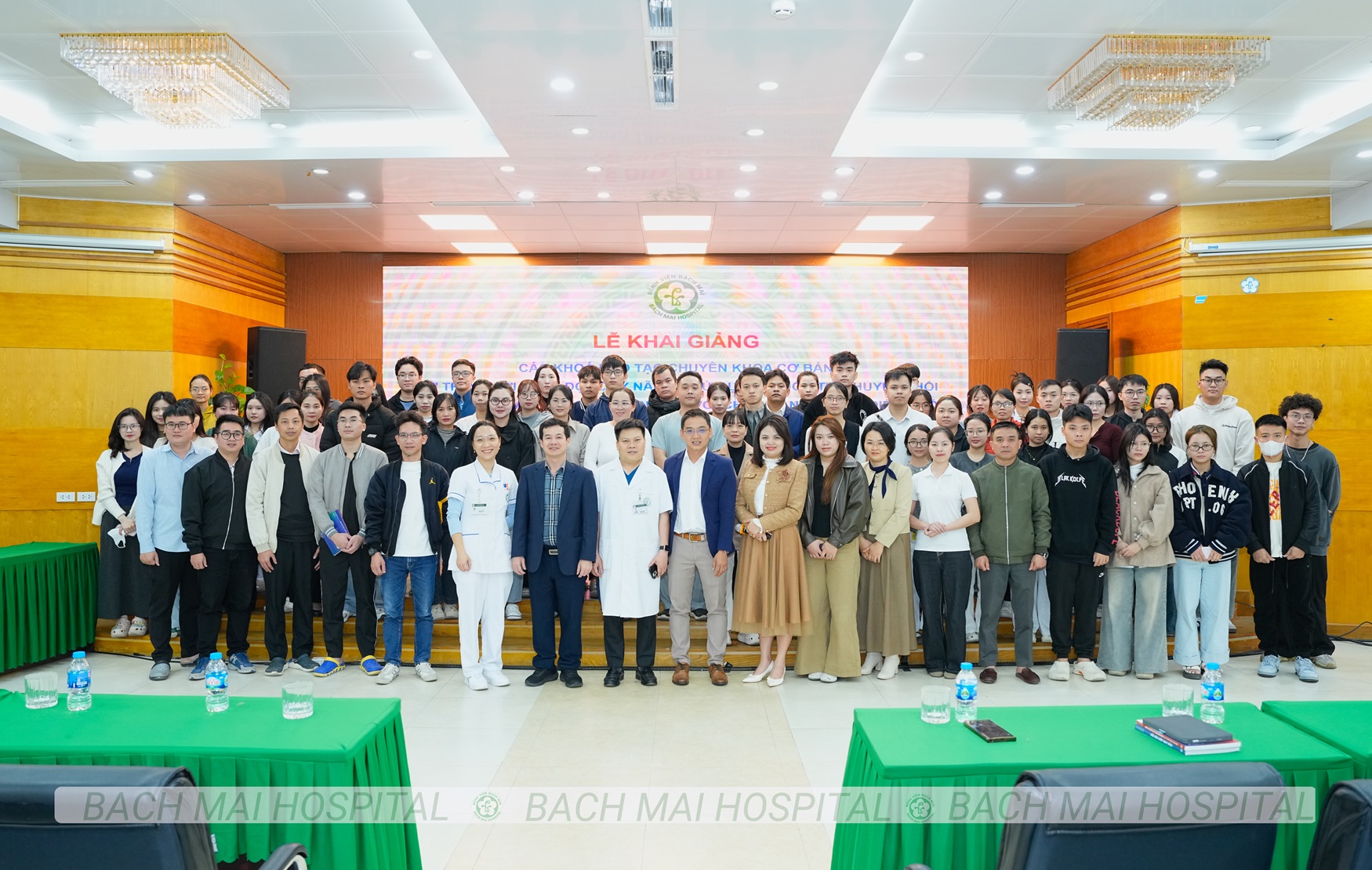
Spreading knowledge – protecting community health
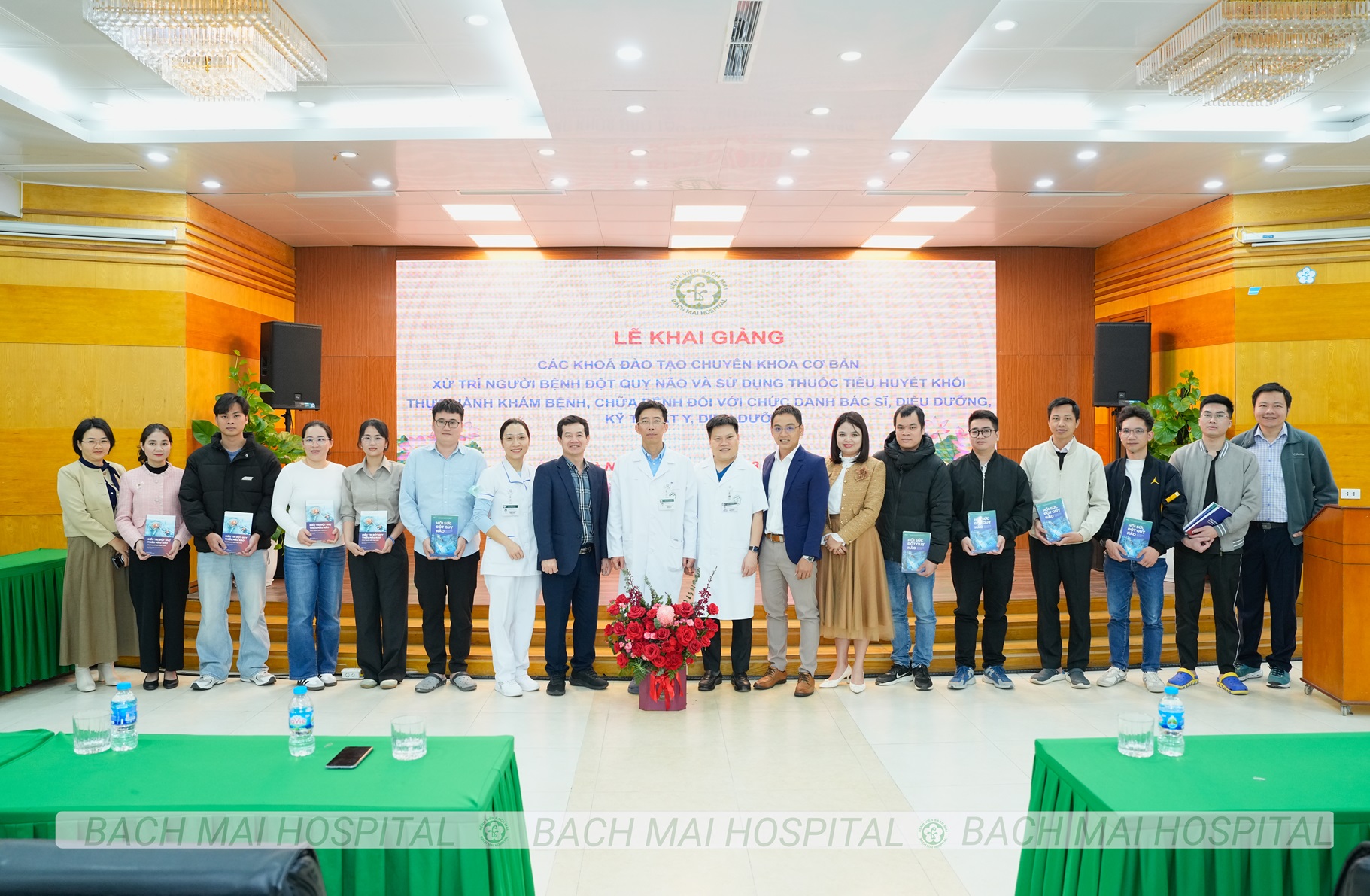
The close collaboration between the Stroke Center, the Institute of Medical Training and Research of Bach Mai Hospital, and the dedication of participating trainees contributed to the success of the opening ceremony.
Upon completing the courses and returning to their local healthcare facilities, physicians and nurses will bring not only professional knowledge but also the confidence gained from the strong professional support network of Bach Mai Hospital. This will serve as a crucial foundation for improving emergency care and treatment quality, especially in island areas and other underserved regions.


78 Giai Phong Street, Kim Lien Ward, Hanoi City
1900.888.866
096.985.1616
Department of On-Demand Medical Examination:
Outpatient Department: Monday – Friday
Main responsible person: Associate Professor, Dr. Dao Xuan Co - Hospital Director




