 Ngày đăng: 17/11/2025Tác giả: VPBV - CTXH
On the afternoon of November 15, 2025, Bach Mai Hospital and Shonan Kamakura General Hospital (Japan) signed a Memorandum of Understanding (MoU), marking the beginning of a deeper collaborative partnership between two leading medical institutions in the region.
The signing ceremony was attended by Dr. Shuzo Kobayashi, Chairman and Chief Executive Officer of Shonan Kamakura General Hospital; Mr. Takashi Hama, Senior Advisor to the JICA Project on Capacity Building for Hepatitis Prevention and Control in Vietnam; along with medical experts from Shonan Kamakura Hospital, representatives from Kanagawa Prefecture (Japan), and members of the JICA project delegation.
Representing Bach Mai Hospital were Assoc. Prof. Dr. Vu Van Giap, Vice Director of the hospital; Assoc. Prof. Dr. Pham Cam Phuong, Director of the Center for Nuclear Medicine and Oncology; Dr. Nghiem Trung Dung, Director of the Center for Nephrology, Urology and Dialysis; Ms. Nguyen Thi Huong, Chief of the Hospital Office; and leaders from the Radiology Center, Quality Management Center, Digestive Surgery Center, Cardiovascular Institute, and the Department of Urological Surgery.
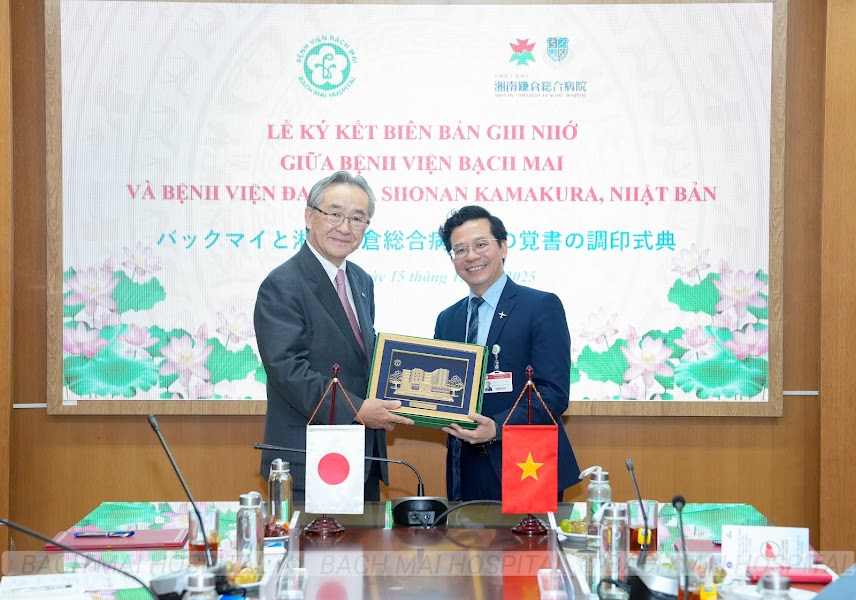 Strengthening Vietnam–Japan Medical Cooperation
Speaking at the ceremony, Assoc. Prof. Dr. Vu Van Giap highlighted the strong friendship between Vietnam and Japan, particularly in the healthcare sector, where Bach Mai Hospital has received significant and effective support from Japanese partners over the years.
He noted that through these collaborations, the hospital has not only adopted advanced medical technologies but also learned valuable principles that underpin the strengths of Japanese healthcare — including the PDCA cycle for quality improvement, the spirit of meticulousness and dedication in clinical practice, and the philosophy of “Omotenashi”, which emphasizes sincere and attentive patient care.
Building on this foundation, Bach Mai Hospital expressed its desire to strengthen specialized cooperation with Shonan Kamakura General Hospital in key areas such as:
Oncology
Organ transplantation
Robotic surgery
Regenerative medicine
Gene therapy and stem cell therapy
Assoc. Prof. Dr. Giap also emphasized the growing demand for cancer treatment among Vietnamese patients and proposed flexible cooperation mechanisms, including:
Referring patients to Japan for treatment
Inviting Japanese experts to provide consultations and medical services in Vietnam
Conducting online consultations for complex cases
These initiatives aim to bring advanced medical technologies closer to patients in Vietnam.
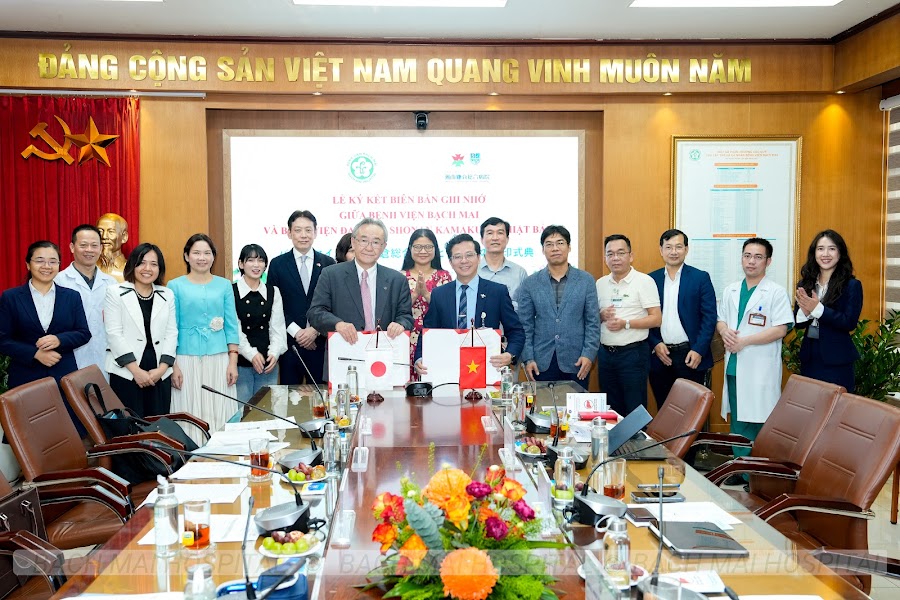
Shared Vision for Patient-Centered Healthcare
On behalf of the Japanese delegation, Dr. Shuzo Kobayashi expressed his gratitude for the warm reception from Bach Mai Hospital and shared his admiration for the professional expertise and technical capabilities of the hospital’s medical staff.
He highlighted the philosophy of “placing people above machines,” emphasizing that dedication and compassion are the most decisive factors in patient care.
Dr. Kobayashi noted that the similarities in professional culture and treatment approaches between the two institutions provide a strong foundation for long-term cooperation.
In terms of medical expertise, Shonan Kamakura General Hospital is currently implementing several advanced cancer treatment technologies, including:
Proton therapy
Hyperproton therapy
BNCIT therapy, a highly targeted treatment approach designed to precisely attack tumors from the first treatment session.
Dr. Kobayashi also extended an invitation for experts from Bach Mai Hospital to visit Japan to explore facilities, exchange expertise, and participate in joint international projects in the future.
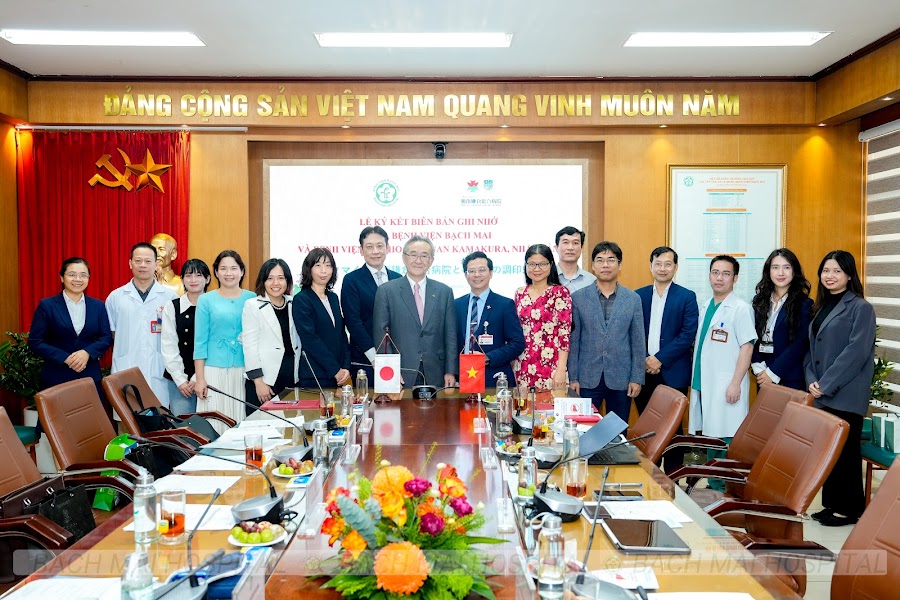
Expanding Opportunities for Specialized Collaboration
During the professional exchange session, representatives from several departments of Bach Mai Hospital presented their cooperation needs.
The Center for Nuclear Medicine and Oncology expressed interest in accessing advanced radiotherapy techniques such as proton therapy, neutron therapy, and immunotherapy, as well as learning from Japan’s model for early pancreatic cancer detection and establishing bilateral consultations for complex cases.
The Center for Nephrology, Urology and Dialysis proposed cooperation in training healthcare professionals in kidney transplantation management, peritoneal dialysis, hemodialysis, and research to optimize treatment for chronic complications.
Meanwhile, the Cardiovascular Institute showed interest in emerging trends such as robotic cardiac surgery, structural heart interventions, and the management of patients with multiple comorbidities.
Support from JICA and Future Prospects
Representing JICA, Mr. Takashi Hama congratulated both hospitals on their new partnership and shared updates on the Capacity Building Project for Hepatitis Prevention and Control in Vietnam.
The project aims to enhance the diagnosis and treatment of hepatitis B and C, which will also contribute to improving liver cancer treatment capacity at Bach Mai Hospital. He expressed hope that the collaboration would create additional opportunities for expanded cooperation in the future.
Key Areas of Cooperation
According to the signed Memorandum of Understanding, the two hospitals agreed to cooperate in several key areas, including:
Academic training and clinical case discussions to develop healthcare professionals through study visits, expert exchanges, and online consultations
Exploring opportunities for joint research projects
Assessing possibilities for the supply and development of medical equipment
Organizing scientific conferences and medical education programs
Priority areas for collaboration include:
Organ transplantation
Robotic surgery
Oncology
Regenerative medicine
Emergency and intensive care
Hematology
Neurology
Gastroenterology
Promoting International Medical Collaboration
The signing ceremony concluded in a warm and respectful atmosphere, reaffirming the commitment of both institutions to a long-term partnership.
Both hospitals expressed their expectation that this agreement will open new opportunities to enhance the quality of healthcare services in Vietnam and further strengthen international collaboration in advanced medical technologies.



78 Giai Phong Street, Kim Lien Ward, Hanoi City
1900.888.866
096.985.1616
Department of On-Demand Medical Examination:
Outpatient Department: Monday – Friday
Main responsible person: Associate Professor, Dr. Dao Xuan Co - Hospital Director




