 Ngày đăng: 10/06/2026Tác giả: Dieu Hien
Every summer, especially during the rice harvest season or after heavy thunderstorms, healthcare facilities see a surge in cases of Paederus dermatitis caused by contact with rove beetles. Unfortunately, many people mistake these skin lesions for shingles and attempt self-treatment using folk remedies such as applying leaves, chewing sticky rice, or using inappropriate medications. Such practices can worsen the condition, lead to secondary infections, and even leave permanent scars.
To help the public better recognize and manage this condition, we spoke with Dr. Nguyen Huu Truong, PhD, Deputy Director of the Center for Allergy and Clinical Immunology at Bach Mai Hospital.
A Powerful Toxin Released by an Unconscious Reflex
Many patients wonder why they develop blistering and burning skin lesions despite never being bitten or stung by an insect.
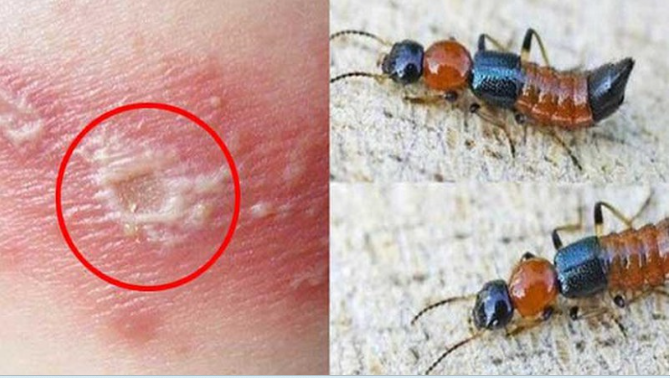
According to Dr. Nguyen Huu Truong, rove beetles do not bite or sting humans. Skin damage occurs when the skin comes into contact with toxic fluid released from the insect's body.
The beetle contains pederin, a potent toxin capable of causing severe irritant contact dermatitis. During harvest seasons or after storms, when their natural habitats are disturbed, these insects are often attracted to artificial lights and may land on clothing, towels, bedding, or exposed skin.
“Many people instinctively slap or crush an insect when they notice it crawling on their skin. This action crushes the beetle and releases pederin directly onto the skin. Even more concerning, the toxin can contaminate the hands and subsequently spread to the face, neck, or eyes when people inadvertently touch those areas,” Dr. Truong explained.
Commonly Mistaken for Shingles
According to specialists at the Center for Allergy and Clinical Immunology, one of the most frequent misconceptions is confusing Paederus dermatitis with shingles (herpes zoster).
Although both conditions may cause blisters and a burning sensation, they are fundamentally different diseases.
Paederus Dermatitis
A form of irritant contact dermatitis caused by pederin toxin.
Lesions typically appear on exposed areas such as the face, neck, arms, or legs.
Blisters often form in linear streaks or clustered patches and may contain whitish fluid or pus.
Symptoms are characterized by intense burning, stinging, and itching.
Shingles (Herpes Zoster)
Caused by reactivation of the varicella-zoster virus.
Blisters occur in clusters along a nerve distribution and usually affect only one side of the body.
Patients often experience deep pain, tingling, or burning sensations along the affected nerve pathway.
Mild fever, fatigue, and body aches may accompany the rash.
Dr. Truong warns that taking antiviral medications intended for shingles will not be effective against Paederus dermatitis.
More concerning is the widespread use of traditional remedies such as betel leaves, herbal leaves, or other substances applied directly to damaged skin. Once the skin barrier has been compromised, these practices may facilitate bacterial invasion, resulting in infection, tissue necrosis, and long-term scarring.
The “Golden Window” for First Aid
According to experts, proper management during the first few minutes after contact with a rove beetle plays a crucial role in limiting skin damage.
Do Not Crush the Insect
If a rove beetle is found crawling on the skin, gently blow it away or use a piece of paper to remove it. Avoid slapping, crushing, or rubbing it against the skin.
Wash the Affected Area Thoroughly
Immediately wash the suspected area with clean water, mild soap, or normal saline solution to remove any remaining toxin.
“The earlier the skin is washed, the lower the risk of severe skin damage,” Dr. Truong emphasized.
Soothe the Skin Appropriately
When redness and burning first appear, mild antiseptic solutions or skin-repair products containing panthenol (vitamin B5) or zinc oxide may be used under medical guidance.
People should avoid self-medicating with potent topical corticosteroids or unverified folk remedies.
When Should You Seek Medical Care?
Medical attention should be sought promptly if:
The lesions become widespread.
Pus develops.
Burning pain persists or worsens.
Fever occurs.
The eyes or surrounding areas are affected.
According to Dr. Truong, early and appropriate treatment not only helps control inflammation and prevent secondary infection but also minimizes the risk of permanent scarring and cosmetic complications.
Summer is the peak season for rove beetle activity. Understanding the nature of this insect and knowing how to respond appropriately can help individuals protect their skin health and safeguard their families from avoidable complications.



78 Giai Phong Street, Kim Lien Ward, Hanoi City
1900.888.866
096.985.1616
Department of On-Demand Medical Examination:
Outpatient Department: Monday – Friday
Main responsible person: Associate Professor, Dr. Dao Xuan Co - Hospital Director




