 Ngày đăng: 08/06/2026Tác giả: Kim Long
Atrial fibrillation (AF) is one of the most common and potentially dangerous cardiac arrhythmias today. Beyond causing symptoms such as palpitations, shortness of breath, and reduced quality of life, AF increases the risk of stroke by up to five times compared to the general population.
Recently, the Vietnam National Heart Institute at Bach Mai Hospital successfully implemented Pulsed Field Ablation (PFA) for the treatment of atrial fibrillation-the most advanced AF ablation technology currently available worldwide. This milestone marks a significant step forward, providing Vietnamese patients with access to a modern, highly effective, and safer treatment option at home.
The “Silent Killer” That Increases Stroke Risk Fivefold
According to Associate Professor Dr. Tran Song Giang, Deputy Director of the Vietnam National Heart Institute, Bach Mai Hospital, a healthy heart beats rhythmically because its electrical conduction system functions in a coordinated manner. In patients with atrial fibrillation, however, electrical signals within the atria become chaotic, causing the heart to beat rapidly and irregularly, thereby reducing its pumping efficiency.
More concerning is that blood can stagnate within the atria, leading to the formation of blood clots. If these clots travel to the brain, they may cause a stroke; if they block the coronary arteries, they can result in a heart attack.
“Atrial fibrillation is one of the leading causes of stroke. Many patients remain undiagnosed until serious complications occur,” said Associate Professor Dr. Tran Song Giang.
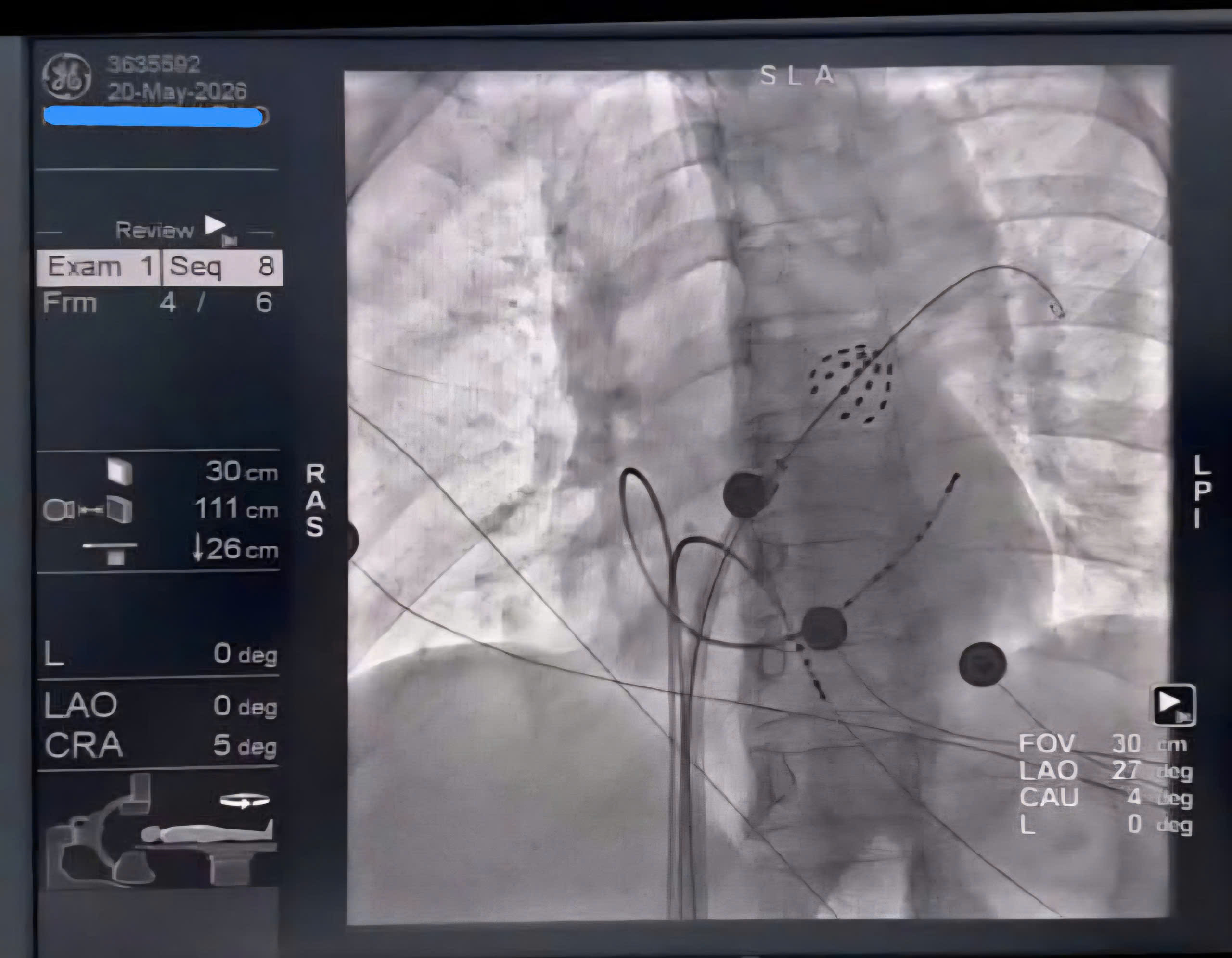
Image of the ablation catheter inside the heart delivering pulsed electrical energy to isolate the pulmonary veins
A New Heat-Free Technology for Atrial Fibrillation Treatment
For many years, catheter ablation using thermal energy-either radiofrequency (RF) ablation or cryoballoon ablation-has been an effective treatment for atrial fibrillation. However, because these techniques rely on heat or extreme cold, there remains a risk of unintended injury to structures adjacent to the heart, such as the esophagus, phrenic nerve, and major blood vessels.
Pulsed Field Ablation represents a breakthrough thanks to its entirely different mechanism of action.
Instead of using thermal energy, PFA delivers ultra-short, high-voltage electrical pulses that selectively target and eliminate the cardiac cells responsible for arrhythmia. Surrounding tissues, including the esophagus, blood vessels, and nerves, are largely spared from damage.
According to experts, the key advantages of PFA include:
High precision with selective targeting of cardiac tissue.
Significantly reduced risk of injury to surrounding organs.
Near-instantaneous pulmonary vein isolation within seconds of pulse delivery.
Shorter procedure times and reduced exposure to X-ray radiation.
Minimal discomfort and pain during the procedure.
Following the intervention, patients generally require only short-term monitoring and can often be discharged within approximately 24 hours.
Who May Benefit from PFA?
According to Associate Professor Dr. Tran Song Giang, based on the latest international cardiology guidelines, PFA is particularly suitable for:
Patients with paroxysmal or persistent atrial fibrillation.
Patients who do not respond adequately to antiarrhythmic medications or experience adverse effects from these drugs.
Younger patients diagnosed at an early stage, before significant structural changes have occurred in the heart.
Experts believe that these patient groups are likely to achieve the greatest therapeutic benefits from this innovative technology.
Success Through Multidisciplinary Collaboration
Pulsed Field Ablation is a highly specialized procedure that requires close collaboration among multiple medical disciplines.
At Bach Mai Hospital, every procedure involves an experienced team of cardiac electrophysiologists, echocardiography specialists who assist with precise anatomical guidance, and anesthesiology and intensive care teams responsible for maintaining patient safety throughout the intervention.
With its advanced infrastructure and status as one of Vietnam’s leading tertiary-care hospitals, Bach Mai Hospital is among the pioneering institutions mastering this cutting-edge technology.
According to Associate Professor Dr. Tran Song Giang, the successful implementation of PFA not only represents a major advancement for Vietnamese cardiology but also enables patients across the country to access one of the world's most advanced, safe, and effective treatments for atrial fibrillation at a reasonable cost.
“Once the clinical pathway is fully established and widely implemented, patients with atrial fibrillation in Vietnam will have access to an effective, safe, and internationally standardized treatment option,” Associate Professor Dr. Tran Song Giang emphasized.



78 Giai Phong Street, Kim Lien Ward, Hanoi City
1900.888.866
096.985.1616
Department of On-Demand Medical Examination:
Outpatient Department: Monday – Friday
Main responsible person: Associate Professor, Dr. Dao Xuan Co - Hospital Director




