 Ngày đăng: 17/04/2026Tác giả: News and photos: Thanh Duong
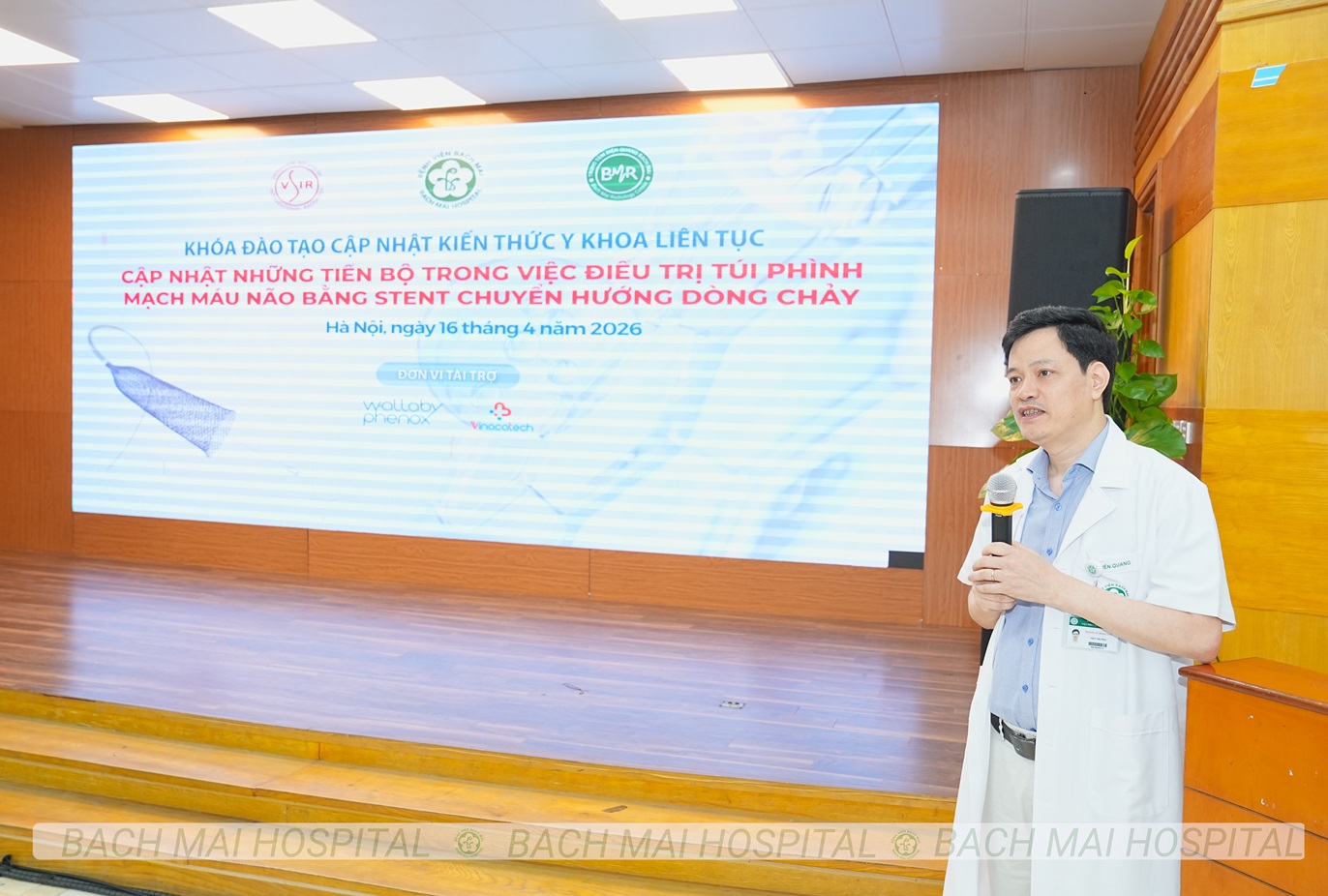
On April 16, 2026, the Bach Mai Institute of Medical Training and Research, in collaboration with the Institute of Diagnostic and Interventional Radiology, organized an advanced training course on the application of flow diverter stents in the treatment of cerebral aneurysms. The program focused on the latest technical advances, aiming to optimize interventional outcomes for complex, high-risk aneurysms.
The course featured lectures by Assoc. Prof. Dr. Vu Dang Luu, Director of the Institute of Diagnostic and Interventional Radiology (Bach Mai Hospital), and Prof. Dr. Laurent Pierot, Head of the Department of Radiology at Reims University Hospital (France), one of Europe’s leading experts in neurointervention.
Over 25 years of collaboration in neurointervention
Prof. Laurent Pierot has collaborated with Bach Mai Hospital since 1999, performing some of the first neurointerventional procedures in Vietnam. Over more than 25 years of partnership, numerous advanced techniques have been transferred and mastered, including endovascular treatment of cerebral aneurysms, the use of WEB devices, and flow diverter stents.
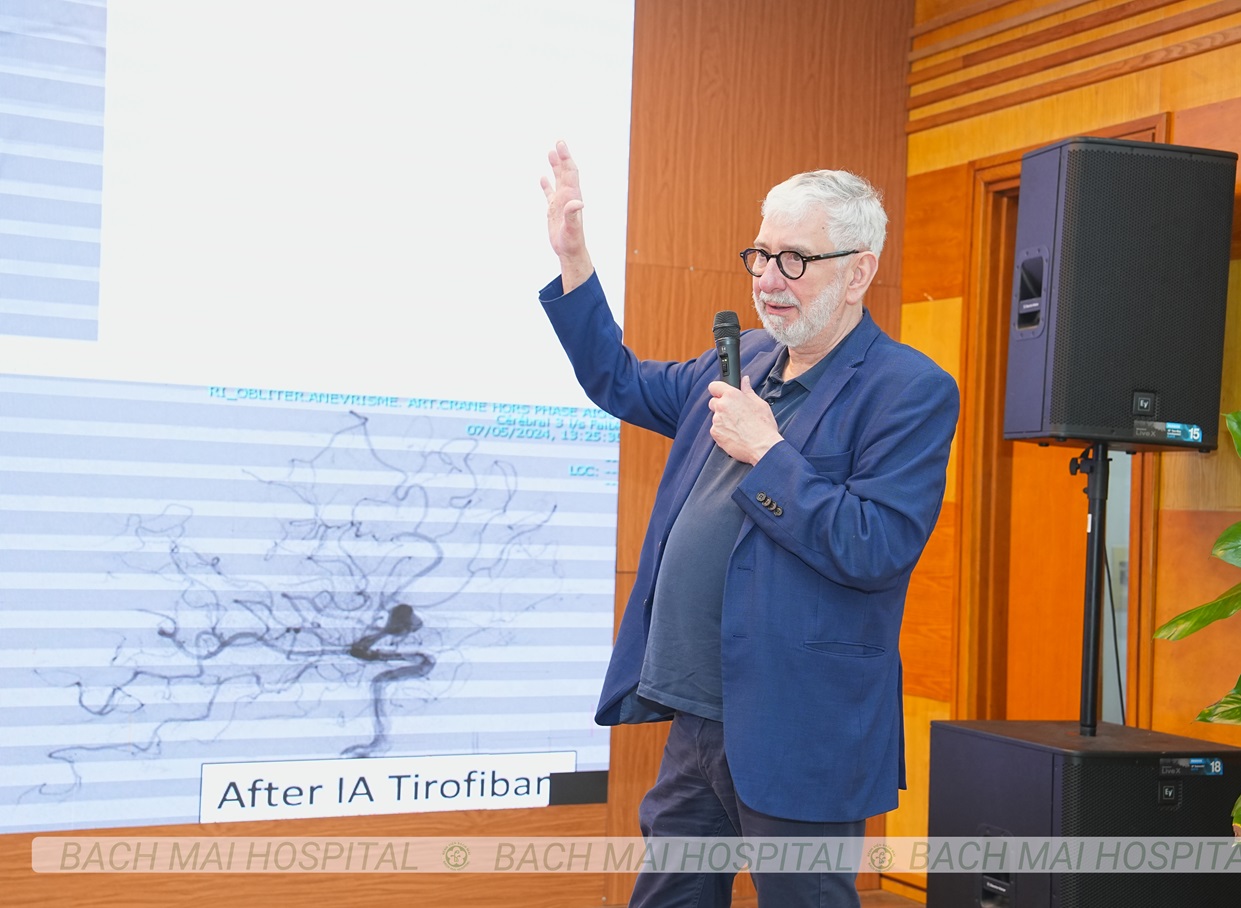
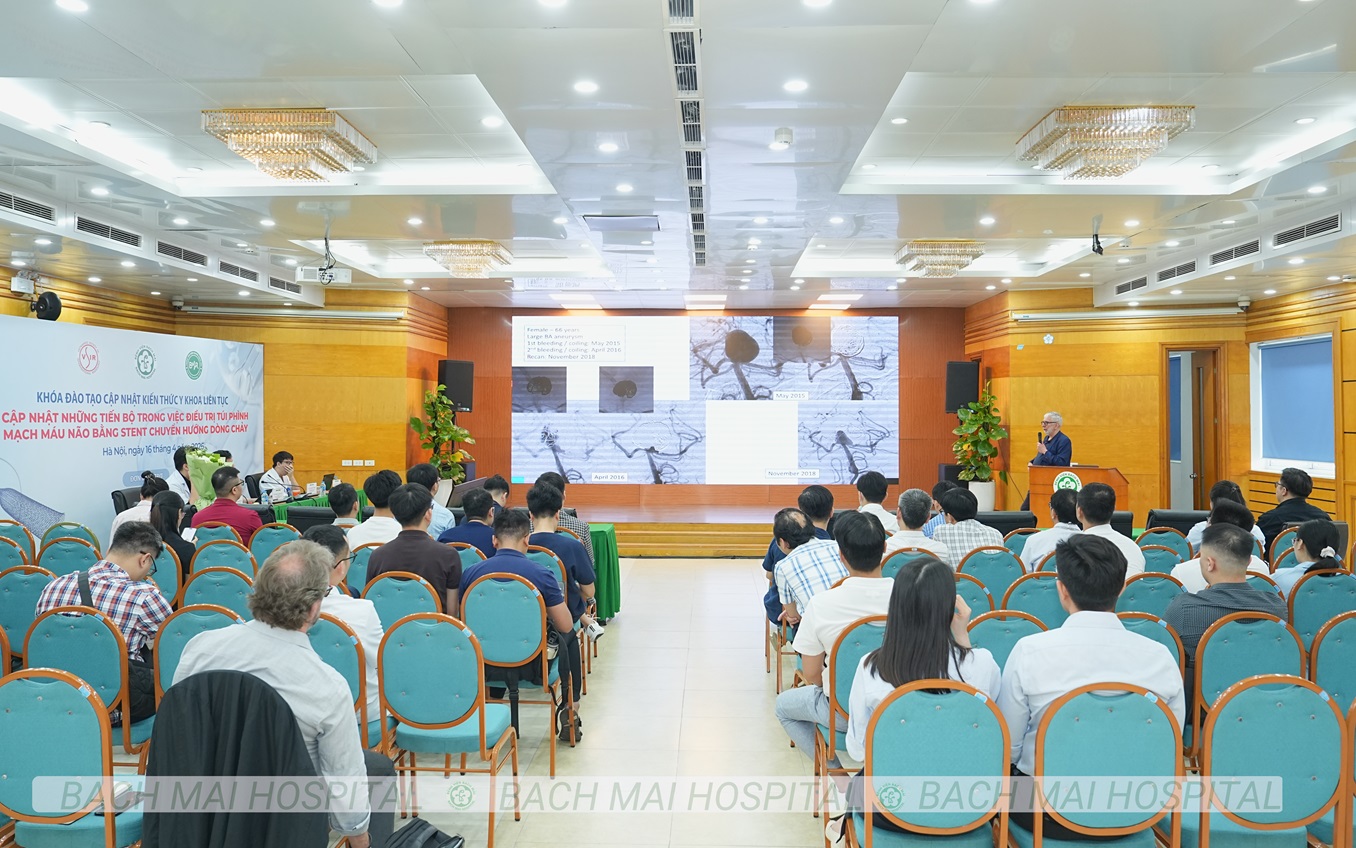
Close cooperation between international experts and physicians at the Institute of Diagnostic and Interventional Radiology has enabled continuous updates of modern treatment standards, while gradually establishing standardized interventional protocols tailored to Vietnam’s clinical context. This has also laid a solid foundation for training high-quality human resources in interventional radiology.
A solution for wide-neck aneurysms with high recurrence risk
According to Assoc. Prof. Dr. Vu Dang Luu, although traditional coiling techniques are effective in many cases, recanalization rates remain around 28–30% for wide-neck or complex aneurysms.
The flow diverter technique represents a major advancement, as it alters intra-arterial hemodynamics, promotes endothelialization, and reconstructs the vessel wall. As a result, the aneurysm is gradually isolated from circulation, reducing the risk of rupture and recurrence.
Notably, experts introduced a new generation of stents coated with HPC (Hydrophilic Polymer Coating). This technology helps minimize platelet aggregation on the device surface, thereby reducing the risk of post-procedural thrombosis and potentially optimizing antiplatelet therapy regimens.
Advancing personalized treatment through simulation technology
A highlight of the training course was the application of simulation software in interventional planning. This technology enables 3D reconstruction of patient-specific vascular anatomy, assisting physicians in accurately selecting stent size, type, and optimal treatment strategies.
Personalized treatment not only improves success rates but also helps reduce complications, shorten procedure time, and optimize treatment costs for patients.
In addition to theoretical sessions, the program included real clinical case discussions at Bach Mai Hospital, live technical demonstrations, and hands-on practice using interventional models. These activities provided valuable opportunities for physicians to update knowledge, exchange experience, and enhance professional skills.
Affirming a leading neurointerventional center
Mastering and routinely implementing advanced techniques such as flow diverter stenting not only affirms the professional capacity of the Institute of Diagnostic and Interventional Radiology but also expands effective and sustainable treatment options for patients with cerebral aneurysms.
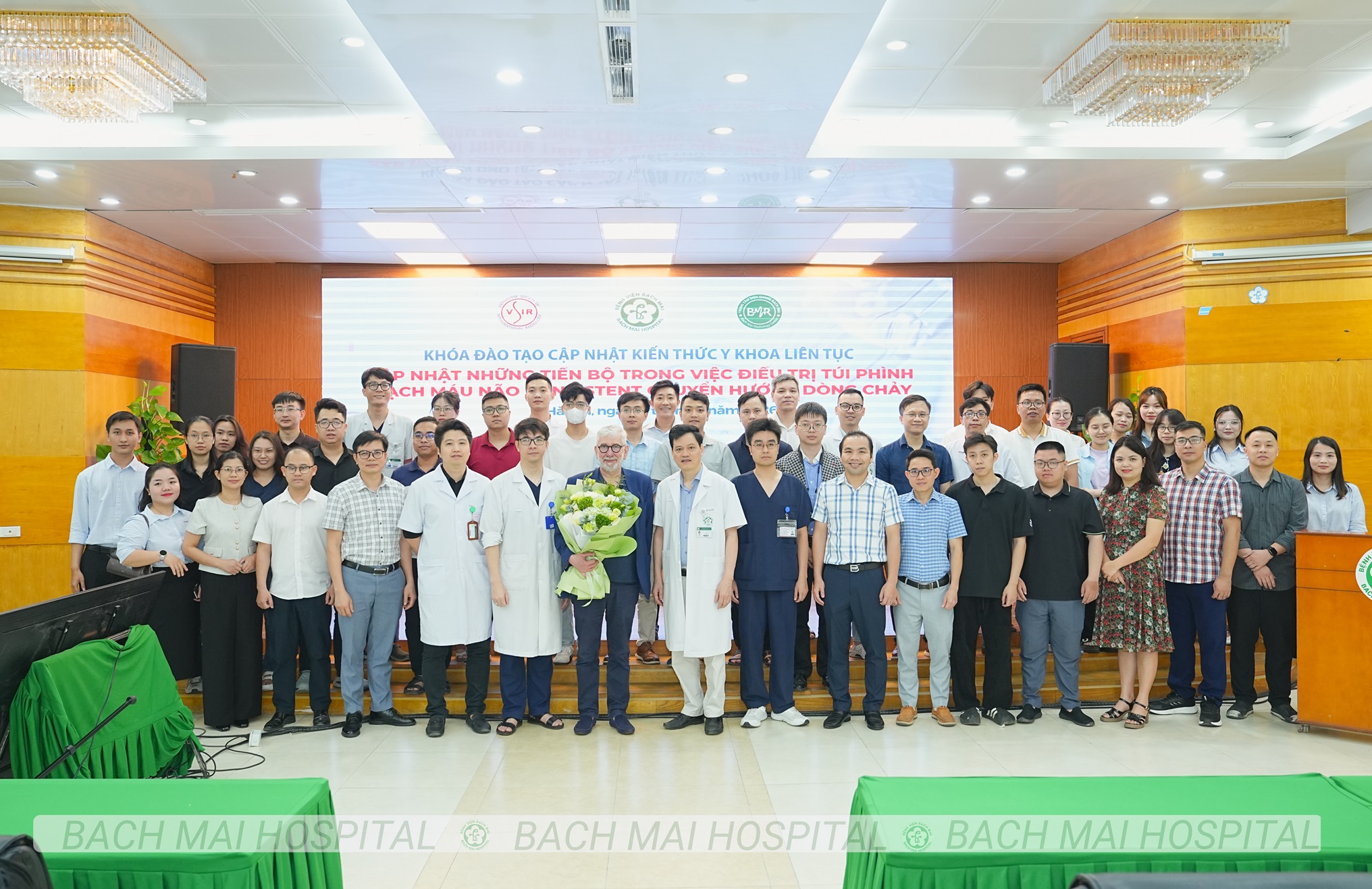
Amid the rising incidence and complications of cerebrovascular diseases, particularly the risk of stroke due to aneurysm rupture, the adoption of advanced technologies plays a crucial role in improving diagnostic and treatment quality, as well as reducing mortality and disability rates.
Through training, international collaboration, and technology transfer, Bach Mai Hospital continues to affirm its role as a leading tertiary healthcare center, pioneering the application of high-tech medicine and contributing to elevating Vietnam’s medical standing in the region and globally.



78 Giai Phong Street, Kim Lien Ward, Hanoi City
1900.888.866
096.985.1616
Department of On-Demand Medical Examination:
Outpatient Department: Monday – Friday
Main responsible person: Associate Professor, Dr. Dao Xuan Co - Hospital Director




