 Ngày đăng: 17/08/2026
Bach Mai Hospital has just announced the milestone of 500 surgical cases for the treatment of carotid artery stenosis. Behind that figure lies not only the maturity of a complex technique but also the coordinated journey of various specialties, marking a significant advancement in the detection, treatment, and prevention of cerebral stroke.Bach Mai Hospital has just announced the milestone of 500 surgical cases for the treatment of carotid artery stenosis. Behind that figure lies not only the maturity of a complex technique but also the coordinated journey of various specialties, marking a significant advancement in the detection, treatment, and prevention of cerebral stroke.
500 surgeries - 500 opportunities to prevent a stroke event
At the recently held symposium "Carotid Artery Stenosis Surgery in Awake Patients: Technical Updates and Clinical Experience," Bach Mai Hospital announced the milestone of 500 carotid artery stenosis surgical procedures performed at the hospital.

The symposium gathered many of the country's leading experts in the fields of stroke, neurology, cardiology, anesthesiology, and thoracic surgery. This was not only an occasion to update knowledge and share experience, but also a forum for experts to openly discuss practical issues, challenges, lessons learned, and new directions for the treatment of carotid artery disease.
According to Dr. Ngo Gia Khanh, Head of the Department of Thoracic and Cardiovascular Surgery at Bach Mai Hospital, this is an occasion for him and his colleagues to look back on a professional journey filled with immense pressure and responsibility—a milestone in the department's development that is deeply meaningful: the milestone of 500 carotid artery surgeries.
Carotid artery stenosis surgery is a specialized technique because the carotid arteries are responsible for supplying blood to the brain. During the process of plaque endarterectomy and restoring blood flow, ensuring cerebral perfusion and early detection of neurological changes are critical to patient safety. No carotid artery surgery is the achievement of the surgeon alone. A patient's journey typically begins in Emergency, the Stroke Center, Diagnostic Imaging, Cardiology, and Neurology, before reaching Surgery and Anesthesiology and Resuscitation, followed by postoperative monitoring.
Dr. Ngo Gia Khanh compares carotid artery surgery to a "team sport": the surgeon may be the striker, but cannot "score" without the assists from Neurology and Stroke; cannot remain safe without Anesthesiology and Resuscitation protecting the "home ground"; and when adverse events occur, the Center of Diagnostic Imaging and other specialties serve as vital "defensive barriers." This is also the advantage of Bach Mai Hospital—where the emergency, resuscitation, stroke, and deep subspecialty systems have been built and developed over many years.
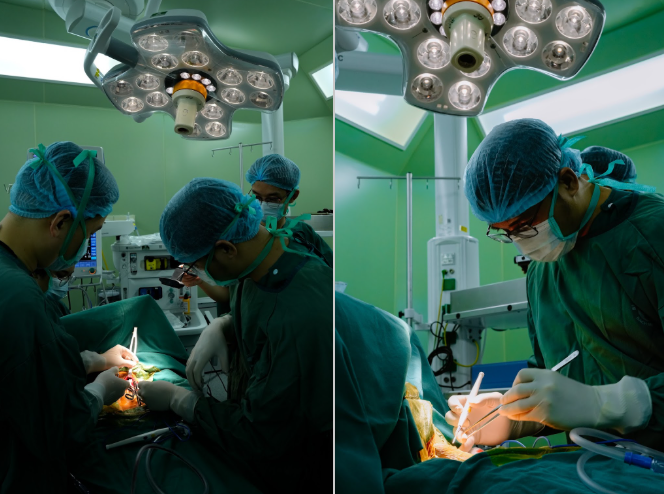
"500 cases mean 500 moments of suspense, 500 thorough preparations, 500 coordinations, and also 500 sighs of relief upon seeing patients wake up after each surgery. We hope to perform the 501st, 502nd, and up to the thousands of cases even better than the 500th. Thank you to our colleagues who participated in joint consultations and managed difficult cases; the anesthesiologists, nurses, and technicians behind every operation; and especially the patients who placed their trust in the physicians," said Dr. Ngo Gia Khanh.
From the milestone of 500 cases to a comprehensive vascular program
Since 2018, carotid artery surgery began to be performed at Bach Mai Hospital and has gradually increased over the years, currently reaching approximately 120 cases per year. Alongside the quantity, the techniques have also progressively evolved: shifting from general anesthesia to cervical plexus block to perform surgery while patients are awake; from routine shunt usage to selective shunting; and perfecting the technique of carotid endarterectomy.
Attending the Symposium, Assoc. Prof. Dr. Dao Xuan Cơ, Director of Bach Mai Hospital, evaluated that the milestone of 500 cases holds significance extending beyond numerical professional statistics.
"Behind 500 surgeries are 500 patients, 500 families, and hundreds of opportunities for us to prevent a very severe event—cerebral stroke," Assoc. Prof. Dr. Dao Xuan Cơ emphasized.
According to the Director of Bach Mai Hospital, extracranial carotid artery stenosis and occlusion are major causes of cerebral ischemia and ischemic stroke. Notably, if detected and treated at the appropriate time, the risk of experiencing an adverse event can be proactively and significantly reduced.
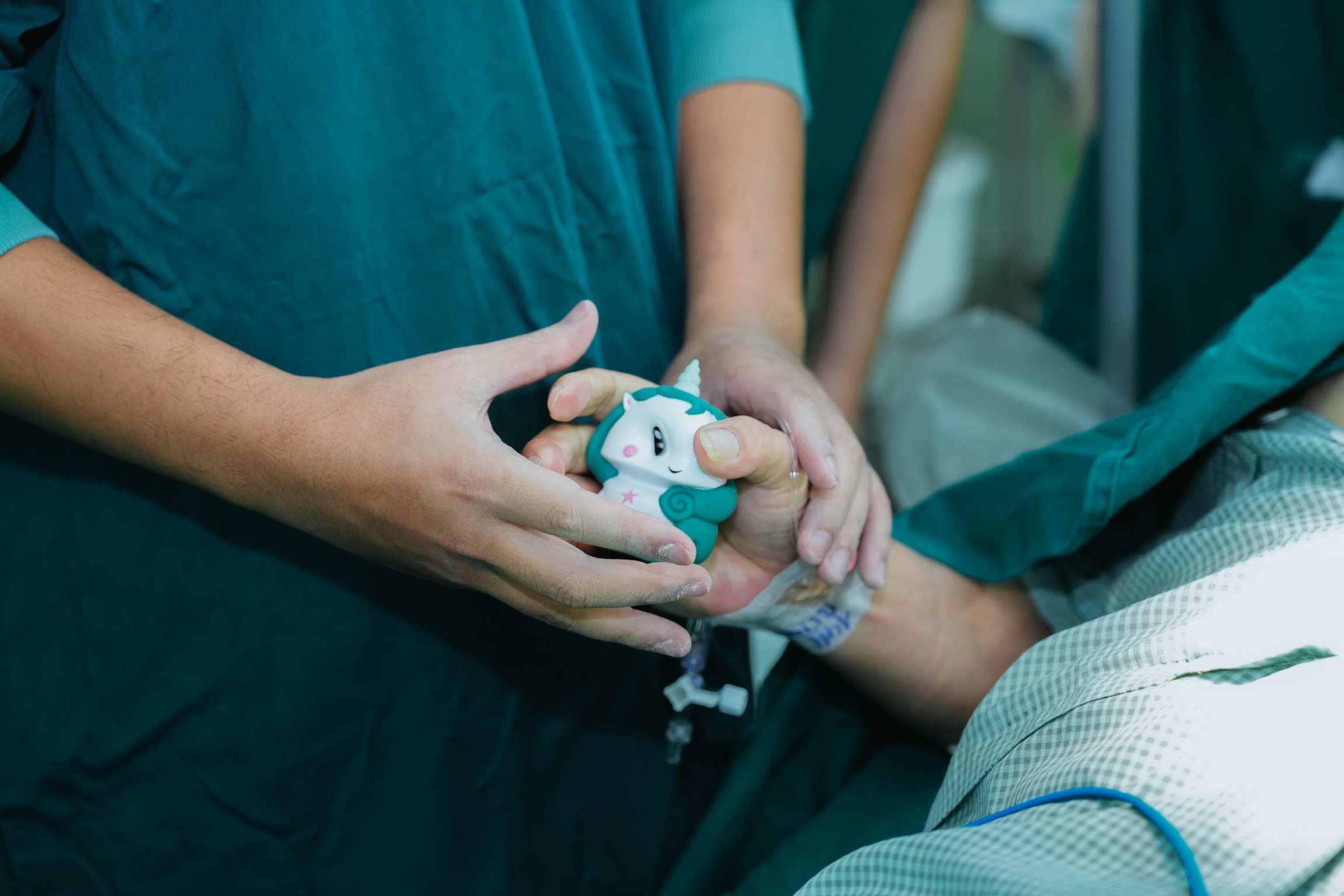
One of the notable highlights in the development of techniques at Bach Mai is carotid artery surgery in awake patients under regional anesthesia. When the patient is awake during the procedure, physicians can directly monitor consciousness, speech, and motor function, and detect neurological changes immediately during the period of carotid clamping.
According to Assoc. Prof. Dr. Dao Xuan Co, at that time, "the patient's brain becomes a living 'monitor,'" helping the team recognize cerebral hypoperfusion early to make timely adjustments. Therefore, the goal of the surgery is not simply to remove the plaque and reopen a narrowed artery, but to "protect the patient's brain every minute of the operation."
However, 500 cases is merely a milestone on the journey ahead. Building upon these results, the Director of Bach Mai Hospital has set a strategic direction for the next 3 years to establish a comprehensive, multidisciplinary vascular disease treatment program—not limited to the carotid arteries, but gradually mastering aortic diseases, peripheral arterial diseases, venous diseases, and complex vascular lesions—while concurrently developing open surgery, endovascular intervention, hybrid procedures, and medical treatment.
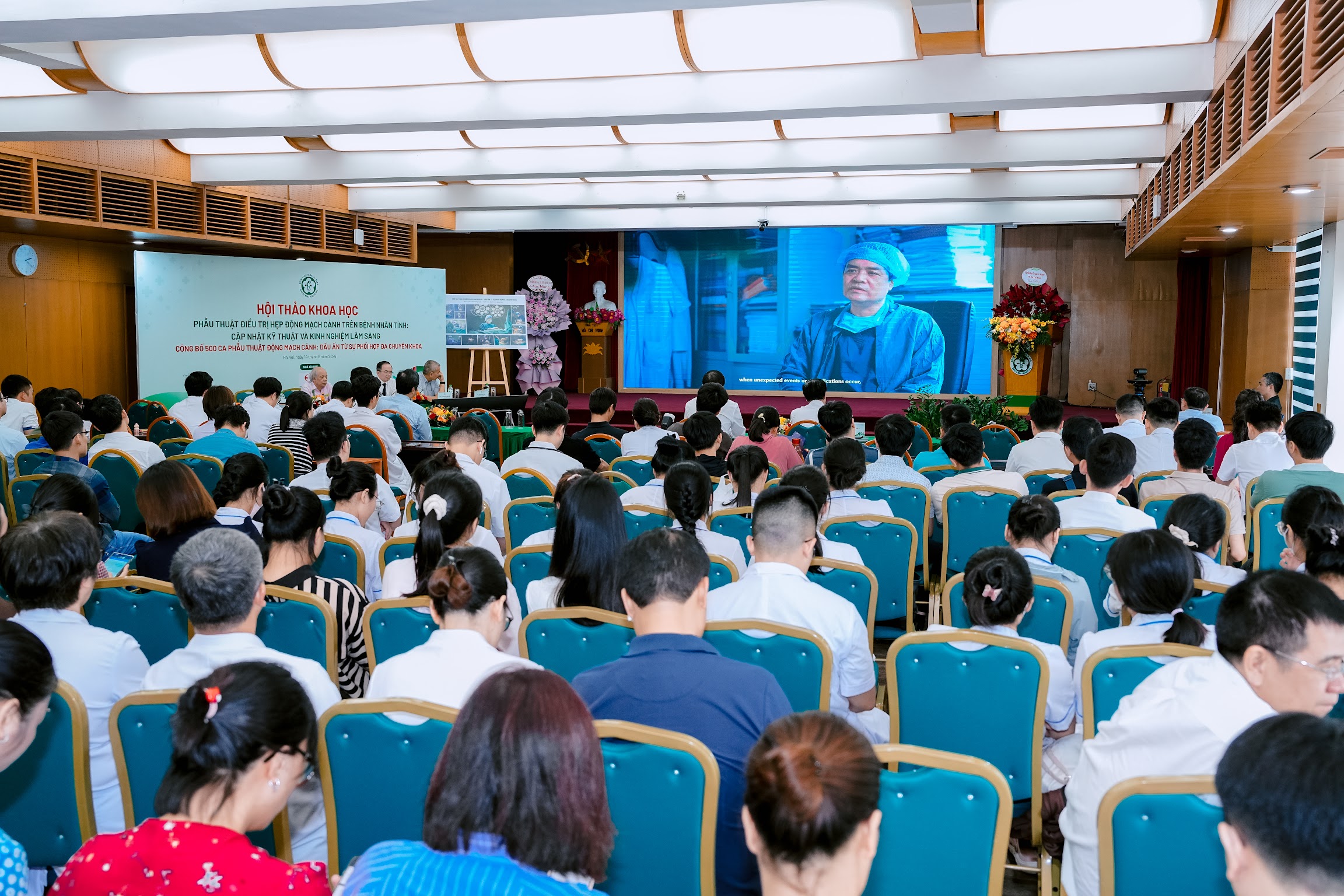
Along with that is building a data system to monitor treatment outcomes, making scientific research a part of clinical practice; training the succeeding generation of staff and developing Bach Mai into a training and vascular technique transfer center for the healthcare network.
"A strong center is not a place that keeps all patients for itself. A strong center is a place that makes the entire system stronger together," Assoc. Prof. Dr. Dao Xuan Co emphasized.
Assoc. Prof. Dr. Dao Xuan Co believes that with the existing professional foundation, the experienced team of physicians, and the synchronized coordination among specialties, Bach Mai Hospital will continue to be one of the leading centers for emergency care, stroke treatment, and a pioneer in developing safe, modern, and effective carotid artery disease treatment techniques.
Nguyen Ha - The Anh



78 Giai Phong Street, Kim Lien Ward, Hanoi City
1900.888.866
096.985.1616
Department of Examination on Demand:
Department of Examination: Monday - Friday
National Route 21B, Liem Tuyen Ward, Ninh Binh Province
1900.888.866
0969851616
Outpatient Department on Demand (On-demand Clinic)
+ Monday - Friday:
+ Saturday - Sunday:
Outpatient Department (Standard Clinic): Monday - Friday
+ Working hours:
Main responsible person: Associate Professor, Dr. Dao Xuan Co - Hospital Director




